

Boeing formally announced the delay of the first delivery of its 777X by one additional year to 2026.
The delay has many ramifications for the planemaker, airlines, and the broader perception of the long-haul jet.
So, why did the major manufacturer decide to delay the widebody, which is expected to help replace ageing aircraft and aid business growth?
Ongoing Boeing Strike Action
One of the first major reasons, which emerged only last month, was Boeing’s inability to resolve the strike action.
That strike action follows the walkout of tens of thousands of employees who are representing key unions and seeking better work conditions, including pay.
Strike action isn’t unfamiliar across the industry and has been a hot topic of conversation for the last 18 months. However, the length at which Boeing’s strike action has rampaged on has been a hot topic of conversation.
This walkout, now lasting around a month, has soured the relationship between Boeing and the union representing the employees considerably.
Furthermore, for all the time that Boeing has seen the walkout occur, it has had to see its output drop to even lower rates than what was seemingly thought possible.
As a result of this lowered output, along with many employees walking out on the job, Boeing’s finances are of great concern for analysts studying the business.
Moreover, programmes such as the MAX, 767, and 777 have all been affected, and the planemaker is now in a mindset where cash preservation is absolute king.
Unfortunately, this means that, alongside the further discussed reasons, the 2025 first delivery and subsequent certification have become increasingly less likely for the 777X.
Although some onlookers would argue that this already seemed unattainable prior to the strike action, this is the final nail in the coffin.
Flight Testing Suspended
Another important factor in the 777X’s delay was Boeing’s confirmation towards the end of August that it would pause test flights to certify the long-haul jet.
The development, initially broken by reputable trade publication The Air Current and later confirmed by Boeing, came at the worst time for the struggling programme.
While testing had been reportedly progressing at a positive rate, a structural part mounted to a GE9X on the aircraft was said to have failed and, thus, not be in satisfactory working order.
Therefore, a halt was required to examine the aircraft and the other two test units. But, this was worsened when sources familiar with the matter confirmed that two other active test aircraft were found to have something similar.

This development came when the 777X appeared to finally be on a pathway to eventual 2025 certification and delivery. However, this suspension now has thrown all that out the window.
Boeing says it’ll learn from this experience and replace the failed component, but the halt has been long enough to throw all timeframes out the window.
Airlines, however, would argue that even the 2025 date Boeing had been putting forward for some time was optimistic, with airlines having doubts.
So Many Delays…
Unfortunately, confirmation of a one-year delay isn’t the first time the 777X has encountered delays; in fact, it’s become an all-too-common theme for this new long-haul jet.
Boeing initially quite publicly targeted a 2020 first delivery. However, it became apparent quickly that this was unrealistic, given the difficulties at Boeing and the challenges of getting a new plane certified.
Up until 2019, Boeing targeted a summer 2020 delivery to Lufthansa, even following the first body join, which occurred in February 2019. The rollout was kept quiet, considering it occurred moments after a 737 MAX 8 crashed with Ethiopian Airlines.
Very quickly, as Boeing encountered MAX troubles, so did the GE9X engines that were meant to be equipped on the 777X with a first flight quickly ballooning out.

By June 2019, Boeing said a first flight would only occur sometime in 2020, and while it remained optimistic that the first delivery would still occur at the turn of the decade, this became increasingly more challenging.
In the latter stages of 2019, it became apparent that Boeing had major flaws in its overall production, quality, and safety processes, which led to more scrutiny of the aircraft it was building, such as the upcoming 777X.
When a door blew off a 777X unit towards the end of 2019 during a static test, further delays were felt. This theme continued all throughout the early stages of the 2020s, with delay after delay.
Most recently, Boeing has been quoted as expecting a 2025 delivery to customers, with these customers hoping for a mid-2026 formal EIS once familiarisation occurs.
However, the latest delay to 2026 for the first delivery adds 12 months to an already-inflated date for an aircraft that while many are excited about, many are equally frustrated.
Airlines Frustrated With 777X
Frustrations have been a big focus of the 777X in recent times, with Lufthansa and Emirates being the leaders in expressing their thoughts on the jet.
While Emirates’ frustrations may have been leveraged to secure a better deal for an additional 777Xs, these thoughts are viewed as warranted.
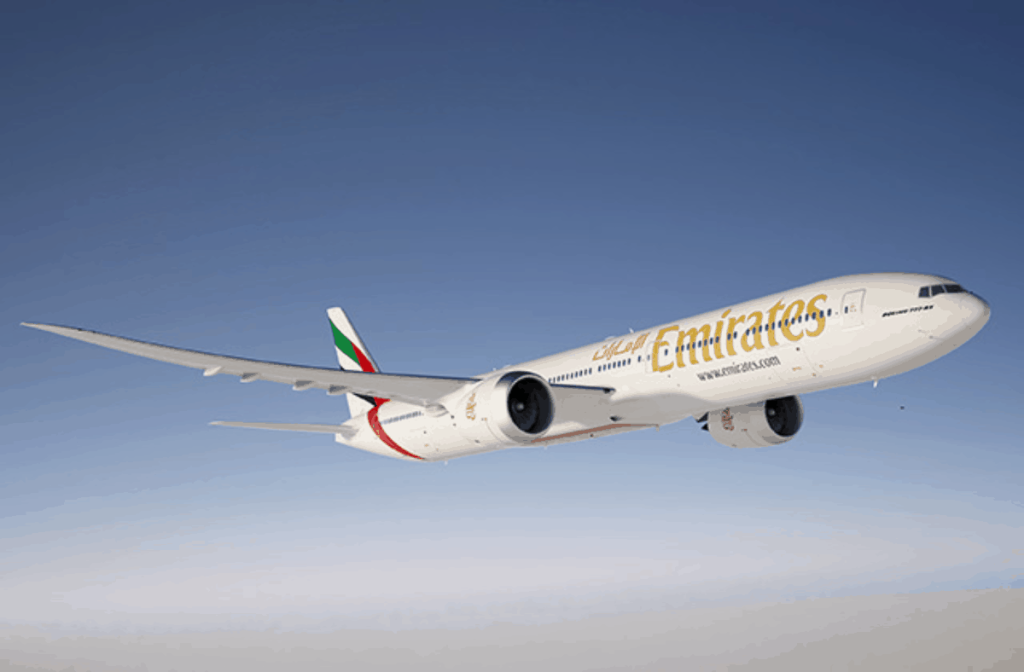
These major international airlines expected the first delivery of the 777X in 2020, and now, as 2025 approaches, there is still a lack of clarity on when the aircraft will actually be ready to enter service.
This means airlines must rejig their operations to cope with fewer aircraft being made available. In the case of Emirates, they’ve advanced the retrofitting of their current aircraft as part of a multi-billion dollar upgrade to cope with the delayed aircraft.
Furthermore, the Dubai-based carrier is retaining aircraft longer than it would’ve imagined. At the same time, it isn’t hurt significantly like some other companies, but this does see it shift away from its typical business model of keeping a youthful fleet, which is far from ideal.
Lufthansa has also been forced to keep ageing aircraft on longer. However, the negative ramifications at the German carrier have been much more widely reported, as the airline says it faces hundreds of millions lost every month.
Lufthansa had planned to retire many of these older quad-engined planes but has been unable to obtain aircraft such as the 777X, which was viewed as a replacement. Therefore, the airline is forced to keep these aircraft on in order to cope and have some type of capacity still readily available.

ABOUT THE AUTHOR
Daniel Fowkes is a Melbourne-based aviation analyst and journalist with over a decade of industry experience. As founder of Dj’s Aviation, he delivers trusted analysis on aircraft, airline strategy and global aviation trends for djsaviation.net
Related Articles




Stay Informed
Get the latest aviation news, analysis and route updates delivered to your inbox.
We respect your privacy. Unsubscribe at any time.
Enjoyed this story?
Make us your go-to for aviation news
Add us as a preferred source on Google and see our latest stories first in Top Stories.
Add Us On Your News Feed