

Virgin Atlantic is in the midst of a significant reshuffling of its global network, and changes are continuing to roll out across the Boeing 787 product.
The business, which has trimmed long-haul flying and shifted capacity to markets where demand is more positive in its latest schedule filing, made changes to its Seoul Incheon operation, as flagged by aeroroutes.com.
The latest change focuses on June, where flights are to be cut from the daily operation, reducing the weekly total from seven to six. This shift, however, is positioned within a much broader trajectory of changes above normal.
Here’s What Virgin Atlantic Is Changing To Seoul
The airline’s London Heathrow to Seoul Incheon flight, operated by the Boeing 787-9, will operate six times a week throughout June, from the 1st to the 30th of 2026, down from the current seven daily flights.
Those cancellations will therefore be on 3 June, 10 June, 14 June, and 23 June from Heathrow, with the return sectors also axed the following day, due to the service’s schedule.
Virgin Atlantic isn’t removing Seoul, as it has done with other cities, but with no less rotation for the Northern Summer 2026 schedule using its Boeing 787 aircraft.
As part of the schedule, VS208 departs Heathrow at 1325 for a 1005 arrival the following day in Seoul Incheon. Then, VS209 departs Seoul Incheon at 1225 for a 1850 same-day arrival back in London. All times local to their respective cities.
A Complicated 2026 Forces Changes
Network shifts throughout a calendar year are common, never studied, but are always happening. These network shifts are part of airlines’ attempts to best deploy capacity around the world, or domestically with their assets and target profitable markets to improve margins.
However, Virgin Atlantic’s more rapid schedule changes have caught the attention of industry analysts and other observers. The business has been forced to respond to challenging economic conditions and harsh volatility that has impacted margins across established routes.
Jet fuel prices have been one of the most brutal additions to the already volatile operating environment. These prices are surging on the back of the Iran-Middle East conflict, with longer-than-usual origin times and supply chain disruptions that have pushed unit costs for long-haul flying to much higher levels than before.

This means that, with many fares sold months in advance, they were priced on the assumption that fuel prices would remain lower and stable. But now, with jet fuel suddenly making up a larger share of operating costs, airlines are being forced to shift their networks, withdraw from weaker routes, cut frequencies, and more to cope.
However, not just this, Virgin Atlantic has been a contributing factor; demand patterns and competition play a role, too. The airline sees strong growth across corridors such as to India from the United Kingdom, making changes here to reflect that.
For example, the changes in service to the Middle East that the airline had long been plotting weren’t just due to jet fuel prices but were directly linked to competition in this region. Whether it’s established carriers or the upcoming and highly ambitious Riyadh Air, Virgin has felt pushed out and unable to sustain high yields, so it has chosen to deploy capacity elsewhere to cope.
Virgin Atlantic Makes Many Other Changes
Virgin Atlantic’s Seoul adjustment is simply one in a series of changes the airline has made in the last couple of months alone, with the likelihood of further change very high given that operating conditions are not letting up.
In early May, the UK carrier confirmed that for the Northern Winter 2026/27 season, it would close bookings on its London Heathrow-Dubai International service, a decision driven by escalating tensions, rising costs, and shifting demand.
Dubai wasn’t the only shift in the Middle East with a complete retreat from Riyadh. For the airline, Saudi Arabia is no longer a sustainable market to serve, especially as Riyadh Air is about to begin flying passengers to the United Kingdom, with London and Manchester both on the initial route map.
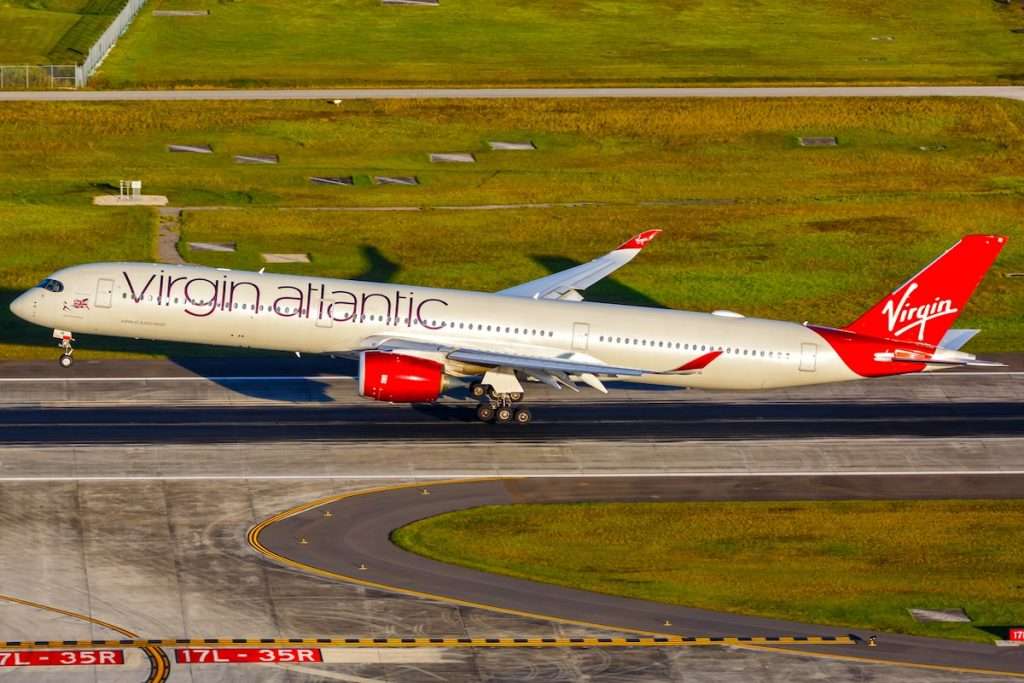
All this was then compounded by the news that the Seattle service would be axed, and by a flight operated by the Boeing 787 Dreamliner, reducing options in the United States as well.
With the removal of Boeing 787s from these markets, innovation has instead taken the form of the UK carrier elevating its assets to focus on identifying more unique markets that could use a capacity bump and have seen strong yields.
Notably, the airline is looking to South Africa, away from India, where Cape Town and Johannesburg have been performing strongly lately and are poised to be rewarded. That reward comes in the form of 10 flights a week to Johannesburg and is complemented by 11 flights a week to Cape Town.

ABOUT THE AUTHOR
Daniel Fowkes is a Melbourne-based aviation analyst and journalist with over a decade of industry experience. As founder of Dj’s Aviation, he delivers trusted analysis on aircraft, airline strategy and global aviation trends for djsaviation.net
Related Articles




Stay Informed
Get the latest aviation news, analysis and route updates delivered to your inbox.
We respect your privacy. Unsubscribe at any time.
Enjoyed this story?
Make us your go-to for aviation news
Add us as a preferred source on Google and see our latest stories first in Top Stories.
Add Us On Your News Feed