

United Airlines confirmed the retirement of 21 aircraft earlier than previously planned in a recent quarterly report.
The tough decision to retire aircraft earlier than expected is considered a last resort to try to manage several operational challenges.
The confirmation will also result in substantial savings of around USD 100 million this year alone, as tactics are initiated to ensure engine overhauls aren’t required for these outgoing planes.
Looking Ahead At United Airlines
United Airlines states that, despite the early retirement of its aircraft, its results could be significantly different in the future due to factors beyond its control.
Studying economic conditions and acquiring new planes will determine how the business performs in the months and years to come. However, both these factors largely remain out of its control.
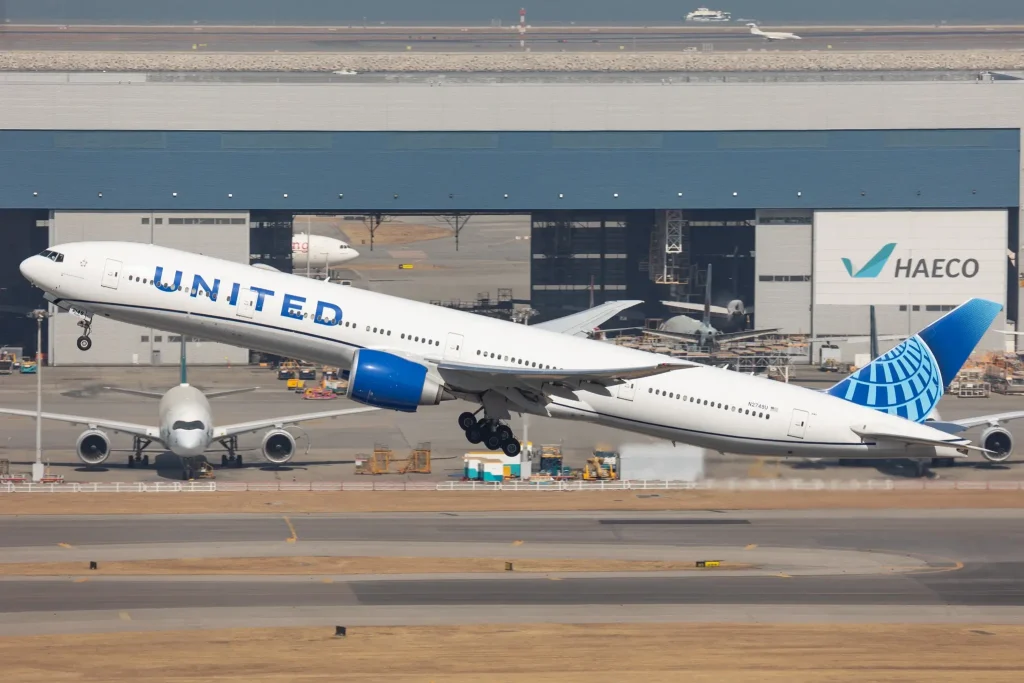
Compounded by the mandatory grounding of aircraft driven by engine reliability concerns and planemakers’ inability to deliver planes on time, United says the integration may be more challenging.
Moreover, with tensions towards the United States rising, United Airlines is also wary of how its performance will fare across specific markets as forward bookings show signs of drops in certain countries.
Internally, United Airlines has already confirmed the axing of services across its domestic network as soon as July 2025 due to what it describes as softer demand.
The domestic capacity cut aligns with United’s public commentary surrounding ongoing political tensions, uncertainty, and more, which have prevented customers from booking flights with confidence like they may have once had.
United, therefore, needs to adjust its network accordingly, as the retirement of planes has impacted it. Still, the reduced capacity is also necessary to ensure further losses aren’t incurred.
A Slowed Growth
Before fresh political tensions, dropping customer confidence in flying, and a smaller appetite from some markets to fly to the United States, the carrier expected growth to be slower.
Aircraft such as the 737 MAX continue to pose problems for United Airlines, such as the lower output rate than what would be ideal to get jets off on time, which means that for United, renewal of the fleet remains complex.

However, another visible concern has been Boeing’s inability to certify two variants still in the MAX program. With United as a customer, not getting jets such as the high-capacity 737-10 is huge for them.
Across 2024, the airline consistently revised its growth forecasts with realisations being made internally that the next few years will require more patience.
Ultimately, all airlines are experiencing some challenges in 2025, ranging from aircraft reliability to increasing costs, engine concerns, political unrest, and more. Each is now tasked with the crucial challenge of navigating this until clearer skies emerge, which will arrive.

ABOUT THE AUTHOR
Daniel Fowkes is a Melbourne-based aviation analyst and journalist with over a decade of industry experience. As founder of Dj’s Aviation, he delivers trusted analysis on aircraft, airline strategy and global aviation trends for djsaviation.net
Related Articles




Stay Informed
Get the latest aviation news, analysis and route updates delivered to your inbox.
We respect your privacy. Unsubscribe at any time.
Enjoyed this story?
Make us your go-to for aviation news
Add us as a preferred source on Google and see our latest stories first in Top Stories.
Add Us On Your News Feed