

Air Algérie has purchased 10 Boeing 737 MAXs to overhaul its fleet and show further confidence in the American planemaker’s narrowbody family.
The newly announced contract will give the airline the confidence to become more efficient and provide a platform that can further improve day-to-day operations and reshape its competitive edge across key locations.
A Push For Fleet Renewal
Air Algérie has specifically selected 10 mid-range 737-8 jets to help develop the outlined national strategy, which focuses on civil air transport and growth in this sector.
With the 737 MAX 8s arriving, the national carrier is hopeful that not only will the aircraft modernise the fleet, but they will also enable expansion across the route network and improve the quality of passenger services.
Under the delivery schedule, five jets will arrive in the second half of this year, and the remaining five will be delivered across 2027, with no further delivery changes permitted between now and then.

These 737 MAX jets, on paper, offer better fuel burn, improved operating economics, and more range compared to older-generation narrowbodies, and these are metrics that matter in a competitive space where, for Air Algérie, it’s all about being as agile, reliable, and profitable.
The order is a decision that also pushes the business towards a more aggressive, deliberate push for a narrowbody fleet focused on next-generation aircraft, ensuring that pilot training, maintenance planning, spare parts, and more can be brought together.
What Aircraft Does Air Algérie Fly?
For Air Algérie, purchasing the Boeing 737 MAX gives it the confidence to continue sticking with a family it has relied on so heavily over the years and to move ahead with the natural successor.
When analysing the fleet by average age, the 737 remains the airline’s most important type, with the 737-800 comprising 25 aircraft still in the airline’s name, 23 of which are active, averaging 17 years.
Additionally, the airline has two Boeing 737-700s at 9.7 years, followed by a handful of 737-600s, which are the oldest fleet type, with an average age of 23.9 years.
However, overall, the airline industry has an average age of 17.3 years, which is old, and as more airlines move towards more efficient alternatives for growth and renewal, airlines like Air Algérie must secure contracts soon to avoid missing available delivery windows.
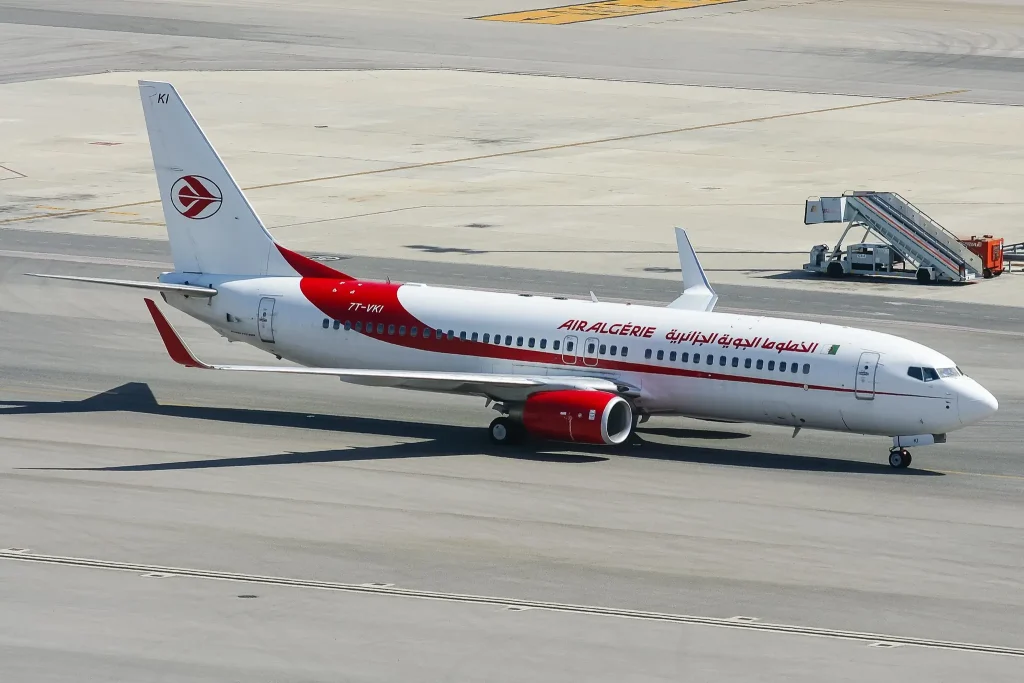
As cited in Avolon’s UpNext report, single-aisle jets are scarce, even into the 2030s, let alone widebody aircraft, as stock is flying off the shelves at a rate that planemakers cannot keep up with, given their own reduced output.

ABOUT THE AUTHOR
Daniel Fowkes is a Melbourne-based aviation analyst and journalist with over a decade of industry experience. As founder of Dj’s Aviation, he delivers trusted analysis on aircraft, airline strategy and global aviation trends for djsaviation.net
Related Articles




Stay Informed
Get the latest aviation news, analysis and route updates delivered to your inbox.
We respect your privacy. Unsubscribe at any time.
Enjoyed this story?
Make us your go-to for aviation news
Add us as a preferred source on Google and see our latest stories first in Top Stories.
Add Us On Your News Feed