
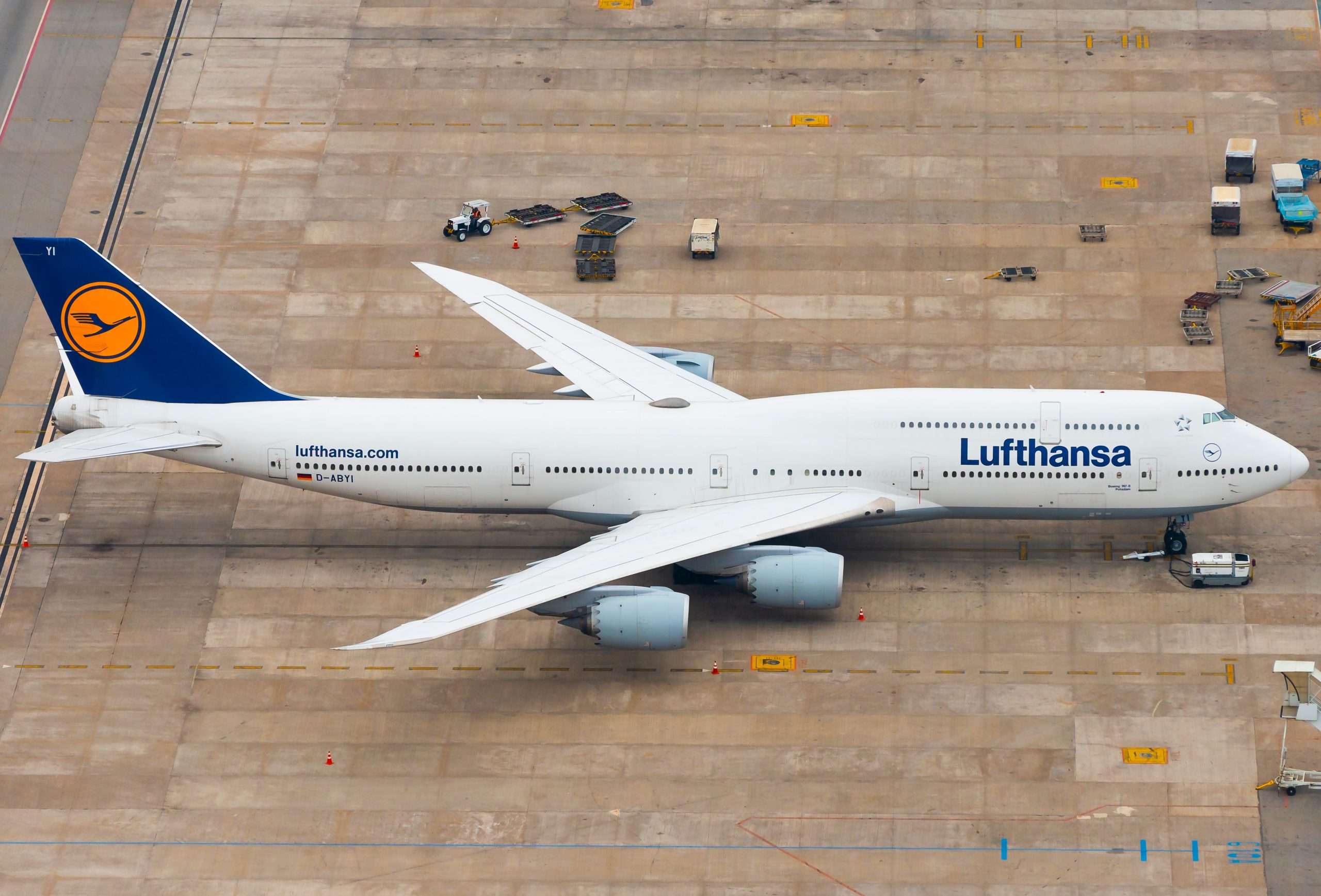
Lufthansa’s Boeing 747 fleet has experienced a rough end to June after transatlantic duties took a turn with two US-bound jets forced into unforeseen landings.
The aircraft were scheduled to operate regular service from Frankfurt; however, both experienced separate in-flight incidents within 24 hours of each other, forcing them to divert.
What Happened On The Lufthansa 747-8s
According to flight tracking data, the first incident occurred aboard a 747-8 on Friday, 26 June 2026, with Lufthansa flight LH418 operating from Frankfurt through to Washington Dulles.
Shortly after departure, the aircraft was forced to declare an emergency and make an unscheduled arrival in Cologne after a medical episode occurred on board. However, at the time of the medical episode, this plane was heavy on fuel.
With limited time and airspace to perform the fuel dumping, the Lufthansa jumbo jet therefore landed at a higher weight than typical or ideal; this was an overweight touchdown.
Then, just one day later, on Saturday, 27 June 2026, another Boeing 747-8 operating a service between Frankfurt and Newark Liberty was forced to return to its hub after the crew received an engine warning shortly after departure.
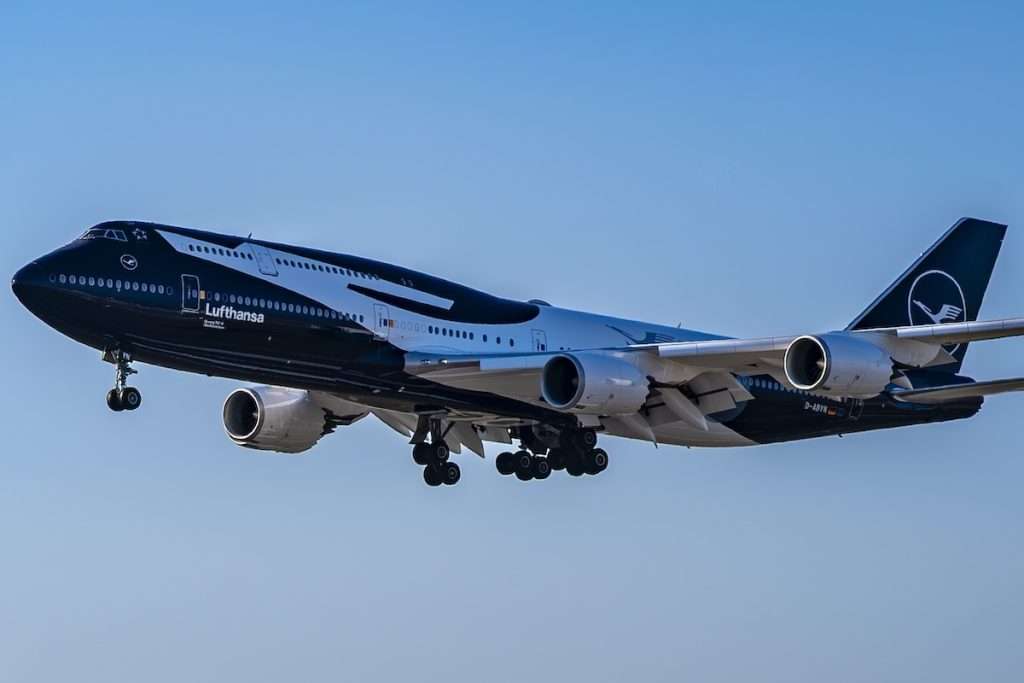
The fuel dumping in this case again wasn’t practical. It was the second time in the space of a day that a direct overweight landing was forced, resulting in the aircraft being well above the typical weight limit. Both planes, however, landed successfully and were able to taxi off the runway at the airport they arrived at, neither of which was their intended destination.
The Lufthansa Boeing 747-8s Involved
The Boeing 747-8 involved in the incident on the Frankfurt-Washington Dulles flight, which was diverted to Cologne, was registered as D-ABYC. This is a 747-830 delivered to the airline on 30 June 2012, and thus at 14.1 years of age following its first flight on 7 June 2012.
Lufthansa has configured the jet as F8C80W32Y244, following a reconfiguration from F8C92Y262, which was its configuration until 2014. The German carrier is naming it Sachsen, and the model is wearing the airline’s revised branding.
D-ABYP was the second Lufthansa 747-8 involved in the LH402 incident; it only reached Cologne before diverting back to Frankfurt. This model was delivered to the airline on 25 June 2014 and is therefore 12.1 years of age.
With the Line Number 1500, this Boeing 747 is the 1,500th built, a monumental landmark achievement for the program covered in history. This aircraft has been involved in an incident before, when on 12 November 2024, en route to Frankfurt, it encountered severe turbulence over the Atlantic Ocean, injuring 5 passengers and 6 cabin crew.
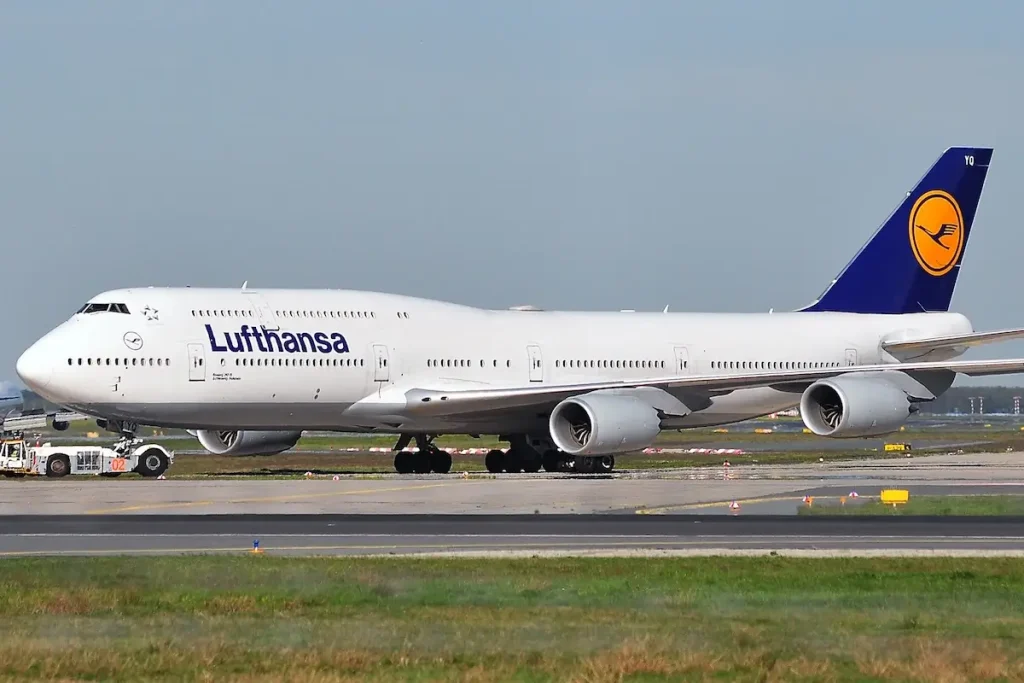
D-ABYP has been on the ground in Frankfurt since the incident. It was scheduled to operate from Frankfurt to Newark Liberty, but was diverted back to Frankfurt. It has not yet left the ground. This is with the engine warning, which carries greater follow-up severity than a medical emergency.
D-AYBC has returned to service after the diversion. It swiftly returned to Frankfurt and then departed on 278 June 2026 for Chicago as LH430, where, although at times delayed, it has continued to play catch-up and has been operating international flights to the United States.
What Is An Overweight Landing?
Overnight landings are rare in nature, but not impossible. With long-haul jets such as the 747-8 often departing with takeoff weights very close to their maximum, the fuel tanks are loaded to enable these long journeys.
Maximum landing weights are calculated based on the load remaining after the fuel is burned and the aircraft reaches its intended destination. In normal operations, that comes as the jet burns fuel on its way to wherever it’s headed. But if the crew are forced to declare an emergency for whatever reason, or divert during the flight, complications arise whether 3 hours in or 20 minutes in.
At times, during those emergency calls, the crew may have the opportunity to dump fuel or stay in the air long enough to drop their fuel and reduce their weight to make the landing acceptable. However, not in all cases is that possible.
With an overweight landing that then occurs without the precautions, it doesn’t make the aircraft unsafe or damaged; rather, it imposes higher loads on the landing gear, wing structure, and general wheel assemblies, meaning inspections are required after touchdown to check for any new stresses that have arisen.

ABOUT THE AUTHOR
Daniel Fowkes is a Melbourne-based aviation analyst and journalist with over a decade of industry experience. As founder of Dj’s Aviation, he delivers trusted analysis on aircraft, airline strategy and global aviation trends for djsaviation.net
Leave a Reply
Related Articles




Stay Informed
Get the latest aviation news, analysis and route updates delivered to your inbox.
We respect your privacy. Unsubscribe at any time.
Enjoyed this story?
Make us your go-to for aviation news
Add us as a preferred source on Google and see our latest stories first in Top Stories.
Add Us On Your News FeedRelated articles
· Airlines
Allegiant Air Buys Six More 737-8s From Boeing
Daniel Fowkes
26/10/2026
· Airlines
Emirates vs Qatar Airways: The Gulf Superhub Rivalry Compared
Bryan Shelmon
26/10/2026
· Airlines
Riyadh Air Is Moving Away From Riyadh
Daniel Fowkes
26/10/2026
· Airlines
Emirates Isn’t Worried At All
Daniel Fowkes
25/10/2026
I just hope that these occurrences will NOT happen on my upcoming 747-8 flight from Miami to Frankfurt on September 16th…I have NOT been on this aircraft for 20 years with no problem.