
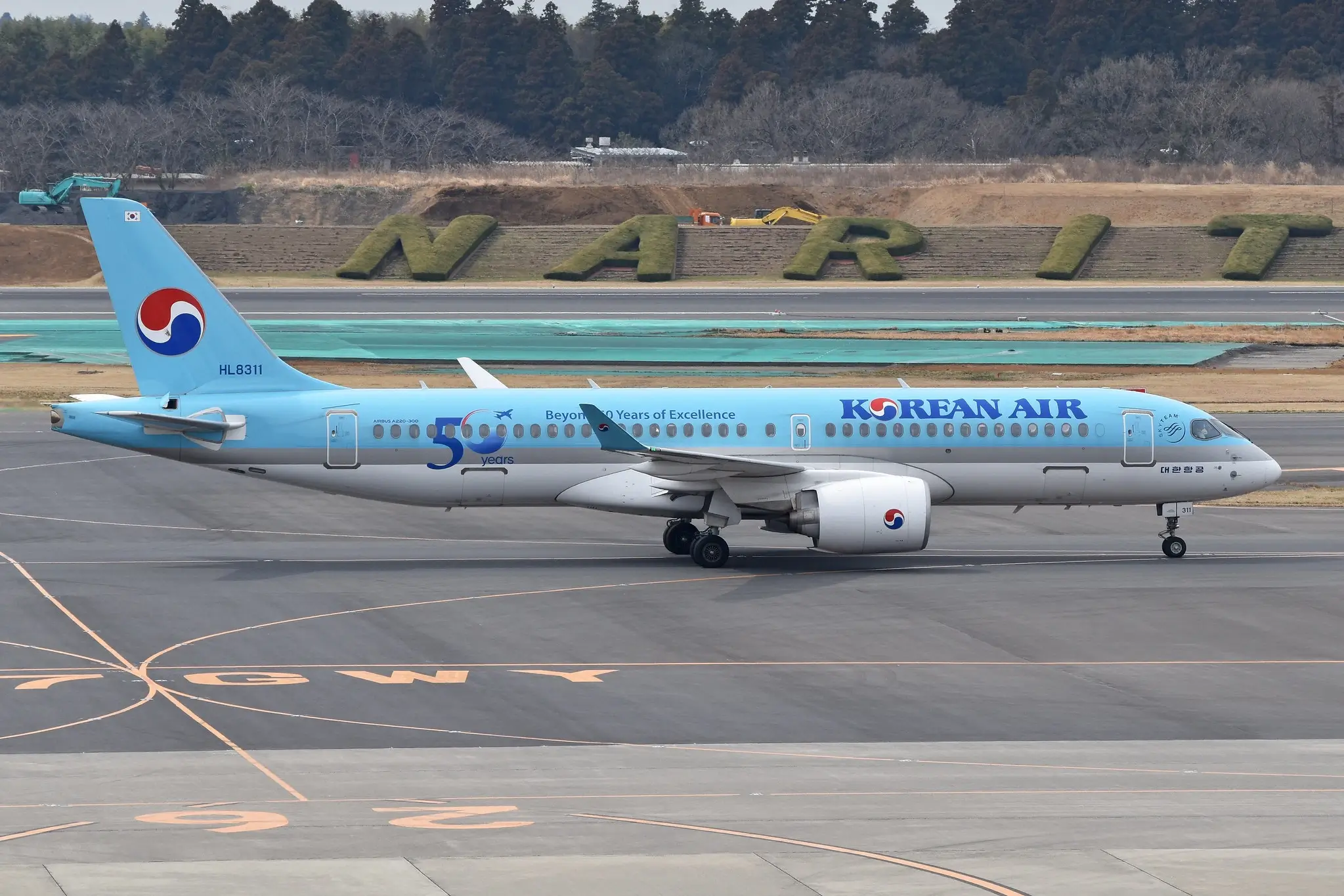
Korean Air has become the newest airline to discuss the impact of the global engine supply crisis with A220s parked.
The South Korean-based carrier isn’t the largest operator of the Airbus single-aisle jet, so its overall commitment to the series is minimal compared to others.
Fleet data indicates the carrier has welcomed 10 A220-300s to its fleet. These planes average an age of 6.9 years, with the bulk of the deliveries occurring in 2017/2018 and one in 2019.
However, four of these 10 planes are parked, meaning that 40% of the Airbus A220 fleet is grounded due to engine problems.
Unfortunately, Korean Air will feel the impact, with customers seeing cancellations and network reshuffling as the airline attempts to battle the lack of available capacity.
The A220 stars on the airline’s domestic network, Korean Air, now say that domestic flights will be reduced across the busy summer season as the carrier finds ways to cope with 40% of its fleet not being active.
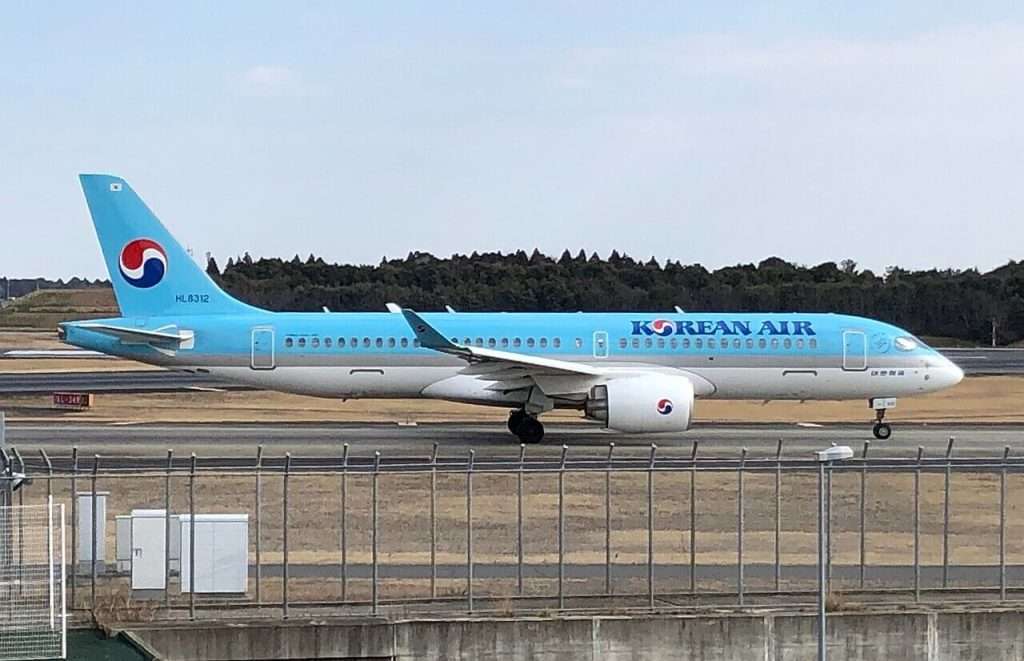
While only operating a modest amount of the Airbus A220, Korean Air still seemingly feels the type has a use across its network. However, it remains challenging to justify the type’s presence if engine woes continue to hurt their operations in the long term.
No date has been publicly provided for when the A220s are expected to return to service. This lack of a timeframe aligns with what most airlines are dealing with and, therefore, presents concerns about amending schedules to cope with the capacity loss.
Therefore, Korean Air must communicate closely with engine suppliers and Airbus to better understand the supply chain woes and when it can return the grounded units to service.
A Global Airbus A220 Problem
Korean Air’s grounding of Airbus A220s has seen it join a long list of global airlines affected by the ongoing engine crisis, with the regional jet produced by the planemaker at the forefront.
However, the A220 is not alone in experiencing these woes. Engine complications even delay the delivery of fresh, factory-produced planes destined for airlines, from the A320neo family upwards to the 787.
The engine crisis has spurred challenges in maintaining active flying with the aircraft. Each airline’s circumstances have resulted in a varying impact on day-to-day flying.

Some airlines have struggled to secure replacement engines as their existing ones undergo maintenance. These spares are essential to keeping the aircraft without its original units flying at some capacity.
On the other hand, airlines have also experienced lengthy visits for their engines in maintenance facilities with work running overtime considerably, thus hindering planned re-entry into service.
A lack of spare parts, resources, and maintenance backlogs, combined with damaged supply chains, have left airlines such as Korean Air with no choice but to temporarily ground some A220s.

ABOUT THE AUTHOR
Daniel Fowkes is a Melbourne-based aviation analyst and journalist with over a decade of industry experience. As founder of Dj’s Aviation, he delivers trusted analysis on aircraft, airline strategy and global aviation trends for djsaviation.net
Leave a Reply
Related Articles




Stay Informed
Get the latest aviation news, analysis and route updates delivered to your inbox.
We respect your privacy. Unsubscribe at any time.
Enjoyed this story?
Make us your go-to for aviation news
Add us as a preferred source on Google and see our latest stories first in Top Stories.
Add Us On Your News Feed
These are American engines, take note Donald Trump not everything is rosy in American manufacturing.
Is Qantas also being affected by this
You never mentioned what engines are used?