

The Boeing 797, often called the NMA, is a prospective new middle-of-the-market airliner that would reshape the American planemaker’s commercial aircraft offering.
The proposed variant was long considered a game changer. The 797 was designed as a clean sheet to reshape how the middle of the market sector, often referred to as MoM, would move in future decades.
Furthermore, the aircraft would’ve likely answered airlines’ sector-specific requirements for growth and replacement efforts.
So, would the prospective 797 have been able to fill the gap left by the iconic but also outgoing 757? What was the purpose of the NMA, why wasn’t it launched, and what’s next?
Early Stages Of The 797
The 797 drew significant attention to Boeing throughout the 2010s, which was considered a critical point for the planemaker to proceed with a new plane.
If released, the aircraft would have slotted between the 737 MAX and 787 and thus provided the perfect bridge between the popular narrow-body and wide-body series.
While details were scarce, considering the aircraft was never launched, analysts predicted that it would be able to seat a modest capacity and slot between the two aforementioned variants, with range capabilities between 4,500 and 5,000 nautical miles.
In essence, the 797 would’ve extended older outgoing aircraft types by implementing next-generation technologies. The hope was that the aircraft would be able to meet growing demand across many different route segments and thus continue to offer the flexibility that airlines desired.
The 797 would’ve been a clean sheet. At the same time, no doubt incorporating technologies seen on other aircraft, updated engines, materials, avionics, and so much more would’ve all been implemented to provide the best possible platform to airlines.

While not launched, this aircraft attracted significant interest. Several companies, from Delta to major leasing establishments, made their calls for such an aircraft very public, but their calls went unanswered.
Why Talks Of A 797 Emerged At Boeing
The 757 has been a mainstay in the industry since its introduction several decades ago. Proving itself to be a workhorse, the plane has significantly improved the middle of the market sector.
However, Boeing ceased production of the 757 in 2004 due to declining orders and the realisation that the program was ending. There were visible gaps as existing units began to show signs of age, and production ceased with no successor.
Throughout the late 2010s, that gap became a focal point for industry analysts and airlines. The question remained: how was the 757 going to be replaced, and were current offerings worthy enough to act as a replacement?
The options available were the larger 787 and narrowbodies like the A321neo or the emerging 737 MAX through the high-capacity 737-10. However, the consensus was these planes still weren’t deemed the optimal replacement, leading to many 757 customers making their cases known.
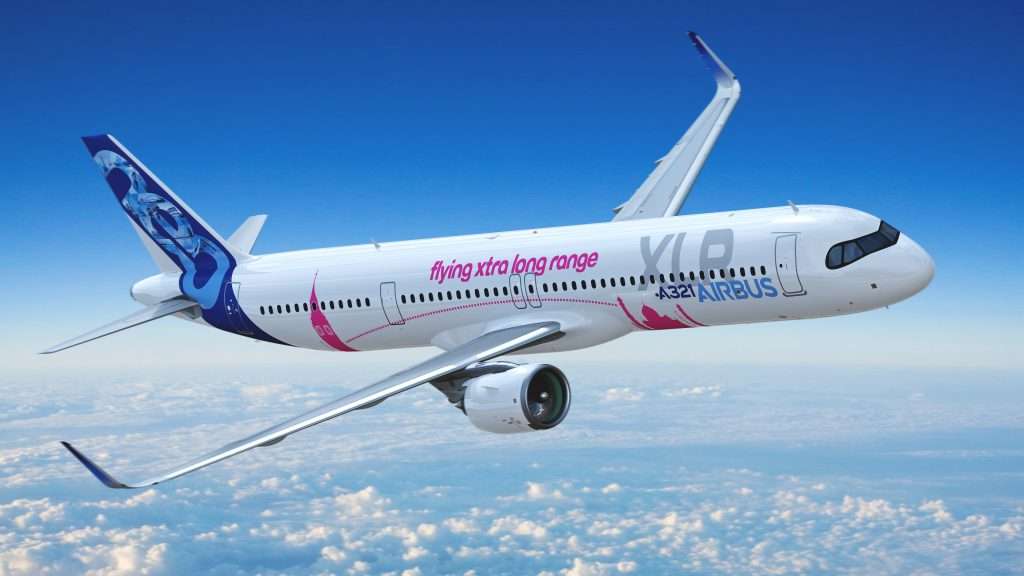
Thanks to Boeing’s misfortunes in recent years, Airbus has been able to develop the A321neo further through the launch of the XLR, which has looked to target some 757 routes. However, even with that being said, it’s still widely not considered the perfect replacement for some, but not all.
The growing pressure from airlines and Airbus’ aggressive moves prompted the exploration of a prospective NMA. However, it wouldn’t be easy.
The Important Middle Of The Market
Feasibility studies must be conducted to understand whether enough demand would be present for a program to move ahead, as this requires a substantial investment to facilitate the launch of a new commercial airliner.
In the 2010s, more airlines were looking to expand their global route network. Instead of focusing strictly on hubs, they wanted to fly between unserved city pairings with a modest, flexible aircraft type.
Airbus saw this demand early and aggressively marketed the A321XLR, which would launch in 2019 as an ultra-long-range variant of its A321neo. This launch was met with hundreds of orders in the first week, and the plane offered fantastic range and passenger capabilities while ensuring fleet commonality.
While not marketed as a 757 replacement, the A321XLR, with its advancements, certainly became a popular choice for airlines seeking to replace aging 757s. Icelandair is revamping its fleet and has selected the A321LR and XLR to replace those 757s.
This market remains lucrative because it perfectly combines regional dominance and long-haul growth, which can be enticing for a wide array of established and emerging airlines.
The development of the 757 and a prospective replacement, even seen through Airbus narrowbodies, has meant airlines haven’t had to use widebodies for smaller international markets.
Nowadays, flexibility is king, and airlines love what flexible aircraft can do for their day-to-day operations, including swapping over planes and optimising their route network.
The 797 A Replacement To The 757?
The 797’s speculated but never confirmed specifications suggested it would easily fill the void of the 757. Furthermore, with other technological advancements, its cost savings would have also been favourable for airlines.
Unlike repurposed narrowbodies or downsized widebodies, the 797 was envisioned as a purpose-built middle-of-the-market and clean-sheet aircraft.
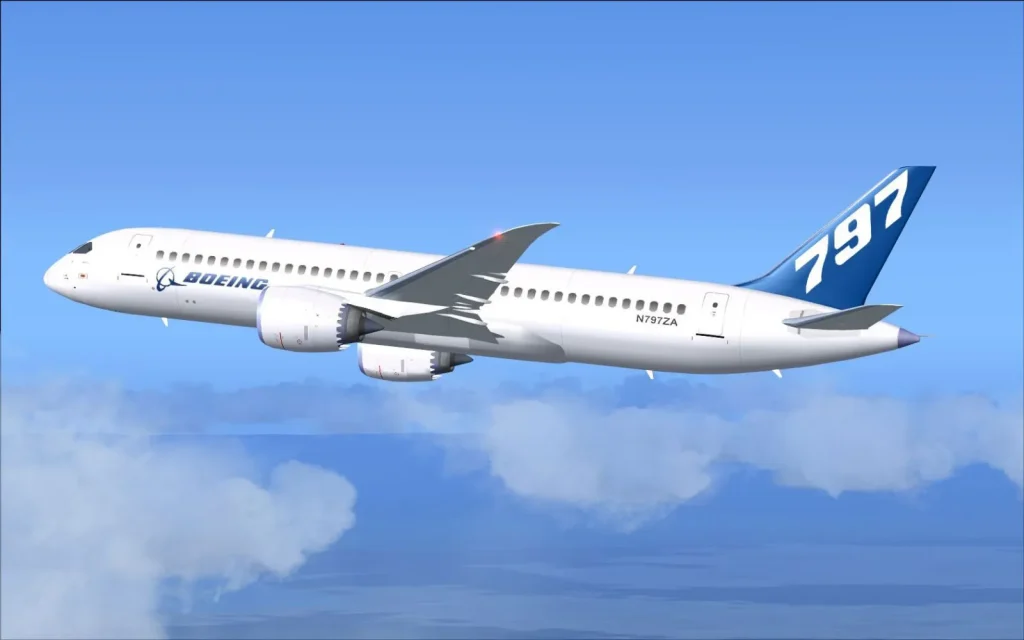
The aircraft would’ve easily provided range to handle transatlantic flights from the East Coast of the United States deep into Europe while also having the means to fly into challenging locations or even domestic in-demand services.
However, much of the 797’s talk came at a challenging time for Boeing, and in the end, the focus on a new commercial airliner wasn’t necessarily at the forefront.
But Why No Boeing 797 Launch?
Several factors contributed to Boeing’s decision not to proceed with the 797 project, which had so much promise.
First, there was the 737 MAX crisis, which unfolded in 2018 and 2019. These crashes and their ramifications consumed much of Boeing’s resources and directed attention away from new endeavours.
While it’s impossible to say if the disaster that has plagued Boeing for the past seven years would not have occurred, there were other complications.
At the beginning of 2020, amid quality challenges to the 737 MAX and other aircraft, travel demand became non-existent due to the COVID-19 global pandemic.
Many airlines postponed aircraft orders and focused on attempting to survive rather than an order, and when factoring in Boeing’s situation, it seemed way too complicated.
Future Outlook For 757 Replacements
Today, airlines seeking to replace the 757 have many options, but for some airlines, not all are perfect.
Arguably, the development of Airbus A321XLR has become the closest 757 successors. However, its capabilities are still not what some would be after; airlines must now make compromises.
Boeing has confirmed that its finances are currently far from optimal, and launching a new commercial aircraft is impossible, which would be a massive mistake.
As a result, while work will continue to study what will be next for the manufacturer, which will likely need to be a clean sheet, this will be some time away.
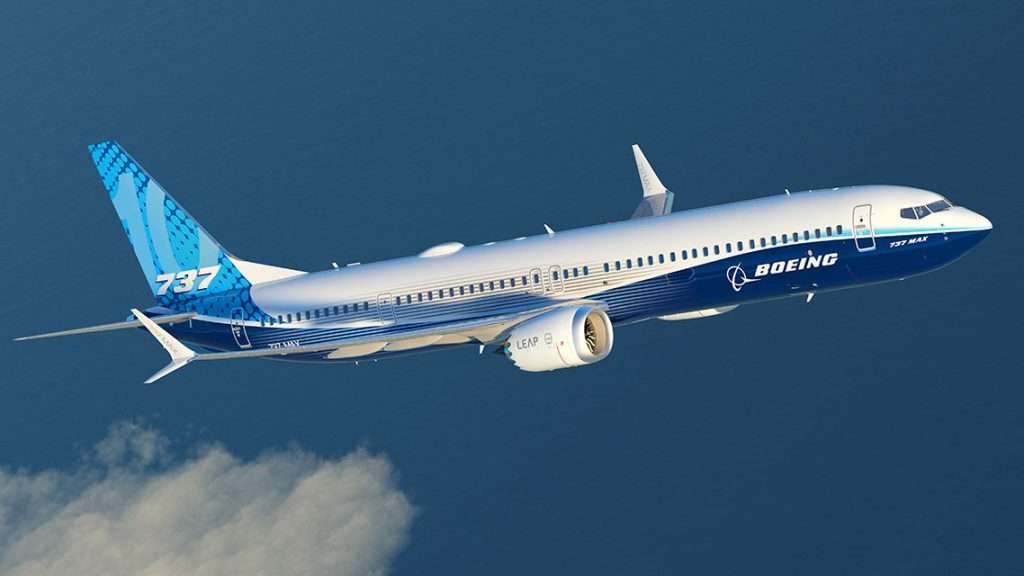
Boeing offers the 737-10, uncertified and the largest member of the MAX series, and the 787-8. Currently, these are the closest offerings from the planemaker to combat airlines’ desires for a 757.
Complications have highlighted that Boeing won’t offer a replacement for some time, and many have had to accept this.
Obviously, things could’ve been very different, and at some point when Boeing stabilises, they’ll look to jump back into this market, but for now, their priorities lie elsewhere.
Was cancelling the 797 a missed opportunity or a necessary decision, considering the major struggles Boeing has faced recently?

ABOUT THE AUTHOR
Daniel Fowkes is a Melbourne-based aviation analyst and journalist with over a decade of industry experience. As founder of Dj’s Aviation, he delivers trusted analysis on aircraft, airline strategy and global aviation trends for djsaviation.net
Leave a Reply
Related Articles




Stay Informed
Get the latest aviation news, analysis and route updates delivered to your inbox.
We respect your privacy. Unsubscribe at any time.
Enjoyed this story?
Make us your go-to for aviation news
Add us as a preferred source on Google and see our latest stories first in Top Stories.
Add Us On Your News Feed
Boeing should have put the 797 into production when the 757 was discontinued.
It is very questionable if and when Boeing will be able to bring out a new aircraft. Most probably not before the mid 2030’s with deliveries in the 2040’s. And that only if they survive!
Why not 757-700, 800 & 757-900?
NEO
Old design, old avionics, you can’t just put a neo engine on a old airframe.
I always travel on airbus rather than boeing as there so much modern.
The only consideration for Boeing right now is survival. Both Airbus and Boeing have a significant new challenger in China which is a lot closer than some observers think and it would be foolish to think otherwise. The next project looks like being a blended wing/body design and this is where attention and energy should be focused.
For long haul, say flights over 5 hours, from a passenger viewpoint, to fly in a wide body but airlines never ask passengers ….
A narrow body with 5 abreast seating at a slightly increased fare would be a nice option, wouldn’t it?
I’d say hell no!!! Boeing is terrible now I still can’t believe dumb ass American hasn’t canceled all their 787 orders and gone to airbus A350… Boeing is a joke now! Until they can show they can make a good product airlines should just go to airbus.. still can’t believe they made that joke of a 737 pos and didn’t tell ANYONE about new system just cause they didn’t want anyone going to training…. Are you kidding me!!