
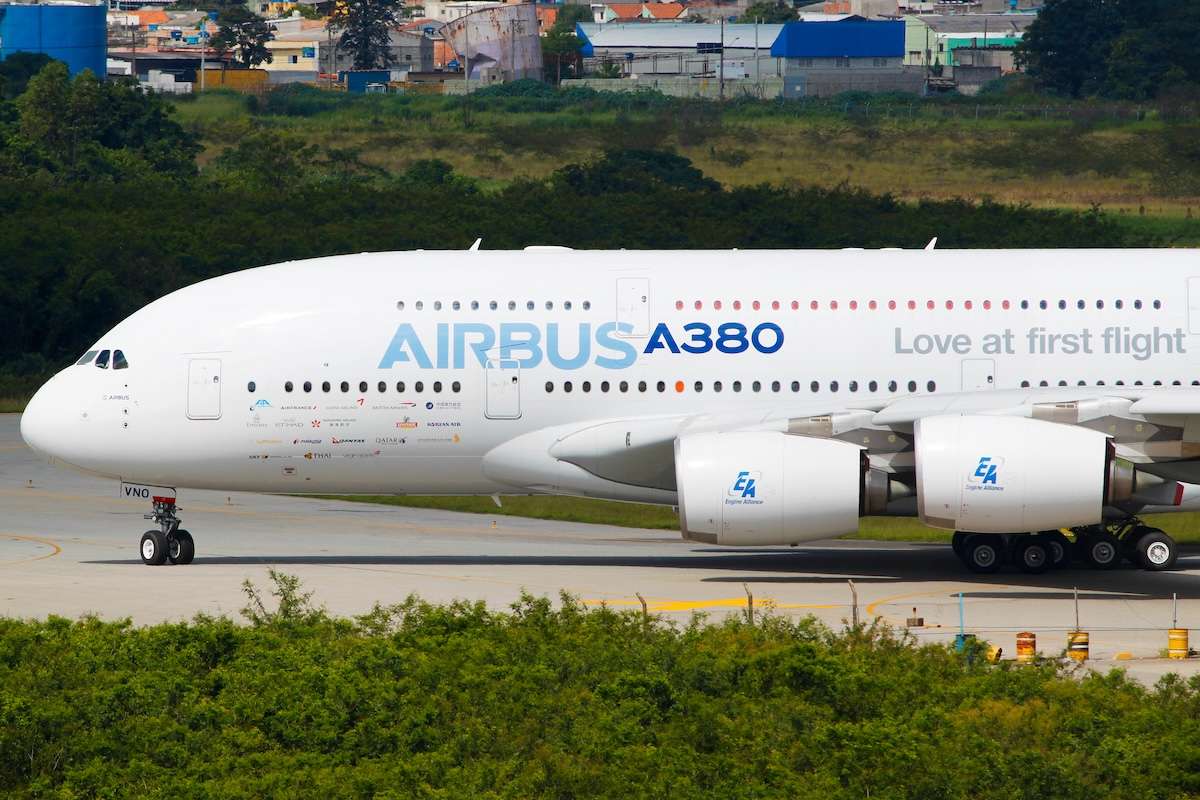
As a newcomer to the commercial airline industry in India, Kingfisher wanted to go head-to-head with major airlines by using the Airbus A380, a move that would ultimately backfire and become one of the leading reasons the airline failed.
All other airlines in India passed on the Airbus A380. But Kingfisher and its billionaire founder, Vijay Mallya, were bold enough to make it happen. Kingfisher is a gone-but-not-forgotten airline whose big ambitions failed to establish it as a world-class luxury airline.
With the Airbus A380 era coming to a close, it’s time to see why it was a pivotal moment in Kingfisher Airlines’ downfall.
Kingfishers Airbus A380 Ambition & Order
If you’ve never heard of Kingfisher Airlines, there’s a good reason. It was an India-based luxury airline that launched in 2005 but ceased operations by 2012. It was founded by the eccentric billionaire Vijay Mallya, who established the airline under the same brand as Kingfisher Beer, India’s most popular beer. Success in one industry never guarantees success in another, but Kingfisher’s ambitions would tell you otherwise.
After its launch in 2005, it took only 3 years to expand its fleet from 0 to 70 aircraft, thanks to the acquisition of Air Deccan (rebranded as Kingfisher Red) in 2008. As this purchase helped catapult Kingfisher to one of the largest domestic operators in India, with nearly 25% market share, its sights were set on the international market.
Enter the Airbus A380. This superjumbo aircraft was set to better connect India to the world, with international routes to major global airport hubs. Kingfisher became the only Indian airline to order the A380 in 2005, shortly after its launch, with a total of 10 aircraft to be delivered by 2011.

The A380 was the dream aircraft for Kingfisher. It planned to bring its opulent branding to the superjumbo jet with lavish amenities, such as in-flight entertainment in every class, a business class with a full-service bar and in-flight ironing service, and to live up to its slogan of “Fly the Good Times.”
Those good times would soon come to a halt before the first A380 was even delivered to Kingfisher.
Why The Airbus A380 Looked Attractive For India
The Airbus A380 is the largest passenger aircraft in the world. And while it may seem like an ego boost to billionaire CEO Mallya and his new airline, it actually had credible reasons for being selected by the India-based airline.
India was the perfect market for the A380 during the early 2000s. Demand for air travel rapidly expanded in the country, which has more than 1 billion residents.
As a result, many airports in India experienced substantial congestion. Both with aircraft and passengers. The massive A380 could accommodate more than 500 passengers, allowing more travellers per flight. It would also benefit airports by reducing the number of aircraft occupying the gates.
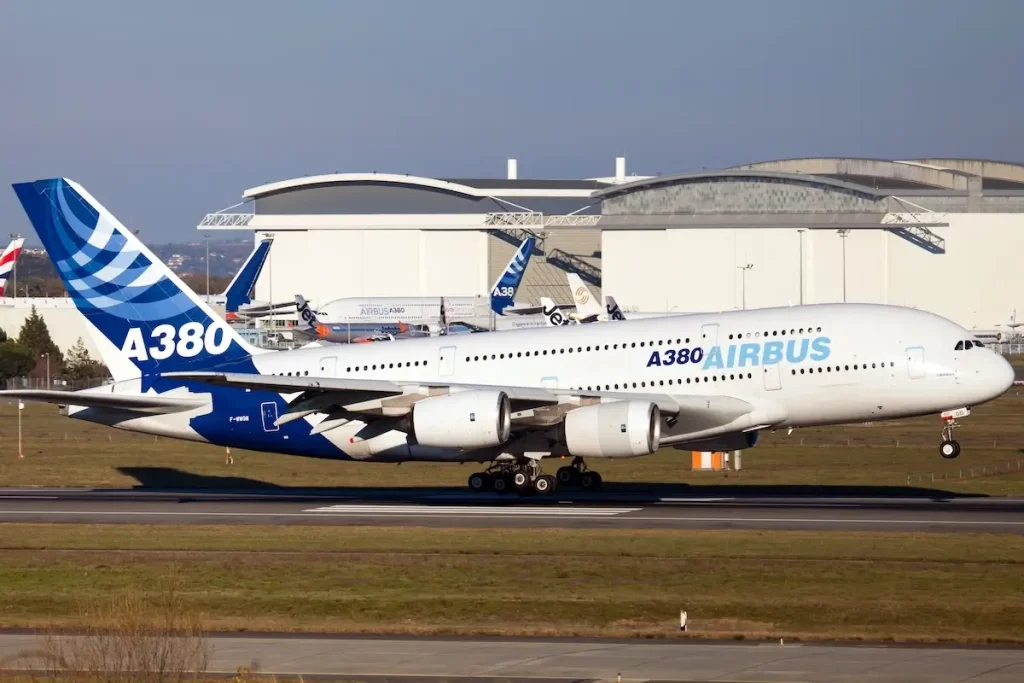
India’s airport networks were also optimal for operating the A380. Due to its size, operating the aircraft is most efficient when it can utilise a few main hubs. These locations would have sufficient demand to fill the aircraft and have personnel on-site for maintenance. India had four airport hubs with both demand and appropriate gate sizes to accommodate the aircraft: Mumbai (BOM), Delhi (DEL), Bengaluru (BLR), and Hyderabad (HYD).
Many of its major international flights already operate from these locations. Indian travellers demonstrated demand for popular long-haul flights, with established direct routes between Delhi and San Francisco, Delhi and New York, Mumbai and London, and Mumbai and Sydney. Passengers would’ve loved travelling these 10+ hour routes on an A380 outfitted with all of Kingfisher’s luxuries.
Order Collapse, Cancellations, and Woes
For every reason in favour of bringing the A380 to India, there were hundreds of reasons why it only looked attractive on paper. The reality was evident across the global market, as Kingfisher and other airlines cancelled their orders as quickly as they placed them.
It was clear that the A380 wouldn’t work in India, despite the positive signs. Although India had substantial demand for an aircraft of this size, most of it was for domestic flights. This reduced the need for a superjumbo optimised for long-haul international flights.
The A380’s size made it infeasible for smaller regional airports, and its high operating costs meant it needed to operate at 75% capacity just to break even, which domestic routes could not achieve.
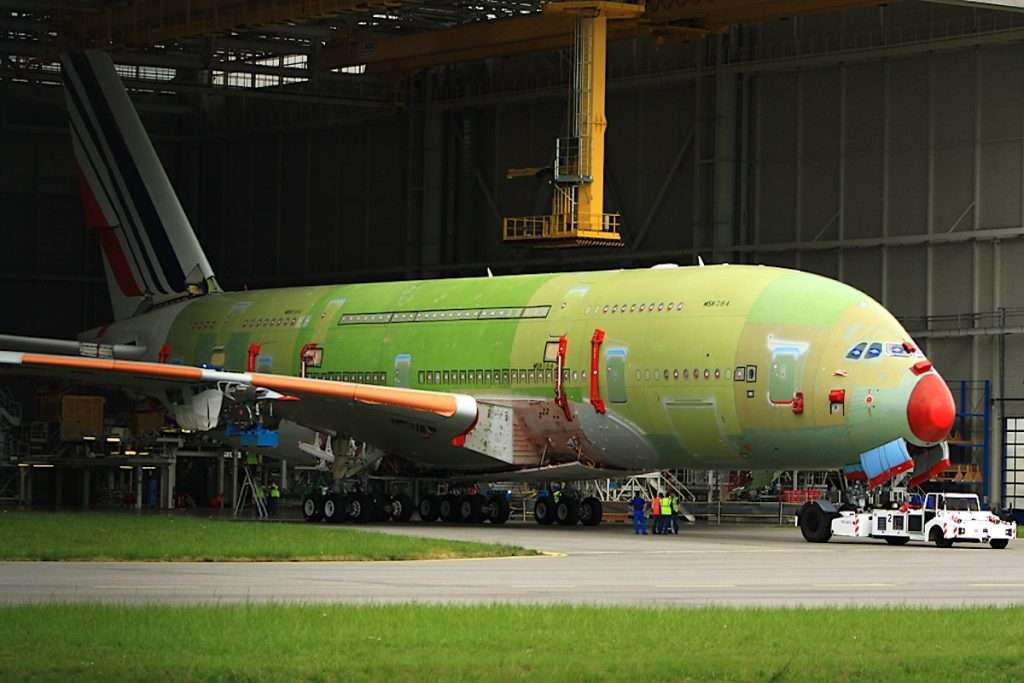
Kingfisher’s plans to expand India’s international travel were also doomed from the moment it placed an order for the A380. Federal regulations in India require new airlines to operate domestically for at least 5 years and to have a fleet of 70 aircraft before they can operate international routes.
Obtaining the world’s largest aircraft also comes with an equally massive price tag. The A380 held the title as the most expensive commercial aircraft. For an emerging airline like Kingfisher, the financial commitments to purchase and operate the A380 were much more than it could manage.
What Then Happened To Kingfisher?
Today, Kingfisher Airlines is no longer operating. Its fate was finally sealed in 2012, just 7 years after its establishment. The financial strains caused by the A380 order were just the beginning. The airline was still awaiting delivery when the global financial crisis of 2008 hit, shortly after it had acquired Air Deccan.
Kingfisher’s ambition to be a premium luxury airline was out of touch with traveller expectations, as the budget Kingfisher Red was preferred over the lavish business-class flights on Kingfisher Airlines.
Low demand and expensive aircraft purchases early in its existence left the airline unable to turn a profit. This led to its inability to meet its financial obligations and to default on all of its aircraft orders. It was revealed that the CEO, Mallya, owed more than US$1.2 billion to 17 Indian banks and later fled to the UK.
Although its ambition is honourable, Kingfisher is an excellent example of how not to run an airline. Staking its main business model on an aircraft ill-suited to the very market it operates in is a recipe for disaster. At least the Kingfisher beer recipe remains a top-seller in India

ABOUT THE AUTHOR
Bryan Shelmon is an aviation journalist with 10 years of experience covering commercial aviation, private aviation, airports, aircraft and wider industry news. Based in the Detroit metropolitan area, he has contributed to publications including Lonely Planet, Matador Network and Visit Detroit.
Related Articles




Stay Informed
Get the latest aviation news, analysis and route updates delivered to your inbox.
We respect your privacy. Unsubscribe at any time.
Enjoyed this story?
Make us your go-to for aviation news
Add us as a preferred source on Google and see our latest stories first in Top Stories.
Add Us On Your News FeedRelated articles
· Airlines
Allegiant Air Buys Six More 737-8s From Boeing
Daniel Fowkes
26/10/2026
· Airlines
Emirates vs Qatar Airways: The Gulf Superhub Rivalry Compared
Bryan Shelmon
26/10/2026
· Airlines
Riyadh Air Is Moving Away From Riyadh
Daniel Fowkes
26/10/2026
· Airlines
Emirates Isn’t Worried At All
Daniel Fowkes
25/10/2026