

The Airbus A321XLR has celebrated a historic milestone as part of continued global adoption.
The first model in the Asia-Pacific region commenced scheduled passenger service on 25 September 2025, following a lengthy crew training flight.
Qantas, the flag-carrier of Australia, is the first operator in the region of the state-of-the-art single-aisle jet, which comes equipped with truckloads of more efficiency and range than previous models.
Additionally, this represents a landmark moment for Airbus, extending beyond the Asia-Pacific region, with Qantas being the fourth airline to fly the aircraft globally, as the model continues to enter service with more companies gradually.
Two aircraft have entered commercial service, VH-OGA, named Great Ocean Road, and VH-OGB, named Outback Way, marking the first two units delivered to the carrier.
As part of the launch, the aircraft commenced service between Sydney and Melbourne, as well as between Sydney and Perth.
These Airbus A321XLRs are helping to replace the Boeing 737 fleet; the XLR models deliver improved fuel efficiency per seat, resulting in reduced carbon emissions and overall better performance.
Furthermore, the XLR features a wider and longer cabin, allowing for wider seats, higher ceilings, and larger windows. It also comes with free and fast Wi-Fi, as well as 60% more space for bags than the outgoing 737s.

The A321XLR generally represents a significant milestone in the renewal of the Group’s narrowbody program, given the considerable importance placed on it over recent times.
The CEO of the carrier stated that investing in the next generation of aircraft is also an investment in the customer base, demonstrating that the airline has its priorities in place for the future.
Increasing customer satisfaction levels has been a massive part of this process, with the airline confirming that it has also seen an increase in its approval rating. This increase follows years of struggles across the business, and many customers have voiced their displeasure.
The Qantas A321XLR In Depth.
For Qantas, these A321XLRs are five metres longer than the 737-800, and with that, they can seat 197 passengers, comprising 20 in business and 177 in economy.
The capacity increase also sees a 13% jump in total seat capacity without the requirement to limit space between seats, and there’s then a susbequent 66% rise in business seats as well.
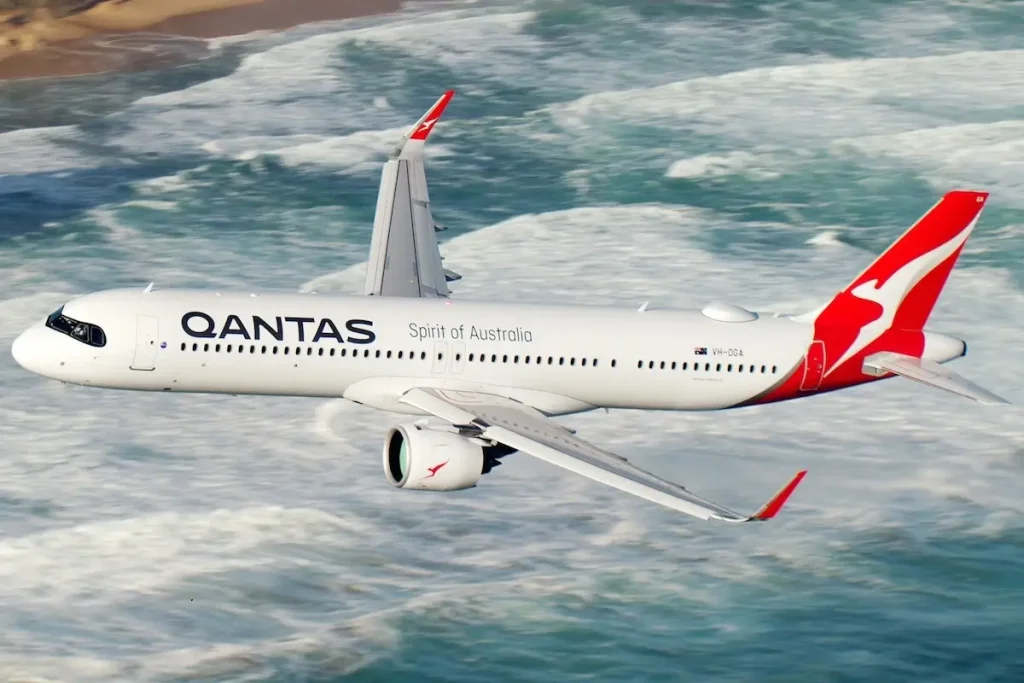
The range is the real killer part for Qantas’ operation with the aircraft, as it flies to around 8,700km. The aircraft has a range of 3,000km more than the 737-800.
With such a significant increase in overall range, the A321XLR will no longer be limited to short domestic services. At the same time, it’ll undoubtedly be present here; some XLRs with lie-flat seats will also have the opportunity to fly on short-haul international services.

ABOUT THE AUTHOR
Daniel Fowkes is a Melbourne-based aviation analyst and journalist with over a decade of industry experience. As founder of Dj’s Aviation, he delivers trusted analysis on aircraft, airline strategy and global aviation trends for djsaviation.net
Related Articles




Stay Informed
Get the latest aviation news, analysis and route updates delivered to your inbox.
We respect your privacy. Unsubscribe at any time.
Enjoyed this story?
Make us your go-to for aviation news
Add us as a preferred source on Google and see our latest stories first in Top Stories.
Add Us On Your News Feed