

Airbus has completed an exciting delivery of its A321XLR to one of Uzbekistan’s leading airlines.
Qanot Sharq has taken delivery of its four A321XLRs; this is the first of four units that’ll join the fleet under an agreement with Air Lease Corporation.
The debut of this aircraft with this airline also represents a symbolic moment for Central Asia, with Qanot Sharq becoming the first airline in this region to fly the A321XLR.
For the Uzbekistan carrier, the addition of the A321XLR will be huge for expanding its international route network, enabling previously unfeasible range-extending routes.
Qanot Sharq is targeting the deployment of this aircraft to markets across Asia, with Sanya and Busan as initial targets; however, it eyes further than that and, in the opposite direction, the airline eyes New York City via Budapest, while also mentioning Asia-Pacific and broader Europe connectivity.
With the enhanced range comes the realisation that this aircraft is also part of a fundamental new era for the business, with heightened focus on the renewal of the active fleet. With that comes the neccesary addition of next-generation jets such as the A321XLR.

Qanot Sharq has configured the new plane to seat 190 passengers in a two-class layout. At the front of the aircraft, there are 16 full-flat business-class seats, followed by 174 passengers in economy class.
Beyond the seating configuration, the critical addition of the Airbus Airspace Cabin ensures overhead bins are 60% larger than on previous-generation aircraft, and there’s in-seat connectivity for all passengers, along with the latest lighting systems to enhance the travel experience.
Why Airlines Love The A321XLR
In the first week, the Airbus A321XLR launched, making quite the splash in the industry with hundreds of orders placed for what is still considered game-changing for airlines.
Firstly, it’s the extra range, as the name suggests, that has made this such an important aircraft for airlines in just the recent period since its launch, with a hefty range of up to 4,700 nautical miles, that’s 15% more than the A321LR, which was already a jump over the base model too.

With a range such as that of the A321XLR, it can be deployed to secondary city pairings that in the past may not have received the connectivity they once needed because airlines’ current fleets made these routes unviable.
For airlines that acquire the A321XLR, this means the new routes launched will come with lower trip costs, and for airlines that have taken delivery of the jet or are expecting to in the short term, the planned routes absolutely showcase what the jet offers.
Next, it’s the commonality that can be offered for airlines; the A320neo family has a strong industry presence, and the XLR, being a derivative of the A321neo. Part of the broader family, it allows for airlines to share commonality, meaning if they already fly a model in the series, the addition of the XLR does not overcomplicate matters in the slightest.
In some cases, as well, for example, visible through American Airlines, not only are they able to leverage the A321XLr to expand their single-aisle flying, but additionally focus on offering a single-aisle jet across transatlantic markets with a heightened focus on premium travel with lie-flat seats, premium economy, and such, boosting revenue.
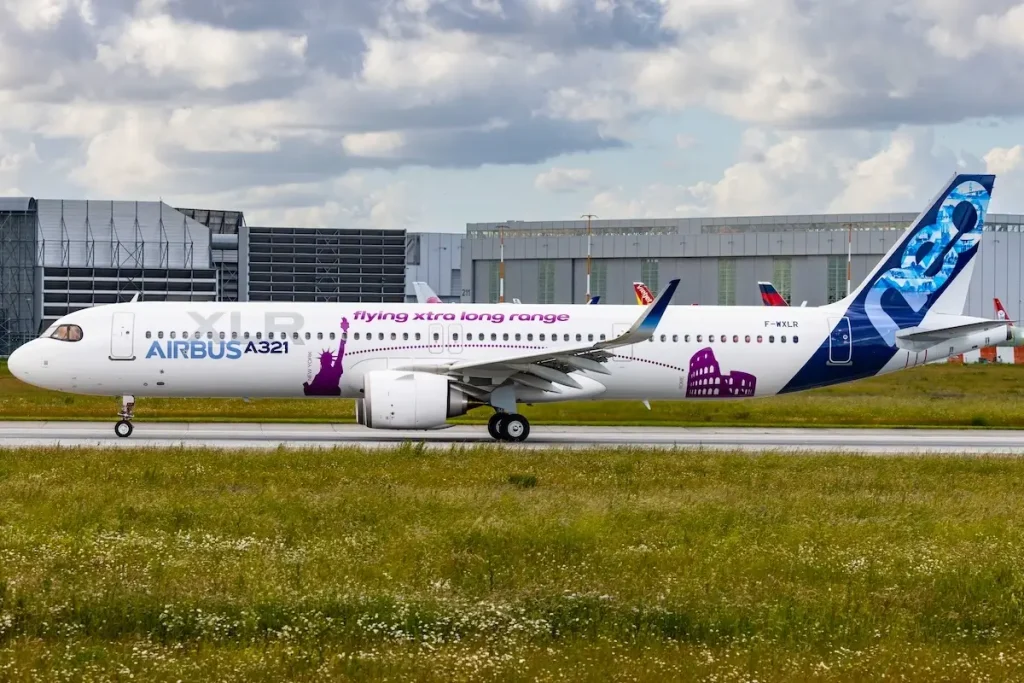
All this is not even considering how airlines love the jet for its capacity increases, the fact that it remains a single-aisle yet still has a sizeable range, and the economics of the plane, from efficiency to crew requirements, utilisation rates, and more.

ABOUT THE AUTHOR
Daniel Fowkes is a Melbourne-based aviation analyst and journalist with over a decade of industry experience. As founder of Dj’s Aviation, he delivers trusted analysis on aircraft, airline strategy and global aviation trends for djsaviation.net
Related Articles




Stay Informed
Get the latest aviation news, analysis and route updates delivered to your inbox.
We respect your privacy. Unsubscribe at any time.
Enjoyed this story?
Make us your go-to for aviation news
Add us as a preferred source on Google and see our latest stories first in Top Stories.
Add Us On Your News Feed