

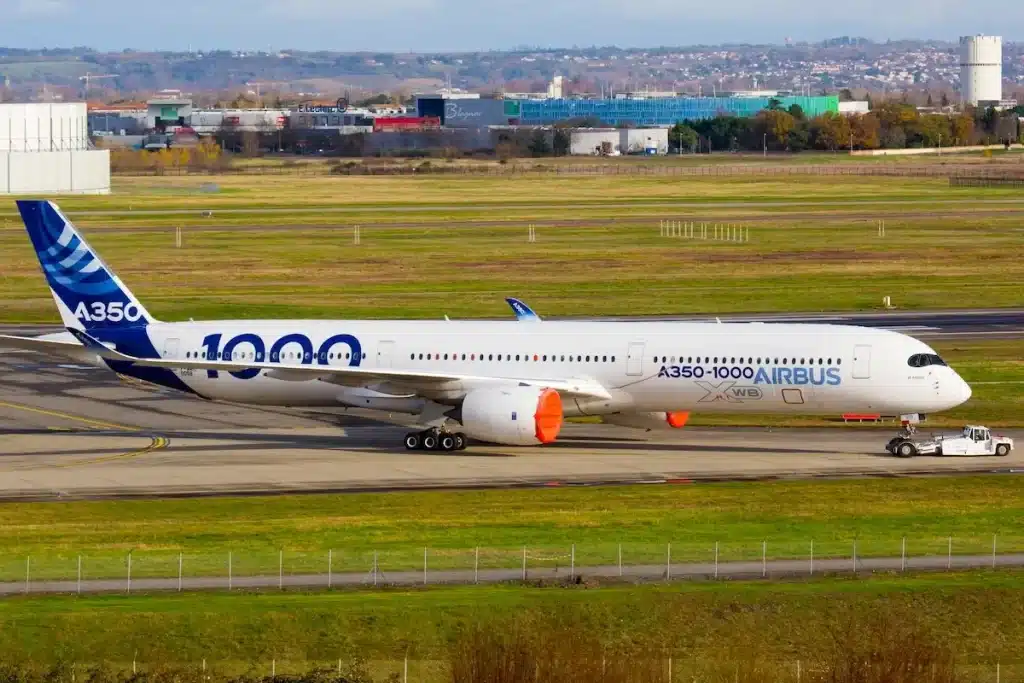
Emirates’ relationship with the high-capacity Airbus A350-1000 has been anything but smooth sailing for nearly two decades.
From an order cancellation to public commentary about engines failing to meet standards, it has been a rocky road for the Dubai-based carrier.
But, what has happened, why were orders cancelled, why were there new order rumours, why are the engines of concern and what’s next?
Emirates’ First Airbus A350-1000 Order
Despite Emirates having expressed problems with the A350-1000 over the past few years, it was initially part of the airline’s fleet.
However, not just with the Airbus A50 but also with other commercial aircraft orders placed by the Dubai-based carrier, there has been a tendency for orders to be scrapped or adjusted, and that’s what happened with the A350-1000 deal.

Emirates had initially committed to the A350-1000 as part of an early order; however, when Airbus redesigned the A350-1000, Clark was highly critical of the changes and what they would mean for its operations and the platform itself.
With 70 orders for the Airbus A350s expected to be delivered in the mid-2010s initially and including deals for the A350-1000 as well, Emirates moved to cancel the contract entirely, believing that the product was good on paper, struggling, and Airbus also facing unknowns with the program over several refinements in its at the time still early tenure in the industry.
Problems With The Engines
One of the long-standing obstacles to a possible A350-1000 acquisition at Emirates again was commentary about the type’s engines.
Labelled as defective on more than one occasion, the President of the airline, Tim Clark, said, even at the Dubai Airshow 2023, that a move to order the plane wasn’t going to happen because the XWB-97, the exclusive engine, wasn’t at the level the company wanted.

In essence, Clark said that if the engine aboard the A350-1000 produced by Rolls-Royce did what they wanted as an airline, something that Airbus and Rolls-Royce recognise, then they would begin reassessing their future fleet and include the model in that future.
With the cycles on the engines reported in 2023 being a quarter of what Emirates wants to perform, the jet became an unattractive option for the business, even though, on paper, its metrics remain attractive. If this were revised, it would have a place in the airline’s operation.
The XWB-97 engine, as Clark said, needs to stay on the wing for a minimum of 2,000 to 2,5000 cycles. If it were able to do that, the maintenance cost per hour would be something Emirates could manage; however, it knows this is not something it can do, and therefore it hasn’t materialised.
Emirates doesn’t fly its aircraft on short distances, and certainly doesn’t keep them in reserve either. The airline’s planes are consistently operating at full tilt, and these high utilisation rates keep them in the air, flying to markets around the world.

With high temperatures in the Middle East, where the airline is based, there are obvious concerns about the XWB-97’s performance and what this would mean for Emirates moving forward, including reliability and overall costs.
Its neighbouring airlines, however, Etihad Airways and Qatar Airways, both fly the A350-1000 extensively across their operations. The Abu Dhabi-based company, just the most recent edition of the Dubai Airshow, committing to more of the -1000s for fleet growth.
These comments also came at a time when the airline was eagerly awaiting the acquisition of the A350-900, the smaller model in the widebody program, which the airline said didn’t have the same woes.
A Rumoured Dubai Airshow Order
Discussions about the possible acquisition of the Airbus A350-1000 heated up in mid-November, just before the start of the 2025 Dubai Airshow.
Bloomberg News breaking reports that discussions were ongoing following several of their sources identifying that the planemaker and global airlines were inching closer to an agreement that would include 30 units with options included.
Two years prior, Clark said that if a deal for the A350-1000 were to be signed, it would have to include changes to the engines, and that it would seek to purchase in the 30-50 range. These reports, therefore, align with the number.
At the time, the deal was also seen as highly sensitive, meaning it could change at a moment’s notice. As with all aircraft contracts, there is the risk of falling apart at the final hurdle. In this case, the prospective contract didn’t go ahead at all; instead, Clark rejected the agreement outright at the Airshow.
Instead of ordering the A350-1000, Emirates went back with a sizeable contract for Boeing’s competing 777x program, placing orders for 65 units and also getting the greenlight on the planemaker’s end to continue with feasibility studies to look towards a launch of the 777-10, a new high-capacity jet addressing the airline’s superjumbo pains.

After the order and on the sidelines of the Dubai Airshow, Clark outright dismissed speculation that the A350-1000 would be ordered instead, saying the jet was never considered an option at the time.
What Next For Emirates & The A350?
While Emirates’ history with the A350-1000 has been somewhat fractured, and a sepulated deal at the Dubai Airshow didn’t get over the line, the broader programme will still play a critical role in the business’s future.
The A350-900, which is developing with its role in the operation, is described by Clark as a peach of an aircraft, a genuine game changer and has represented the first new aircraft series to join the airline in many years after such a lengthy reliance on the 777 and A380.
For Emirates, the deployment of the A350 has given them the flexibility they have so dearly missed, with the jet’s configuration also enabling flights to markets such as Adelaide via its designated A350ULR layout. The flexibility is shining through.
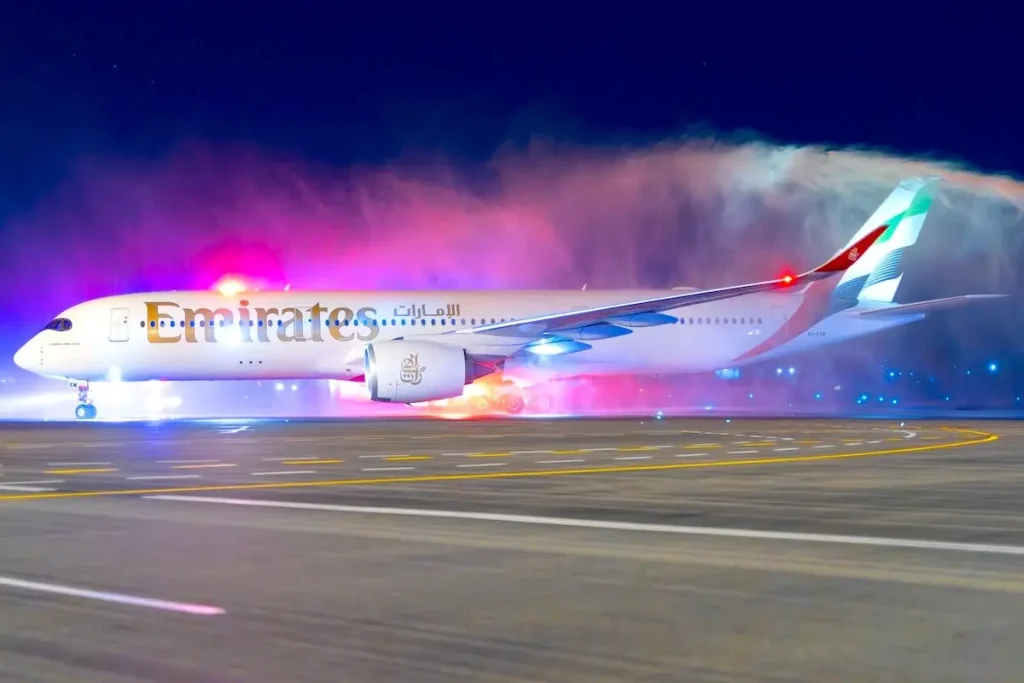
Emirates will continue to take home more A350s in the coming years, and this network will expand, with the jet to be leveraged for markets that were not previously feasible with current aircraft or to lessen pressure on existing widebodies.
So, for the moment, while the A350-1000 will not be part of the airline’s fleet, the A350 family will still play an integral role in shaping the business for the long term.

ABOUT THE AUTHOR
Daniel Fowkes is a Melbourne-based aviation analyst and journalist with over a decade of industry experience. As founder of Dj’s Aviation, he delivers trusted analysis on aircraft, airline strategy and global aviation trends for djsaviation.net
Leave a Reply
Related Articles




Stay Informed
Get the latest aviation news, analysis and route updates delivered to your inbox.
We respect your privacy. Unsubscribe at any time.
Enjoyed this story?
Make us your go-to for aviation news
Add us as a preferred source on Google and see our latest stories first in Top Stories.
Add Us On Your News Feed
Clark proving he isn’t basing his opinion on facts. The 2 XWB variants have the same life/ reliability, so if the 900 performs then the 1000 will. He wants the size of the 777x. Well that is his right but be honest. Oh and is that aircraft/ engine proven?
Compared to the XWB84, the 97 has a larger and hotter core and some of the components used are of different alloy materials. This, along with the higher thrust has been a problem for TOW in hot, dusty climates. So there is a difference in reliability between the A359 vs A3510
I think you should you should explain the so called problems with the RR XWB97 engine. It’s sand ingestion at Dubai Airport and the melting of said sand on the high temperature turbine blade which blocks the cooling vents built into the blades.
RR is working on the situation.
Qantas don’t seem phased by this problem. I think Sir Tim should have his knighthood revoked for disservice to British Industry.
Kevin in BNE