

As the Airbus A380 experiences a resurgence, could a combi-type variant be the answer to keeping the aircraft active with airlines longer?
The Fate Of The Airbus A380
Firstly, to understand the A380’s long-term outlook, it’s essential to examine its overall status with Airbus, the European planemaker.
Unfortunately, at the beginning of 2019, Emirates, the leading customer of the world’s largest passenger plane, announced the cancellation of many units for the type.
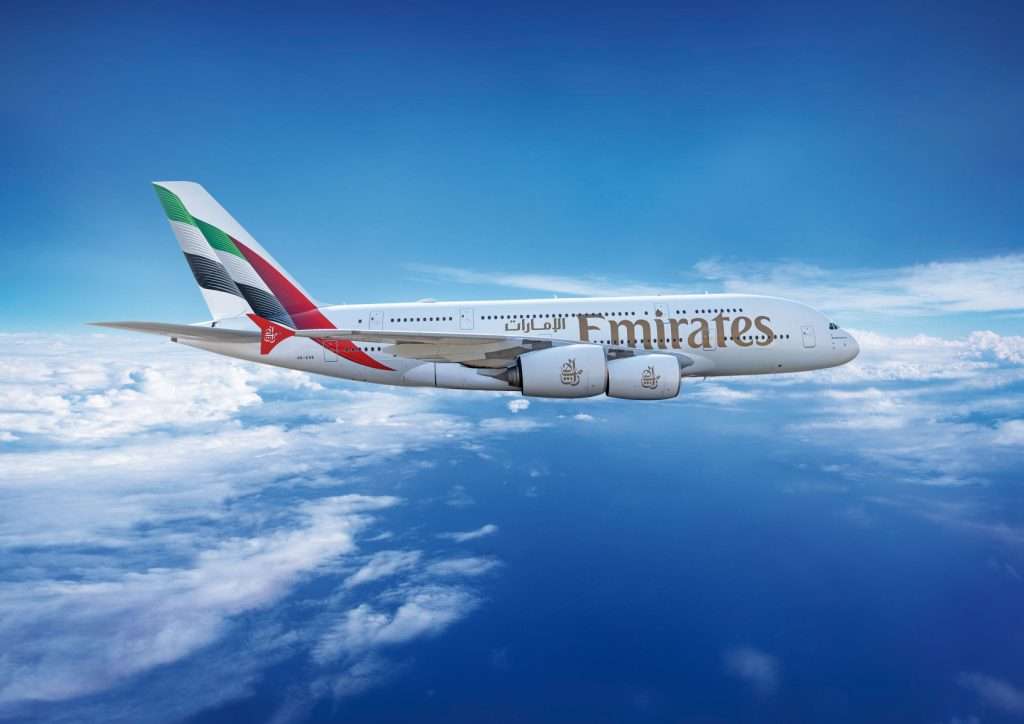
This cancellation, combined with Airbus’ overall inability to secure fresh orders, meant quite a strong decision needed regarding the programme’s fate.
Subsequently, Airbus announced that production would cease in the early 2020s and that it would progress towards a new era.
The final A380 was delivered to Emirates, and since then, the space at Airbus used for making the jet has been transformed into assets for programmes such as the A320neo family.
As a result, the A380’s presence at Airbus has diminished significantly, and the aircraft is nowadays a mere memory despite still flying worldwide.
How Customers Of The A380 Feel
Understanding whether there’s an appetite for a Combi-like variant of the A380 means analyzing how customers currently feel about the A380-800s and their prospects.
The A380 has experienced quite a resurgence, with airlines returning the type to be deployed on some of its most in-demand routes.
This resurgence comes as airlines race to meet capacity, but it follows one major problem in many airline fleets. That point relates to supply chain shortages.
While most airlines are bringing back the A380, this isn’t set to be a long-term decision. This could be seen as a short-term solution to a broader capacity problem.
This broader capacity problem stems from airlines’ inability to acquire aircraft on time from Airbus and Boeing. These next-gen aircraft were destined to replace the A380 and reduce overall costs.
However, airlines have been hit with substantial delays for many reasons, including jets such as the 777X, which remain uncertified. As a result, airlines are retaining older, less efficient, but larger aircraft that are a little bit longer and in many cases, that includes the A380.
So, what does this mean for the long-term prospects of the aircraft and a Combi? Unfortunately, given the lack of customer appetite, further adjustments to the A380 seem unlikely.
Long-standing operators such as Emirates intend to fly the aircraft until they can no longer, likely into the early 2040s, assuming nothing extreme happens between now and then.
Meanwhile, airlines such as Qatar Airways want to eliminate what they call their biggest mistakes as soon as possible, relying on aircraft deliveries for this.
What About A Mixed Aircraft?
So, what about a combi-type Airbus A380? Could this be a means to extend the life of the aircraft even further and give it a greater purpose across the industry?
Well, combi-type aircraft aren’t uncommon across the industry and date back many decades, when they were deemed to be very useful means of carrying passengers and cargo, hence the name Combi.
As aircraft evolved from small jets to planes such as the 747, it became apparent that airlines could leverage this newfound capacity to their advantage in terms of passenger and cargo traffic.
For example, KLM, a major adopter of the 747, relied on a 747 Combi, which focused on offering a significant amount of payload for freight while having a capacity in the hundreds.
Would An A380 Combi Work?
But given that and the wide adoption of combi-type aircraft some time ago, would that work now as the mid-2020s approach?
No, the A380 has always seemed to be a one-type aircraft, used primarily for passenger flights and typically operated with just one airline.
While examples exist, such as HiFly or the prospective but unproven Global Airlines trying to operate second-hand units, once the A380 has fulfilled its life at an operator such as Thai Airways, it heads to the scrap yard.

Furthermore, combi aircraft don’t have the greatest future either. While their role was substantial some time ago, it has diminished considerably in recent times.
The fall of this very means of aircraft configuration comes from the lack of efficiency and the difficulty of finding a beneficial balance.
Unfortunately, the A380 is also dead from Airbus’ standpoint; its future is no longer, and thus, investing money into such a Combi wouldn’t be worth it.
But There Is Hope
In 2021, however, a slight glimmer of hope was given to the A380 Combi as FreightWaves reported that Airbus was speaking with operators regarding a conversion.
This change would see the addition of the main deck as a cargo hold and the top deck as a focus on passenger transport.
The report indicated that the new configuration could help the A380 survive and was plausible. However, nothing firm has come to light since then, thus casting doubts on the progress being made.

ABOUT THE AUTHOR
Daniel Fowkes is a Melbourne-based aviation analyst and journalist with over a decade of industry experience. As founder of Dj’s Aviation, he delivers trusted analysis on aircraft, airline strategy and global aviation trends for djsaviation.net
Leave a Reply
Related Articles




Stay Informed
Get the latest aviation news, analysis and route updates delivered to your inbox.
We respect your privacy. Unsubscribe at any time.
Enjoyed this story?
Make us your go-to for aviation news
Add us as a preferred source on Google and see our latest stories first in Top Stories.
Add Us On Your News Feed
The absolute Answer is NO!
Wish them luck…oove the A380.
It’s a shame though if we are going to loose this beautiful masterpiece.
What’s up, after reading this remarkable article i am also cheerful
to share my knowledge here with friends.