

British Airways grounded its entire Airbus A380 fleet at the beginning of 2020, a landmark decision that has now become historic.
Grounded during a time of great uncertainty, British Airways backed the aircraft throughout challenging times; now the A380 is back flying to international destinations.
What is the story behind the Airbus A380 grounding at the U.K. carrier, the airline’s love for the aircraft, and what’s next for this superjumbo as the series becomes more scarce?
The COVID-19 Pandemic Arrives
When the COVID-19 pandemic arrived, British Airways was forced to react to government restrictions, meaning that international flying at the typical level seen for decades was no longer possible.
As a result, for aircraft like the A380, while this plane helped British Airways significantly in the years leading up to 2020, its place in the fleet was no longer required when demand dropped, as the airline had nowhere to send the jet.
Parking its entire fleet of superjumbos was a significant decision for the company at the time; however, on the grand scheme of things, it was just one of the many major changes that were implemented.

British Airways would go on the ground far more than just its A380 fleet, and instead of focusing on growth, the whole emphasis was placed on stabilising its business to limit costs.
Some reports suggested that British Airways was at risk of collapse if a global pandemic were to continue for any longer than it did, highlighting the overall impact being felt in every corner of the business.
Therefore, at this point, retaining the services of the A380 would have been a costly decision for British Airways, which needed to limit its expenses and had no alternative routes available due to government restrictions on travel.
British Airways Backs The A380
Despite many international airlines announcing the permanent retirement of the A380 in a bid to become more efficient, British Airways was one of the few airlines that continued to support the jet.
When the pandemic concluded, Air France, China Southern and Malaysia Airlines would not return to flying the superjumbo. However, British Airways believed a place within the business for the world’s largest passenger plane was still present.
In early 2021, Sean Doyle, the airline’s CEO at the time, reaffirmed confidence in the A380 product, stating the jet works very well for their day-to-day business when demand is present. These comments were shared during a CAPA Live Stream.
Doyle further stated that the jet was not limited to the markets it served. Whether capitalising on demand towards cities in the United States or markets east, in locations such as Asia, or even as far as South Africa.
While British Airways therefore knew the A380 worked, it also continued to understand that the only way the jet would return to service was if international demand increased.
British Airways, throughout the early 2020s, put pressure on the UK Government in a bid to understand when restrictions would ease, publishing its expectations that demand would only return in 2024.
Hindsight now shows that demand returned far quicker. Indeed, the return of the A380, with all the jets reactivated by 2022, led to a return to regular service as people began travelling after years of being locked away.
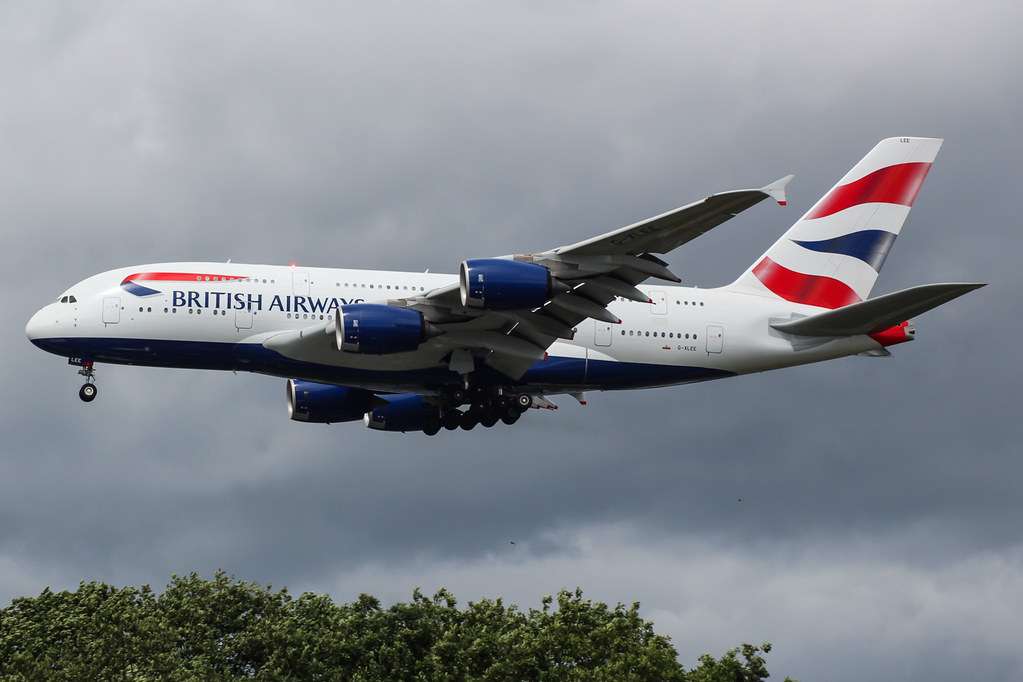
The support of the A380 could be argued to have predated even the COVID-19 pandemic, with the flag carrier in the late 2010s exploring the possibility of increasing its commitment to the program through new jets or the second-hand market.
British Airways thus positioned itself as one of the only airlines publicly to confirm interest in increasing its fleet of the superjumbo during this period, highlighting its support of the series and also its belief that the plane, when demand is present, truly works, aided by the hub and spoke model operated out of London Heathrow.
The A380 Finally Returns
In October 2021, British Airways, after a long drought, confirmed that its fleet of Airbus A380s would return to service.
The decision meant that initially, short-haul flights were to be flown with the aircraft as part of familiarisation efforts across Europe, to develop this, then returning to its typical scheduling.
Initially, the flag carrier confirmed it’d send the A380 to Frankfurt and Madrid before, as of December 2021, deploying the jet towards markets such as Dubai, Miami, and Los Angeles in a bid to serve locations with the most traffic.
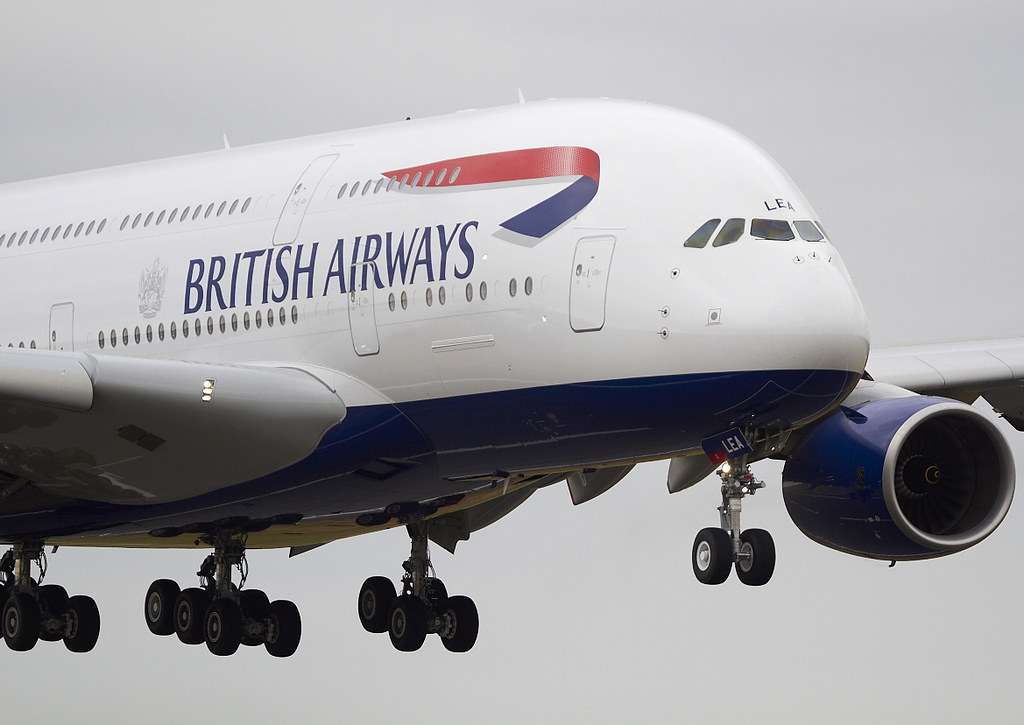
Before the return was facilitated, the A380 fleet was primarily stored in Spain, where many airlines relocated their aircraft to preserve them in warm weather conditions.
The fleet, on rare occasions, also made the trek back to London Heathrow, where maintenance checks were conducted; however, these flights before reactivation did not necessarily mean the jets would return sooner than expected.
What’s Next For The A380?
British Airways plans to continue flying the Airbus A380 in 2025 and beyond, following several recent investments aimed at enhancing the onboard product.
In late 2024, the carrier confirmed that it would proceed with the retrofit program for the Airbus A380, featuring new first- and business-class suites to be installed on the jets.
The dated interior, which passengers have often criticised, will receive fresh, innovative features in an attempt to align the product with competitors while also finding ways to leap ahead of these airlines.

The retrofit process is not easy, requiring substantial resources in terms of finances and workforce. As a result, for British Airways to commit to this means they intend to keep the plane flying for many more years.
While no timeline has been provided, given the work on the jets will not likely conclude for more than a couple of years, the expectation is the superjumbo will continue to fly with the UK carrier into the 2030s.
This timeframe means British Airways joins the likes of Emirates and Qantas, which have both backed the jet and intend to fly it into the 2030s, making investments into the fleet for the benefit of its passengers.
British Airways also recognises that retaining the Airbus A380 fleet is crucial to mitigate the delayed delivery of new commercial aircraft, particularly in light of the Boeing 777X.

The high-capacity, upcoming Boeing jet remains uncertified. Due to the inability to integrate these jets, the A380 remains the highest-capacity jet in the fleet. It is therefore essential to serve demand and mitigate slot restrictions at major global airports.

ABOUT THE AUTHOR
Daniel Fowkes is a Melbourne-based aviation analyst and journalist with over a decade of industry experience. As founder of Dj’s Aviation, he delivers trusted analysis on aircraft, airline strategy and global aviation trends for djsaviation.net
Leave a Reply
Related Articles




Stay Informed
Get the latest aviation news, analysis and route updates delivered to your inbox.
We respect your privacy. Unsubscribe at any time.
Enjoyed this story?
Make us your go-to for aviation news
Add us as a preferred source on Google and see our latest stories first in Top Stories.
Add Us On Your News Feed
I loved the article. I am happy to hear that some airlines like British Airways, Qantas and Emirates continue flying this magnificent aircraft. I have flown a lot during my life and I still do it. I flew the Air France 380 a couple of times and it was the best aircraft I ever flown. What a pity Air France it doesn’t have the same vision as the three airlines mentioned above.
Love it
Great aircraft. I hope British Airways now decides to bring in direct flights between Durban and Heathrow again