

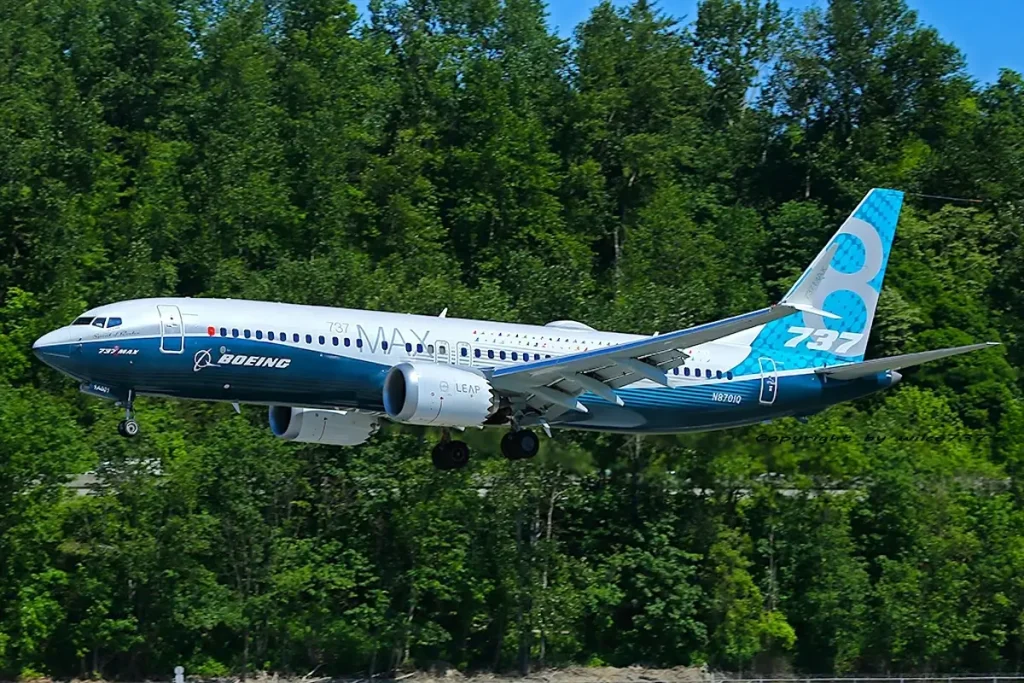
Boeing has begun developing the early framework for a 737 MAX replacement aircraft, according to The Wall Street Journal.
The early stages of development will see the planemaker focus on designing the key narrowbody flight deck to prepare the plane for a formal launch.
At this stage, as part of the early framework, no firm decisions have been made; however, the planemaker is conducting crucial research to move forward effectively.
The launch of a 737 MAX replacement is crucial for Boeing as it seeks to match ongoing studies at its competitor, Airbus, which aims to eventually replace the A320neo family. Airbus is targeting a formal entry into service for its replacement in the mid-to-late 2030s.
As a result, these timelines anticipate a prospective launch by the 2030 mark, which means the business must conduct thorough planning to determine not only the flight deck configuration but also the engines, wing structure, and other key components.
Boeing’s 2024 Announcement
Talk of Boeing moving ahead with the launch of a replacement to the 737 MAX also follows confirmation in 2024 surrounding a new commercial aircraft to be built in the company’s traditional home of Washington.
Developments surrounding the new aircraft followed an agreement with some 33,000 employees working in Washington state, home to Renton and Everett.
The tentative agreement, which involves unions representing workers, comes with substantially increased relief, including a reported 25% wage increase, as well as other benefits such as healthcare.
The agreement stated that Boeing would commit to launching a new commercial aircraft, along with all derivatives, during the program life. As a result, the aircraft would fall within the union’s jurisdiction points in Puget Sound and Portland.
According to the agreement, this means that elements such as final assembly, wing fabrication, major components (including interiors and wiring), part fabrication, delivery operations, and subassemblies will occur in this part of the country, as per the deal.
However, there is a significant catch for this new commercial aircraft: the board of directors must launch the program within four years. Otherwise, by all accounts, the deal is voided.

A commitment to launching the program within four years doesn’t mean the new prospective plane must be flying by then, but the wheels must be in motion to suggest this is formally moving ahead.
Why No New Aircraft Yet?
With so much talk surrounding the 737 MAX replacement beginning to come together, this follows a decade of discussions about prospective new aircraft that never formally eventuated.
Most notably, Boeing’s decision not to proceed with the NMA, also known as the 797, was the most discussed. This decision followed concerns about the inability to offer customers a genuine, worthwhile upgrade with the currently available technologies.
Boeing stated it would pause this work and likely return to the drawing board in the 2030s, when new technologies are being studied that could be adopted on a larger scale and prove a worthwhile upgrade for airlines.
Waiting for technologies to become available is a significant risk, especially as the business is relying on technology that hasn’t been formally introduced.

Furthermore, Boeing has had a plethora of issues itself. When it didn’t progress with an NMA, it faced production issues, certification troubles, a pandemic, a MAX grounding, and more.
Now, many years on, only a few of those elements have been solved, and arguably, they’ve been replaced with much else. So, a new aircraft becomes less optimal, but it is still an absolute requirement not to fall further behind.

ABOUT THE AUTHOR
Daniel Fowkes is a Melbourne-based aviation analyst and journalist with over a decade of industry experience. As founder of Dj’s Aviation, he delivers trusted analysis on aircraft, airline strategy and global aviation trends for djsaviation.net
Related Articles




Stay Informed
Get the latest aviation news, analysis and route updates delivered to your inbox.
We respect your privacy. Unsubscribe at any time.
Enjoyed this story?
Make us your go-to for aviation news
Add us as a preferred source on Google and see our latest stories first in Top Stories.
Add Us On Your News Feed