
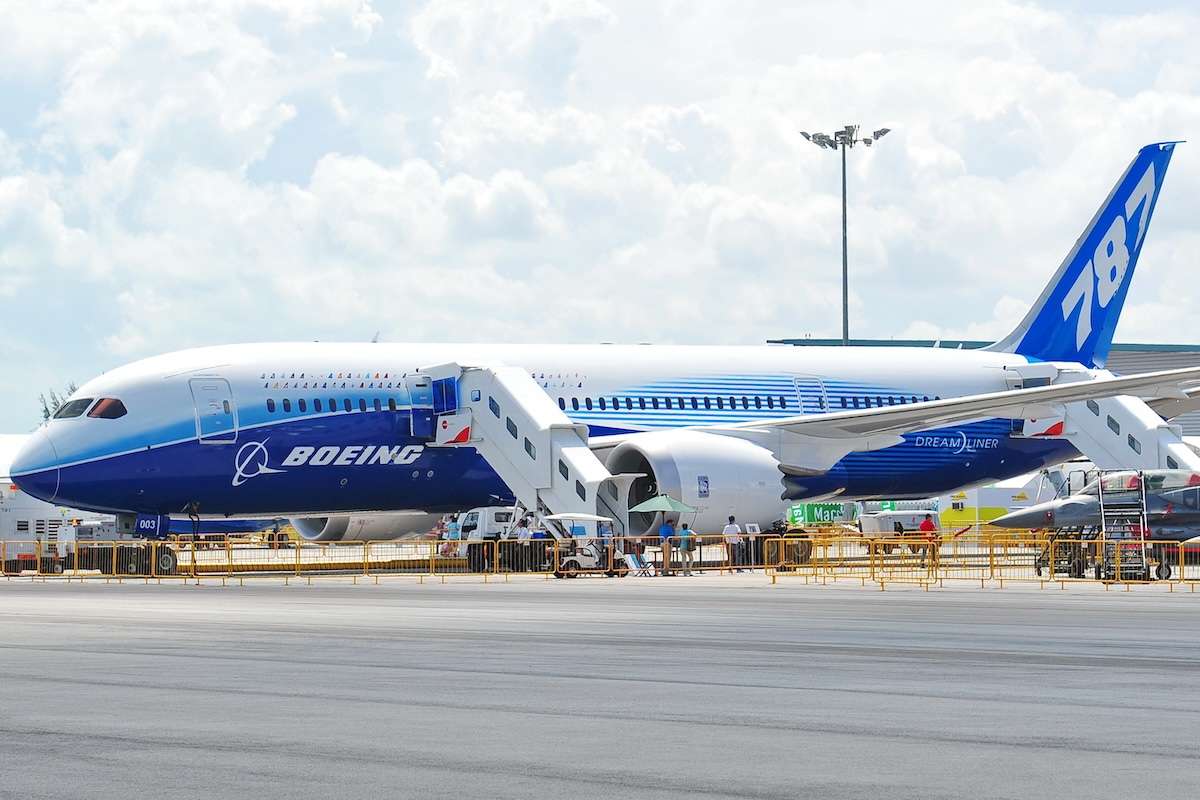
Boeing’s CEO, Kelly Ortberg, hasn’t ruled out the possibility of a new 787 Dreamliner being launched in an exclusive interview with Aviation Week.
During the talks, the head of the American planemaker, firmly in the midst of a turnaround, aired his view on the possible new iteration with re-engines, always something possible, that includes even a dedicated freighter.
As Boeing moves ahead with the upgraded 787s that come with higher payloads or increased range, there’s so much emphasis on improving now, as it scales for the future and finds what’s next.
What Ortberg Said On A New 787
Asked whether Boeing might look to re-engine the 787 at some point in the next decade, Ortberg didn’t shy away from the possibility, saying that while today’s technology is good, there’s always a need to take a forward-looking approach to understand what’s next.
Currently, emphasis on reliability is greater than ever; that near-term focus directly targets Rolls-Royce and GE as the suppliers of engines for the family and the durability improvements being added. These still need to be proven in the marketplace.
Additionally, the question was raised about a possible 787 Freighter; this is not the first time, and it has been a decade-long saga, with the prospect of such a model mentioned but without any firm movement. Ortberg said, “We’ll see,” on that front.

These aren’t confirmations of anything, nor are they rejections. In a planemaker’s eyes, all possibilities remain open; everything must be studied, and a suitable approach will eventually emerge after intense discussions and feasibility studies.
What cannot be disputed is the role the 787 has played in the industry since its launch: the industry leader for flexibility. It’s a model that has reshaped many airlines’ long-haul flights, even trunk domestic routes. As such, there’ll be a need for a replacement that’s more efficient and addresses customers’ desires at that point, but that’s not the case yet.
A Possible Re-Engined Boeing 787 One Day?
If Boeing were to one day move ahead with a refreshed 787, it would fundamentally require more than just a few tweaks; it would require a complete overhaul. The business has already greenlit improvements this year, including longer range or greater cargo capacity via higher certified takeoff weights and structural enhancements.
Those improvements certainly help Boeing, but they are more surface-level and may not be game-changing enough for a brand-new entity like a 787X-type iteration. A re-engined Dreamliner would need to deliver a true step above the existing platform.
That shift would have to focus on fuel-burn savings that considerably outperform what is currently on offer. As a result, what has to be done is close analysis and research with engine makers and other suppliers to truly find ways to take the next leap. Ultimately, that is not something that comes overnight for a planemaker either, and it can carry risks.
For Boeing to justify a re-engine, much has to line up perfectly; it may not result in a re-engine, and instead, with fresh technology becoming available, something entirely different may emerge. However, that leans more heavily on the speculative side than.
What Boeing Would Truly Need
For Boeing to launch a new 787 Dreamliner, whether through a re-engine, wing design changes, or something else, it first and foremost needs a compelling case, with market studies and interested airlines.
Similar to Airbus’ A220-500 or the Simple Stretch, and with several anchor airlines needed to support its launch, Boeing would need something similar, albeit on a larger scale, given that this isn’t a new variant but a totally new aircraft type.
As a result, market research would be pivotal to identifying customers who need an efficiency upgrade. With that said, the 787s in service today will still be delivered in the 2030s. That means while some may be approaching the latter stages of their lives, for others, they’ll be brand-new entities and therefore won’t be eyeing up a replacement.
Engine technology will be key, with many studies ongoing related to the next single-aisle jet to be offered. There has to be a platform available that isn’t just a story up, but rather ten floors up, that makes a clear difference in fuel burn and reliability compared to the predecessor.
While there’s much optimism for what’s next and how even a possible 787 Freighter could play a role if chosen to be actioned, this is a planemaker still bruised and beaten by the many quality-related issues it has experienced in the 21st century, which have beaten its culture and finances.
As a result, the talk of the new is enticing and wonderful, and it shows that innovation is still present, as it has to be. But Boeing remains very focused on working through its current niggles to get it back to being a regularly trusted, healthy, and profitable company.

ABOUT THE AUTHOR
Daniel Fowkes is a Melbourne-based aviation analyst and journalist with over a decade of industry experience. As founder of Dj’s Aviation, he delivers trusted analysis on aircraft, airline strategy and global aviation trends for djsaviation.net
Related Articles




Stay Informed
Get the latest aviation news, analysis and route updates delivered to your inbox.
We respect your privacy. Unsubscribe at any time.
Enjoyed this story?
Make us your go-to for aviation news
Add us as a preferred source on Google and see our latest stories first in Top Stories.
Add Us On Your News Feed