

Boeing’s 777X remains uncertified with five years of delays, but a new variant could be coming sooner rather than later.
Dubbed the 777-10, this high-capacity model has been a talking point in the industry for now a decade.
With airlines such as Emirates keen, why have reports heated up? What would the plane offer, and where’s the demand?
Reports Of The New 777X
Reports of the prospective new Boeing 777X model known as the 777-10 emerged at the 2025 edition of the Dubai Airshow, all thanks to Emirates.
When Emirates purchased 65 additional 777-9s, a deal which came to the surprise of many following previous reporting indicating that a deal for the A350-1000 was close, it was the finer detail of a press release that highlighted the new model.
In that press release, Emirates confirmed that because of its substantial backing of the broader program, Boeing now had what it believed was adequate support to proceed with a feasibility study for a new model.

Dubbed the 777-10, this prospective aircraft model has been a recurring theme across the industry for some time, largely driven by airlines’ search for a high-capacity alternative to the A380 or 747 that retains the efficiency of next-generation models.
Emirates’ Chairman and Chief Executive, HH Sheikh Ahmed bin Saeed Al Maktoum, said at the Dubai Airshow that he would fully support Boeing in the feasibility study of the 777-10 and once more expressed his desire to purchase the model if released.
As part of the order for those 777X jets, Emirates confirmed that it held options for the larger, unreleased variant and could exercise them at a later date if the feasibility studies ongoing at Boeing show sufficient appetite to move ahead with the jet.
Introducing The Boeing 777-10
The Boeing 777-10, if launched, would become the third passenger variant in the broader 777X program and, as the sequence of numbers suggests, also the largest.
In essence, as seen in the 787 program and the 787-10, Boeing would adopt the same logic for the prospective 777-10, aiming to increase capacity across all previous models while retaining efficiency.

For Boeing, without production now continuing on the 747 program and a drive to build more efficient aircraft, the 777-10 would become the flagship model in the commercial aeroplanes operation and also the highest-capacity jet in production.
While there’s been heightened discussion of this 777-10 in recent times, this prospective model is not new to the industry; it first made headlines in the 2010s, when the business was considering ways to further develop the product line.
That interest came several years after the 777X was launched, in 2013, and there was interest on Boeing’s part to understand how innovation could help the upcoming long-haul jet take the next step.

Boeing confirmed that technical feasibility had been achieved on a 777-10 in the 2010s; however, since then, talk of the jet has gone quiet, driven by the many problems experienced with the broader program, which have derailed innovation and forced attention on the lengthy certification process.
Where’s The Demand?
For Boeing, technical feasibility is a strong advantage, but it’s not the only factor in deciding to move forward with either a new variant within an existing family or a new aircraft program.
Boeing will now conduct a feasibility study. This study will enable the business to liaise with airlines and suppliers to understand what a world with the 777-10 would look like, the timeframes that can be achieved, the demand that exists, and more.

Analysts have long pointed to the lack of superjumbos now being produced as something that would catch up with planemakers, especially as airlines such as Emirates, with their traditional hub-and-spoke model, rely on such big aircraft to transport truckloads of passengers to key cities around the world.
It is Emirates that has been the driving force for the 777-10, with its sights firmly set on a larger twin-engine aircraft than what is currently on the market, as it navigates the stresses of replacing the A380 fleet, which will be retired in the 2040s.
Analysts argue that when a company such as Emirates makes a request, you listen. The Dubai-based airline is one of the world’s most renowned carriers and certainly does not purchase planes in small lots.

With this in mind, Boeing is doing exactly that, listening and analysing the market. Analysts also argue that Emirates would likely not be the only airline interested in something larger than what is currently on the table; however, other potential parties have either not come forward publicly or have not yet considered something like the 777-10.
Looking Ahead For The 777X
While a 777-10 remains of strong interest thanks to feasibility studies, Boeing still has a lot of work to do on the broader 777X family.
For a plane announced in 2013 with an EIS in 2020, the aircraft is now rapidly approaching 6 years of delays, and Boeing just recently pushed back the launch window to 2027 at the earliest.
The latest delay means the 777X will not enter scheduled passenger service until seven years after the initially proposed timeframe, a blow for airlines eagerly awaiting its services, such as Emirates.
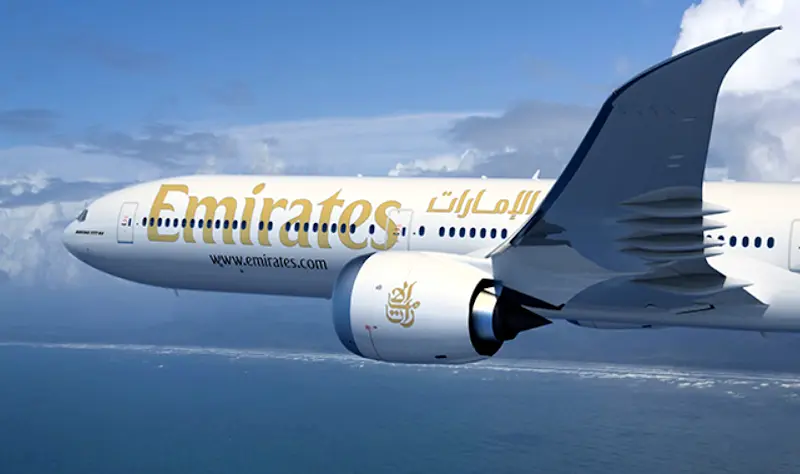
Delays to new models are not uncommon; they are evident in the most recent A321XLR, the A380, and even the 737 MAX. However, the length and hurdles of the 777X have ensured it has remained in headlines for the wrong reasons.

ABOUT THE AUTHOR
Daniel Fowkes is a Melbourne-based aviation analyst and journalist with over a decade of industry experience. As founder of Dj’s Aviation, he delivers trusted analysis on aircraft, airline strategy and global aviation trends for djsaviation.net
Related Articles




Stay Informed
Get the latest aviation news, analysis and route updates delivered to your inbox.
We respect your privacy. Unsubscribe at any time.
Enjoyed this story?
Make us your go-to for aviation news
Add us as a preferred source on Google and see our latest stories first in Top Stories.
Add Us On Your News Feed