
Airbus has published several updates surrounding programs in its commercial aeroplanes division.
The reporting follows the publishing of the planemaker’s results across the first nine months, which ended 30 September 2025.
Airbus says that due to continued supply chain obstacles affecting its A220 program, production rate increases will be delayed, resulting in significant impacts.
As part of the revision, Airbus is now hopeful of reaching a monthly product ramp-up of 12 units in 2026, down two units from the 14 previously targeted by the business.
Meanwhile, the carrier is hopeful that its A330 programme is stabilising further, which would maintain the monthly production rate at four aircraft moving forward.
However, with stabilisation now, the view is that the A330 will be able to jump to a monthly output rate of five units by 2029 to manage demand, which is showing signs of increasing.
As for the popular A320 program, the planemaker is still hopeful that the family will continue to ramp up and reach a production rate of 75 aircraft per month in 2027.

This production rate has long been documented as a target for the business, and the recent opening of a secondary facility in China is crucial to achieving it and expanding Airbus’s global presence and its ability to produce aircraft for specific markets.
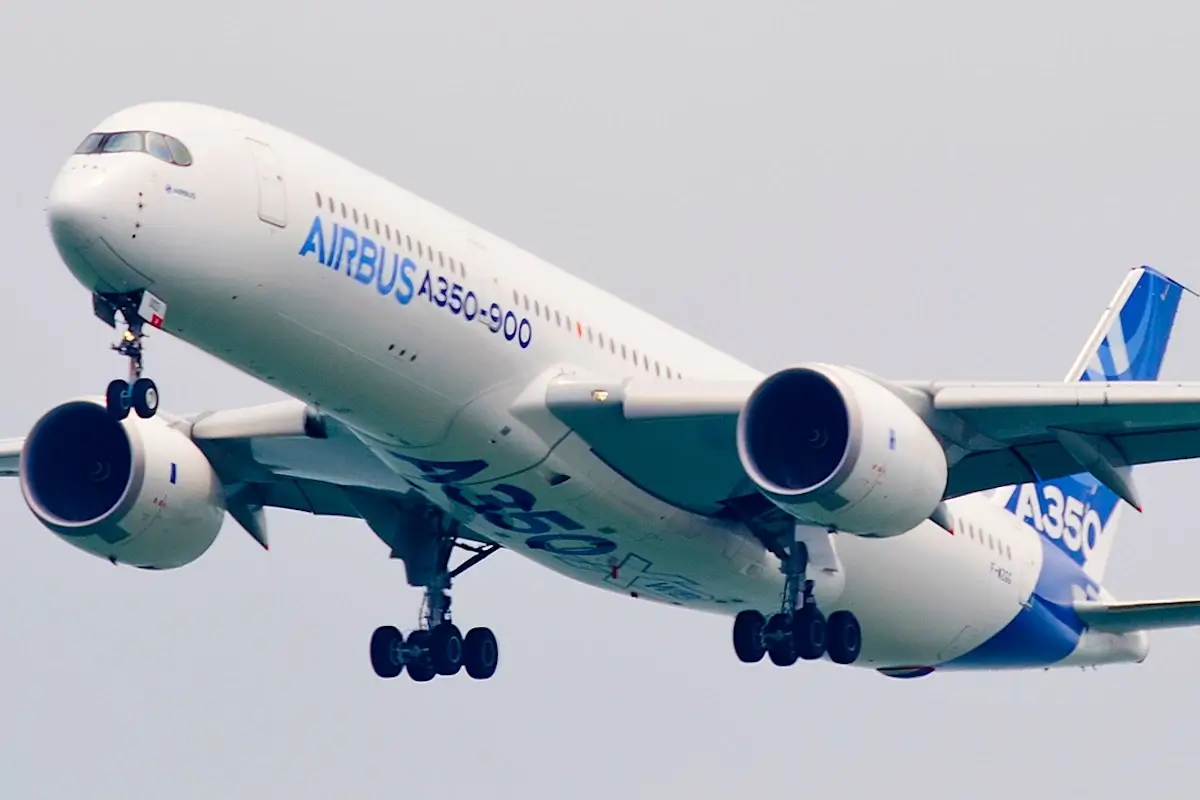
Meanwhile, one year after the planned increase in the A320 family, Airbus has stated that it’s still on track to reach a target rate of 12 on the A350 family by 2028.
Bad News For The Airbus A220
While Airbus remains on track with many metrics for its commercial aircraft division, despite production obstacles, there’s one outlier: the A220, a regional jet, which the planemaker took on in 2018; it was formerly known as the CSeries.
For Airbus, there were hopes for the A220 to reach monthly output rates of 14 units, and achieving this figure would not just be a milestone for the series but would have broader ramifications.
See, despite strong perfromance with the A220 in terms of sales, Airbus has not been able to turn a profit with the jet since taking it on; it has been incurring loss after loss.

As a result, Airbus has attempted to drive change in recent times, but these efforts have repeatedly failed, and the ability to increase production is directly tied to achieving profitability.
What does profitability mean for the business? Well, not just the ability to see the investment turn into green, but also the possibility of further derivatives in the program, such as the touted A220-500.
The A220-500, as it has been known, would be a stretch of the -300 model produced by the planemaker and is one many airlines have expressed strong interest in committing to.
For airlines seeking to evolve their fleet moving forward and increase capacity across key routes, the -500 offers a solution, especially for existing A220 operators who do not want to move to the A320neo family.
Take Breeze Airways, a U.S.-based carrier, which outlined its belief that its fleet could one day reach 400 aircraft through demand forecasting and therefore needs aircraft to support its journey.
Breeze Airways may be pushed by onlookers toward the A320neo program, seen as the next step beyond the A220, but Breeze argues that this would add unnecessary complexity to its operations. If there’s a way not to commit to the larger model, they’ll opt for that every single time, believing that the A220-500 is the way to go.

For Airbus, though, responding to this interest remains impossible on a program that is ultimately unstable and continues to incur losses; therefore, the delayed production target is another blow in a string for the business.

ABOUT THE AUTHOR
Daniel Fowkes is a Melbourne-based aviation analyst and journalist with over a decade of industry experience. As founder of Dj’s Aviation, he delivers trusted analysis on aircraft, airline strategy and global aviation trends for djsaviation.net
Related Articles




Stay Informed
Get the latest aviation news, analysis and route updates delivered to your inbox.
We respect your privacy. Unsubscribe at any time.
Enjoyed this story?
Make us your go-to for aviation news
Add us as a preferred source on Google and see our latest stories first in Top Stories.
Add Us On Your News Feed