
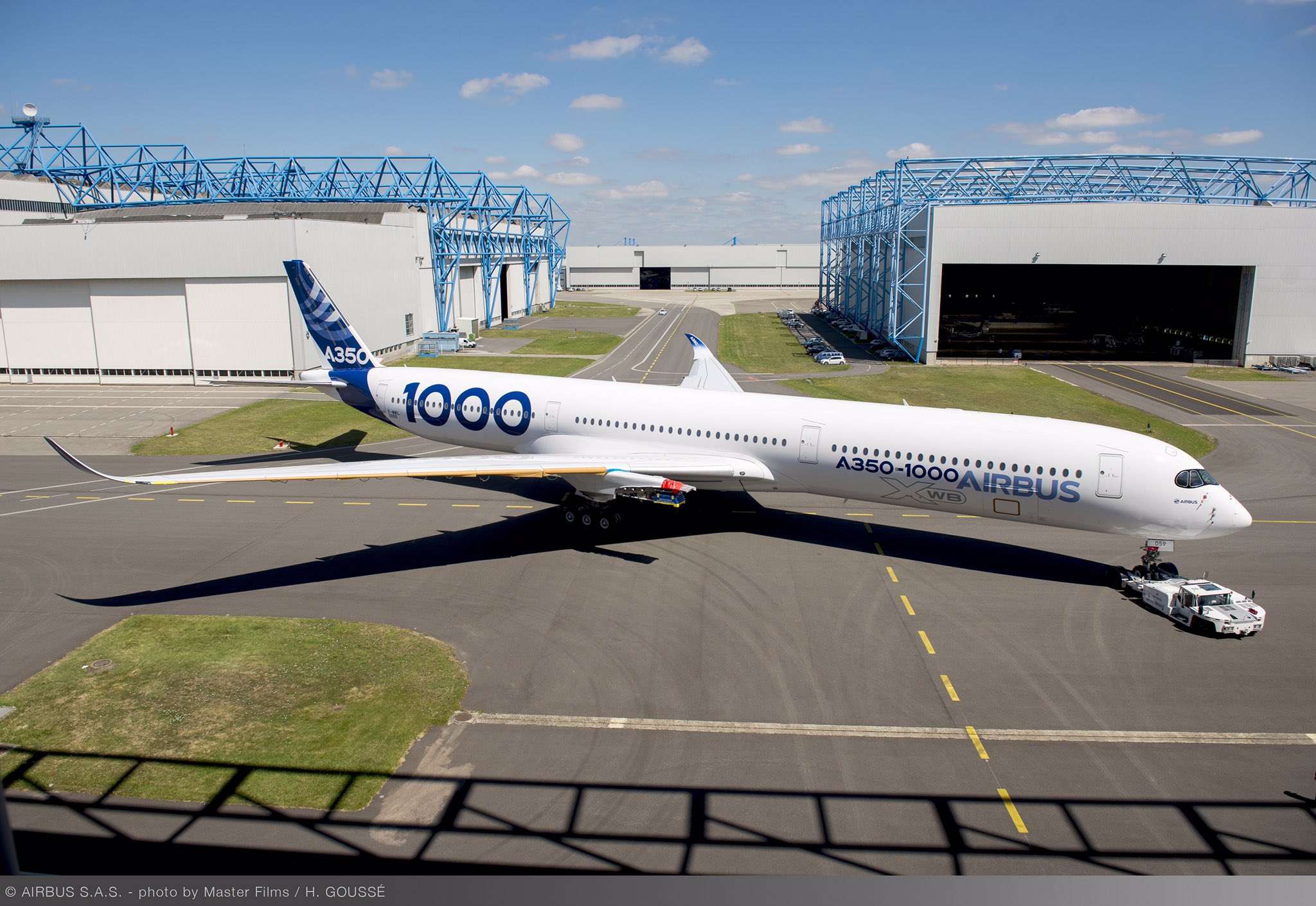
Airbus is preparing for a busy next two decades. The planemaker has taken steps to revise its overall forecast.
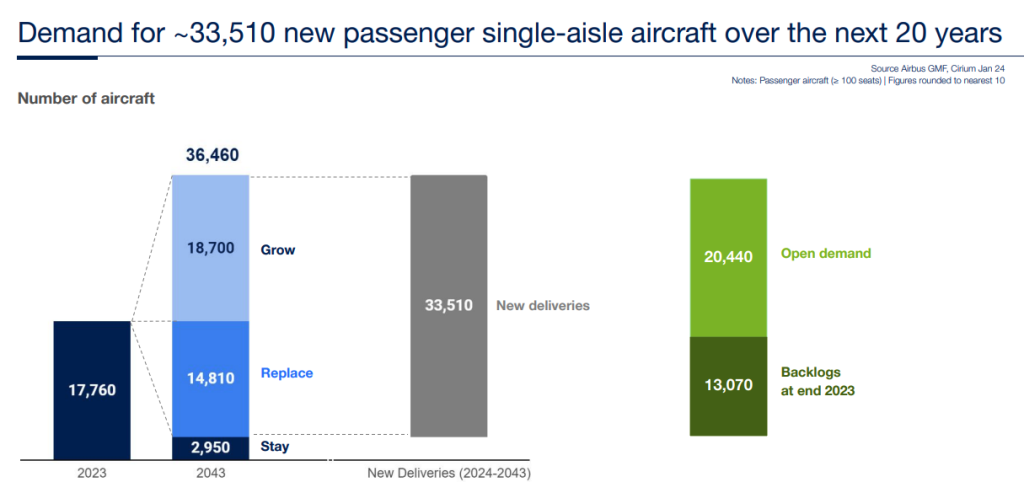
As part of the latest forecasting, Airbus says there will be a requirement for 42,430 aircraft between 2024 and 2043. These planes will be new deliveries, and their purposes will significantly differ.
One of Airbus’ more telling expectations is that the global fleet of aircraft will more than double over the next two decades, with the planemaker expecting 48,230 planes to make up the fleet.
Airbus expects more than 18,000 new aircraft to replace older-generation aircraft as airlines seek to become more efficient and meet sustainability goals.
However, more than 23,000 aircraft will be delivered with the pure intention of airlines meeting growth demand across the industry. As a result, more markets will grow, and ones with untapped potential will see new aircraft.
As their capabilities advance, the bulk of new deliveries will come in single-aisle jets, and more airlines will use them to alleviate stress for widebodies. Moreover, single-aisles have always proved reliable and low-risk for most companies, thus obtaining more orders yearly.
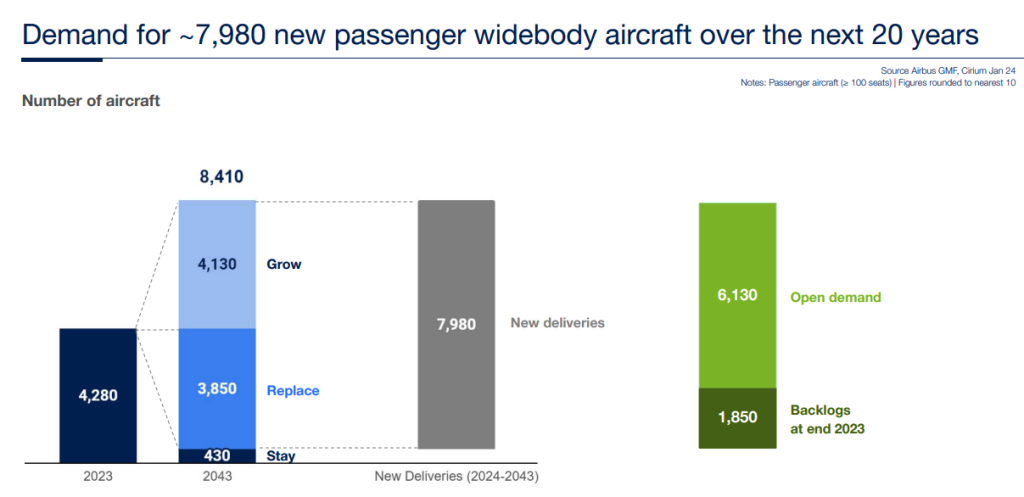
Widebody aircraft, however, will still be important in the future global fleet. Airbus expects to require 7,980 new passenger-widebody planes. The manufacturer believes there’ll be a relatively even split between the need to replace and the need to grow when acquiring these jets.
The majority of this widebody demand falls in the Middle East. Airbus believes that across the next 20 years, 42% of deliveries to the Middle East will be for widebody aircraft. In Latin America, that figure is just about 10%.
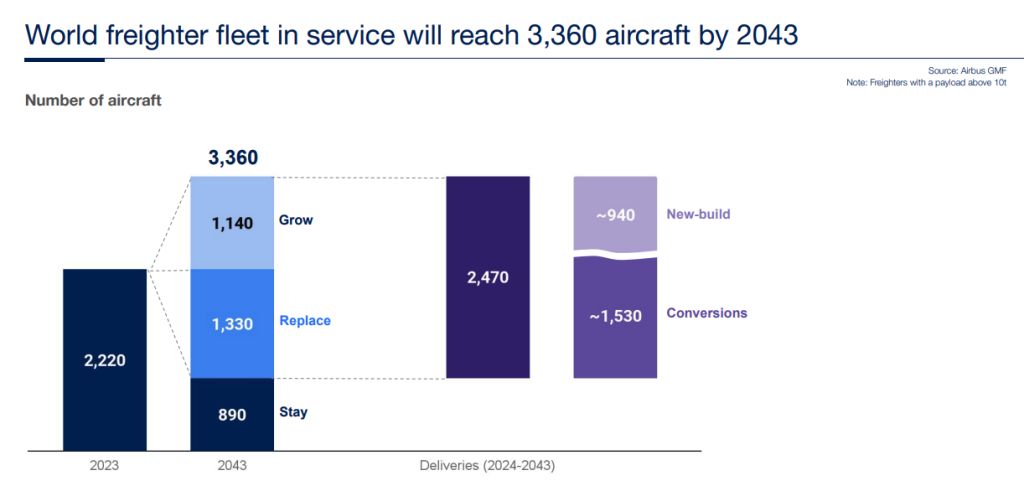
Despite some concerns about the future of the freight fleet, Airbus expects it to grow from 2,220 units present in 2023 to 3,360 in 2043. Of this, 940 new builds will be made, with the bulk of new deliveries being conversions of existing passenger planes.
Internally, at Airbus, the ability to launch new products such as the A321XLR, A350-1000ULR and A350F will present new opportunities for customers to grow their network. Furthermore, for Airbus, it’ll highlight their ability to expand upon already successful programmes.

ABOUT THE AUTHOR
Daniel Fowkes is a Melbourne-based aviation analyst and journalist with over a decade of industry experience. As founder of Dj’s Aviation, he delivers trusted analysis on aircraft, airline strategy and global aviation trends for djsaviation.net
Related Articles




Stay Informed
Get the latest aviation news, analysis and route updates delivered to your inbox.
We respect your privacy. Unsubscribe at any time.
Enjoyed this story?
Make us your go-to for aviation news
Add us as a preferred source on Google and see our latest stories first in Top Stories.
Add Us On Your News Feed