

Airbus Beluga Transport has secured its critical Air Operator Certificate that will allow it to operate as a large outsized air-cargo airline.
A final approval and move to becoming an airline followed years of strategic planning and resource management alongside significant paperwork.
The family at Airbus has continued to grow in recent history as the company has hired the relevant employees and trained them for their new roles.
The Initial Beluga Plan
Airbus says that AiBT (Airbus Beluga Transport) will operate on the existing network for the European plane maker, a decision that took some consideration,
The plane maker believes that launching on familiar routes will be crucial for a smooth entry into service with the new endeavour. Complex worldwide missions have significant associated risks.
Short flights will allow all the relevant crew members who make up this new endeavour to obtain crucial skills to transfer to longer flights.
Airbus notes the flights commenced in November 2023 for routes to Hamburg, Sevilla, and others. However, the company wants to focus on more long-haul missions with the Beluga.
Ultimately, for Airbus, these plans to launch a cargo airline date back to 2022. Thus, the process publicly has been two years in the making.
Big Ambitions At Airbus
Airbus hopes it’ll have a fleet of five operational Beluga’s flying right around the world across a host of missions.
The European plane maker believes there is a substantial market for the service set to be offered by their Beluga. Additionally, it’ll allow the older aircraft replaced by Beluga XL to have a new purpose.
Airbus, in early 2022, said they were getting a lot of requests from specifically freight forwarders and charter brokers for a more oversized transport solution between several locations globally.
While Airbus offers dedicated freighters, the Beluga is more optimised for abnormal payload sizes and weights and thus can be a brilliant solution for relevant parties.
Challenges Exist
Despite much optimism and excitement, Airbus is also more than aware of the challenges present thanks to this new endeavour.
Airbus knows that the Beluga fleet was built for use across the European network, with sectors’ maximum operation reaching four hours. However, the AiBT will focus on long-haul missions primarily in the future. Several legs will, therefore, need to be performed before the aircraft can reach its new destination.
If Airbus were flying a Beluga to Singapore, it would take substantially longer than a routine flight with an A350-900. This will present unique challenges in itself, including the altitude and speeds of flight.
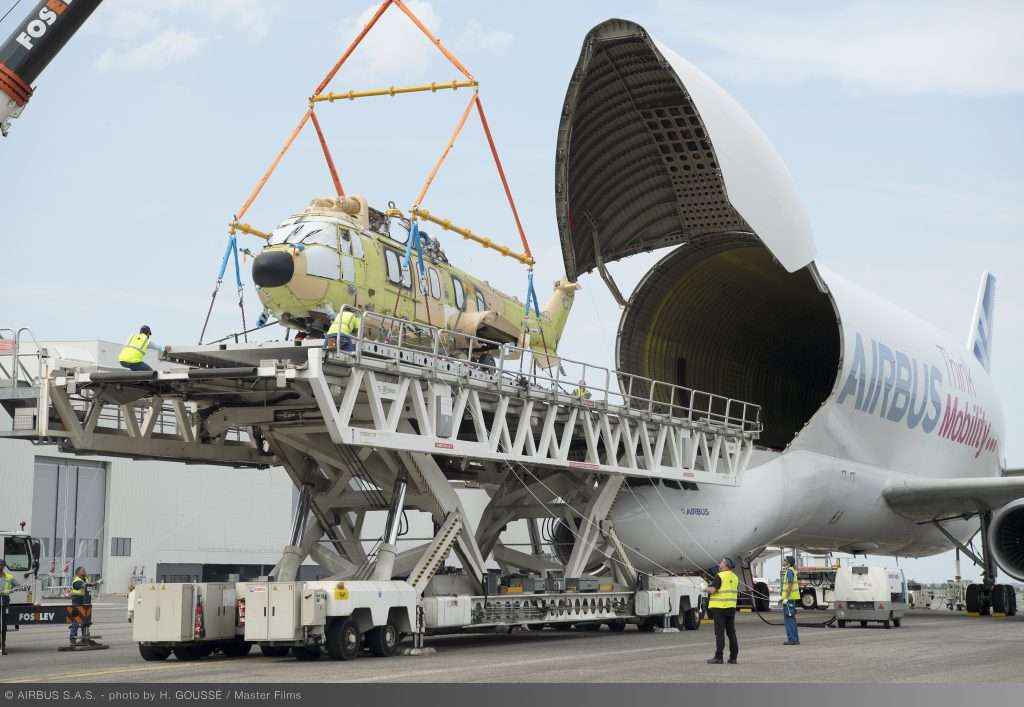
Unlike regular freighters, to offload and load freight onto the aircraft at ports globally, there must be quite the infrastructure and ground operation to allow it. This comes down to the main deck being relatively high off the ground.

ABOUT THE AUTHOR
Daniel Fowkes is a Melbourne-based aviation analyst and journalist with over a decade of industry experience. As founder of Dj’s Aviation, he delivers trusted analysis on aircraft, airline strategy and global aviation trends for djsaviation.net
Related Articles




Stay Informed
Get the latest aviation news, analysis and route updates delivered to your inbox.
We respect your privacy. Unsubscribe at any time.
Enjoyed this story?
Make us your go-to for aviation news
Add us as a preferred source on Google and see our latest stories first in Top Stories.
Add Us On Your News Feed