

Boeing could be slated to welcome a new customer to its ever-growing 787 family sooner rather than later.
Exclusive reporting from Aviation Week reveals that ASKY, a privately owned carrier based in Togo and marketed as the Pan-African airline, is exploring ways to expand its fleet.
The airline’s CEO, Esayas Woldemariam Hailu, spoke with Aviation Week on the sidelines of the African Airlines Association annual meeting and expressed a desire to begin operations to Paris and develop a more robust international network.
Paris is just one of the many regions that ASKY would like to commence operations in at some point; however, securing aircraft is key, and doing so in a financially responsible manner, with the guidance of backers and Ethiopian Airlines, which owns a stake in the carrier.
Currently, ASKY operates 15 aircraft; it’s an all-Boeing airline, but more importantly, it only flies the 737 family, with 9 737-800s averaging 12.3 years old, followed by 6 737 MAX 8s.
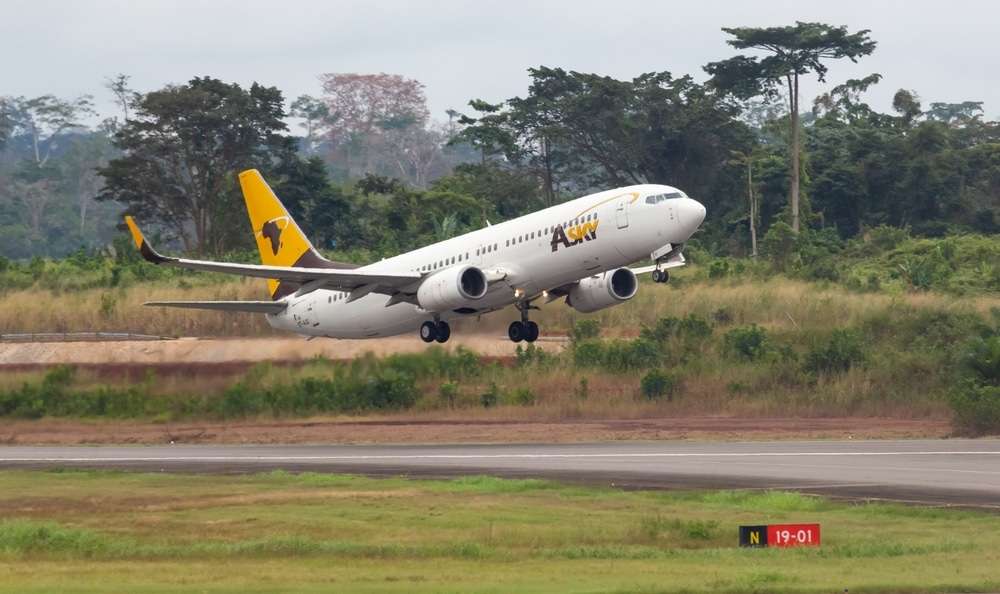
As a result, with only single-aisle aircraft in its operations, the airline is looking to take the next step forward and dramatically evolve its fleet portfolio with the addition of a widebody aircraft. The 787 is being carefully considered as the optimal selection.
With the 787-8, the smallest member of the series, which is already under consideration and certainly the preferred option, the airline needs to analyse the leasing market to make the splurge on likely two widebody planes that would be operational by the end of 2026.
Hailu cites that heightened costs of the leasing market, which in the past has put the airline in a position where the acquisition of the 787 has not been optimal; however, now it feels more confident of demand and also the financial backing to be able to move forward with such an endeavour and certainly with Ethiopian Airlines backing the company.
A Busy Period For The 787
With the prospect of adding a new customer to the 787 family, it has been a busy couple of months for Boeing’s popular widebody, and that isn’t expected to let up anytime soon.
Across the planemaker’s third-quarter results, it confirmed that production had stabilised at seven units per month throughout 2025, representing a positive development after years of instability driven by systemic woes that caused quality-related issues.

With that stability achieved, it has given Boeing the confidence within the 787 program to push for further growth to meet a healthy backlog that continues to grow each year, thanks to fresh purchases.
Boeing has already invested heavily in its South Carolina facility, aiming, sooner rather than later, to reach a monthly output rate of 14 units, allowing it to return to pre-pandemic levels. This has been a slow but steady pathway back to full recovery.
However, the manufacturer has also set its sights on achieving record levels of production at its Charleston plant, aiming to reach an output rate of 17 per month at some point in the future. To make this happen, however, it needs to invest in its people and facilities.
At the beginning of November. Boeing confirmed that, as part of efforts to enhance the 787 program, it had broken ground on a site expansion in South Carolina. This project employs more than 2,500 people and involves completing 6.2 million work hours in a joint venture.

The expansion will include a new final assembly line, similar in size to the current one at 1.2 million square feet. Additionally, there’ll be a state-of-the-art aircraft production line, production support, and office spaces.
Construction is ultimately part of an investment worth around the USD $1 billion range to enhance infrastructure and create 1,000 new jobs over the next five years as part of expansion efforts.

ABOUT THE AUTHOR
Daniel Fowkes is a Melbourne-based aviation analyst and journalist with over a decade of industry experience. As founder of Dj’s Aviation, he delivers trusted analysis on aircraft, airline strategy and global aviation trends for djsaviation.net
Leave a Reply
Related Articles




Stay Informed
Get the latest aviation news, analysis and route updates delivered to your inbox.
We respect your privacy. Unsubscribe at any time.
Enjoyed this story?
Make us your go-to for aviation news
Add us as a preferred source on Google and see our latest stories first in Top Stories.
Add Us On Your News Feed
Expansion of the production rate will test their so-called cleaned up assembly issues that are due to the full fuselage complete barrel sections that are fabrication in different facilities with potential differing material lay down settings thus contributing to slightly different thicknesses at the joint barrel ends. these potential thickness and waviness differences. These slight differences require shimming in the barrel circumferential joints, which, in the past have not been fully documented. Hey, if they have tamed these issues permanently, good, but I am sceptical that consistency is robust.