
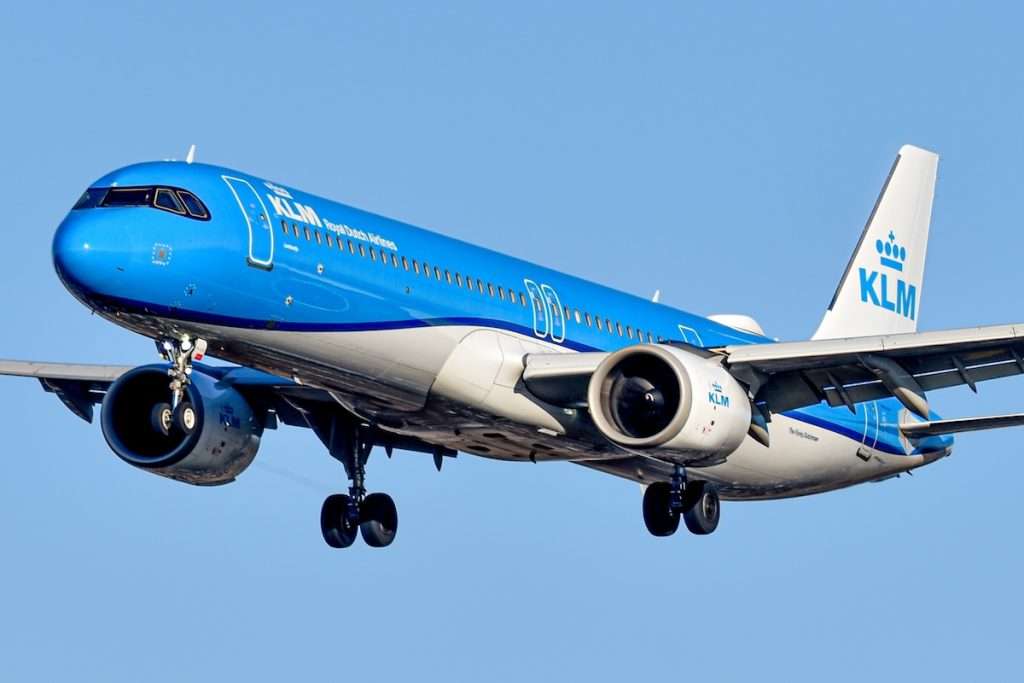
KLM will temporarily shift away from its Boeing 737-reliant strategy and, for single-aisle operations, now use the Airbus A321neo, with a rare aircraft joining the fleet.
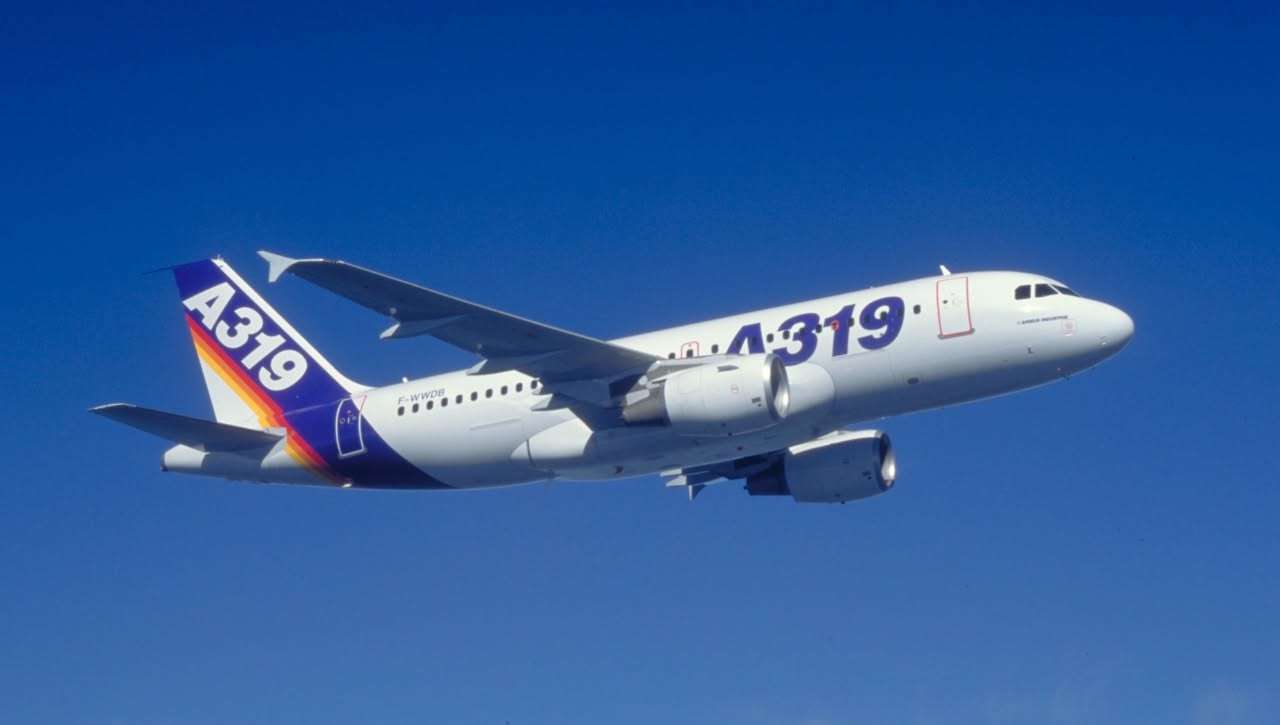
The Dutch carrier will temporarily use an Airbus A319 operated by Romania’s Carpatair across its European routes to help stabilsie its operations and add a reserve aircraft to cover shortages due to maintenance pressures.
The arrangement involves an A319 and is a short-term solution to operational pressures; it will therefore not become a permanent addition.
KLM faces pressures on maintenance.
KLM has confirmed it will supply the aircraft through a temporary wet-lease arrangement, with several internal measures in place to find aircraft quickly and stabilise operations.
Carpatair presented itself as a quick alternative to meet the aircraft need, helping offset worsening maintenance pressures while still providing necessary capacity across the European network, albeit on short notice and temporarily.
Under the arrangement, KLM will not need to fully train its staff for the A319, with Carpatair providing the aircraft and also operating personnel responsible for maintenance and insurance. Support from the Romanian carrier makes the proposition much easier for KLM to take up, with limited complexity.
Business class and a full onboard product will be present to mirror its own fleet, even if the cabin and onboard experience will not fully replicate a traditional service offered by the airline.
KLM has already reduced its flying schedule between 26 October and early March; the upcoming northern winter reductions respond to ongoing maintenance issues that have raised reliability concerns and forced the airline to cut certain routes to prioritise reliability.
KLM doesn’t fly the Airbus A319
The decision to add an Airbus A319 temporarily represents a significant shift from KLM’s traditional fleet mix, which relies on the wider A320 family, particularly the larger, next-generation A321neo, rather than the A320ceo family, specifically the A319.
The European carrier is betting on the A321neo for the future and has relied on Boeing 737s for decades across mainline operations, but the A319 is not present and is therefore a new, temporary addition to the business.
Its unusual presence in KLM’s current mainline fleet reflects the situation the Dutch carrier faces and the need to secure temporary capacity guarantees as its maintenance windows balloon and unexpected problems arise.
KLM is no stranger to these agreements; years ago, German Airways supplied Embraer E190s to the CityHopper division under a wet lease and became a long-standing wet-lease partner. These arrangements are vital to limiting the business’s cancellation rates.
According to KLM, several factors are driving the A319 joining, with unscheduled maintenance as one; however, maintenance work is taking longer than expected because delayed parts are keeping planes on the ground longer than anticipated.
With aircraft parked longer and uncertainty around other maintenance, the schedule has been impacted, and securing an A319 provides a short-term safety net to allow supply chains to stabilise.
What single-aisle aircraft does KLM fly?
KLM’s current single-aisle fleet comprises solely two families, the Airbus A321neo and the Boeing 737, with the latter representing the largest reliance.
Fleet data shows KLM has taken delivery of 18 Airbus A321neos, with an average age of 1.2 years. This model is the second-youngest series behind the A350-900, which it just took delivery of for the first time this month.
The airline’s Boeing 737NG fleet is its oldest, with an average age of 18.8 years, and it remains committed to three separate variants. First, the airline flies seven 737-700s with an average age of 15.5 years, followed by its largest reliance on the 737-800s, with an average age of 18.5 years; 26 remain in the airline’s name, and 24 are active. Lastly, the airline has five 737-900s, which, at an average age of 24.6 years, are the oldest aircraft in the fleet.

ABOUT THE AUTHOR
Daniel Fowkes is a Melbourne-based aviation analyst and journalist with over a decade of industry experience. As founder of Dj’s Aviation, he delivers trusted analysis on aircraft, airline strategy and global aviation trends for djsaviation.net
Related Articles




Stay Informed
Get the latest aviation news, analysis and route updates delivered to your inbox.
We respect your privacy. Unsubscribe at any time.
Enjoyed this story?
Make us your go-to for aviation news
Add us as a preferred source on Google and see our latest stories first in Top Stories.
Add Us On Your News FeedRelated articles
· Airlines
Allegiant Air Buys Six More 737-8s From Boeing
Daniel Fowkes
26/10/2026
· Airlines
Emirates vs Qatar Airways: The Gulf Superhub Rivalry Compared
Bryan Shelmon
26/10/2026
· Airlines
Riyadh Air Is Moving Away From Riyadh
Daniel Fowkes
26/10/2026
· Airlines
Emirates Isn’t Worried At All
Daniel Fowkes
25/10/2026