
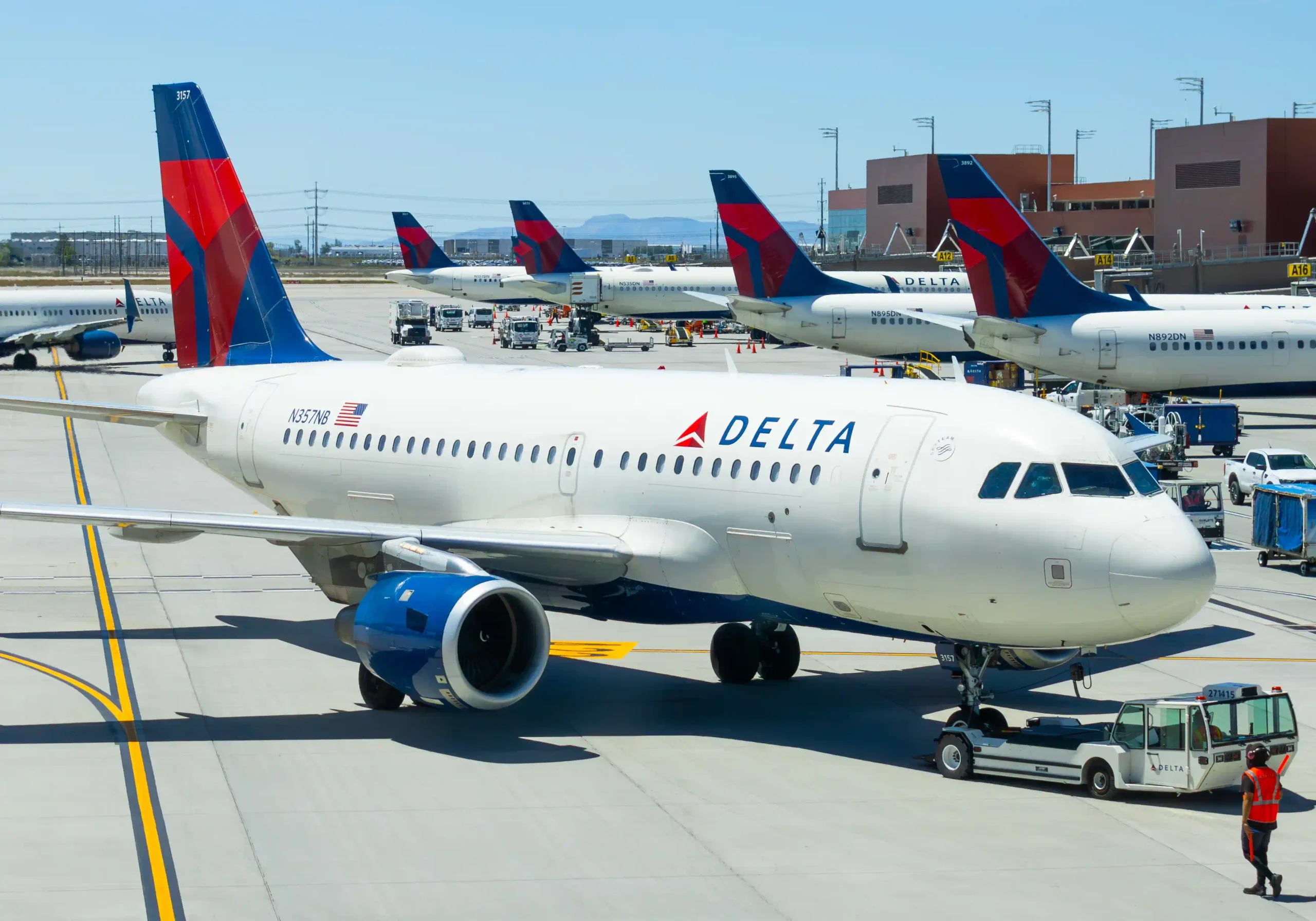
Delta warns that flight cancellations and further capacity adjustments may become regular at the airline and across the broader industry.
The warning comes as the airline identifies the need to restrain capacity growth into 2027 as higher fuel prices persist and the threat to its bottom line grows.
With higher fuel prices comfortably outpacing fare increases, the airline has been forced to cut its annual profit forecast and now worries about long-term profitability in an environment that relied so heavily on expansion.
For Delta, the problems stem not from dropping customer confidence, with bookings still strong; it’s cost pressures outpacing the airline’s ability to maintain profits.
Speaking during its third-quarter earnings call, the airline’s chief executive, Ed Bastian, said limited growth was already something he and airlines across the industry were facing, but it was expected to continue in 2027.
Adding more flights puts Delta at risk
Ed Bastian has said that expanding Delta’s schedule over the next 12 months won’t resolve the shock of operating costs. Those high-cost environments that have become the industry’s new normal aren’t something Bastian argues you can grow your way out of.
Strong demand remains, and while this is encouraging for the airline, limited seat growth has led airlines to raise airfares to offset the increases they took on over the last six months.
Delta has already raised ticket prices by roughly 20% this year, with what it has described as limited resistance from travellers so far. The airline is attempting, where possible, to limit the impact on its customer base, but further capacity growth now appears unlikely in 2027.
Deutsche Bank analysts have publicly said in the last week that airlines will recover only a small proportion of their additional fuel costs through revenue for the remainder of the fourth quarter, and that a full recovery won’t come until 2027.
Delta’s concerns reflect a worsening Middle East situation that was once expected to resolve in days, then weeks, then months, and now possibly years, and analysts warned airlines that if the conflict persisted, the damage would be significant.
Delta won’t make heavy changes, but still vital ones
Despite higher prices, Delta isn’t looking to make surgical changes to its network, but it is still signalling caution that persistently higher-than-expected fuel prices may alter its 2027 plans. Bastian’s comments also centred on the broader industry and its need to restrain growth.
Delta has scaled back operations this year while also finding ways to add new destinations to its network strategically, so it doesn’t fall behind competitors such as United Airlines, which keeps evolving its network in a bid to crush competition.
Delta reports that growth this year has dropped by 3.5%, and further declines would be even worse if fuel prices didn’t improve; if they do, growth would increase again.
Therefore, based on current forecasts, expansion in 2027 remains on the cards; however, strong booking numbers and premium revenue suggest international flying will account for a larger share of growth.
For Delta’s domestic flying, this remains a top priority; however, Bastian hasn’t shied away from the fact that these flights have faced increased pressure, and selective growth remains pivotal to limit the network’s exposure.

ABOUT THE AUTHOR
Daniel Fowkes is a Melbourne-based aviation analyst and journalist with over a decade of industry experience. As founder of Dj’s Aviation, he delivers trusted analysis on aircraft, airline strategy and global aviation trends for djsaviation.net
Related Articles




Stay Informed
Get the latest aviation news, analysis and route updates delivered to your inbox.
We respect your privacy. Unsubscribe at any time.
Enjoyed this story?
Make us your go-to for aviation news
Add us as a preferred source on Google and see our latest stories first in Top Stories.
Add Us On Your News FeedRelated articles
· Airlines
Allegiant Air Buys Six More 737-8s From Boeing
Daniel Fowkes
26/10/2026
· Airlines
Emirates vs Qatar Airways: The Gulf Superhub Rivalry Compared
Bryan Shelmon
26/10/2026
· Airlines
Riyadh Air Is Moving Away From Riyadh
Daniel Fowkes
26/10/2026
· Airlines
Emirates Isn’t Worried At All
Daniel Fowkes
25/10/2026