

COMAC’s problems producing the C919 are neither slowing down nor disappearing as the Chinese planemaker struggles to push into the next phase of commercial development.
As U.S. restrictions put pressure on proposed ramp-ups, aircraft component exports have added uncertainty and compounded existing struggles for the business on its single-aisle aircraft meant to compete with Airbus and Boeing.
The C919 has therefore seen just about a dozen deliveries in 2026; that’s down from 15 across the full 2025 calendar year and well below the initial expectations outlined by the business. The damning figures show that despite the business’s attempts to establish supply and production lines, progress has yet to materialise.
COMAC has the U.S. tighten its grip
COMAC’s most recent obstacle has been a decision by the United States and the Trump Administration to take larger steps to use the dependence China has built on U.S. manufacturers and aviation suppliers to its advantage in trade negotiations.
By leveraging the supply chains companies like COMAC rely on, the U.S. can improve trade negotiations; the effect is felt immediately as export approvals and the quantities of components available are reduced, limiting output rates.
In the past, complete delivery suspensions were common and affected COMAC. At the same time, components can now reach China, and production can continue, they are under far tighter controls and greater uncertainty, making planning impossible.
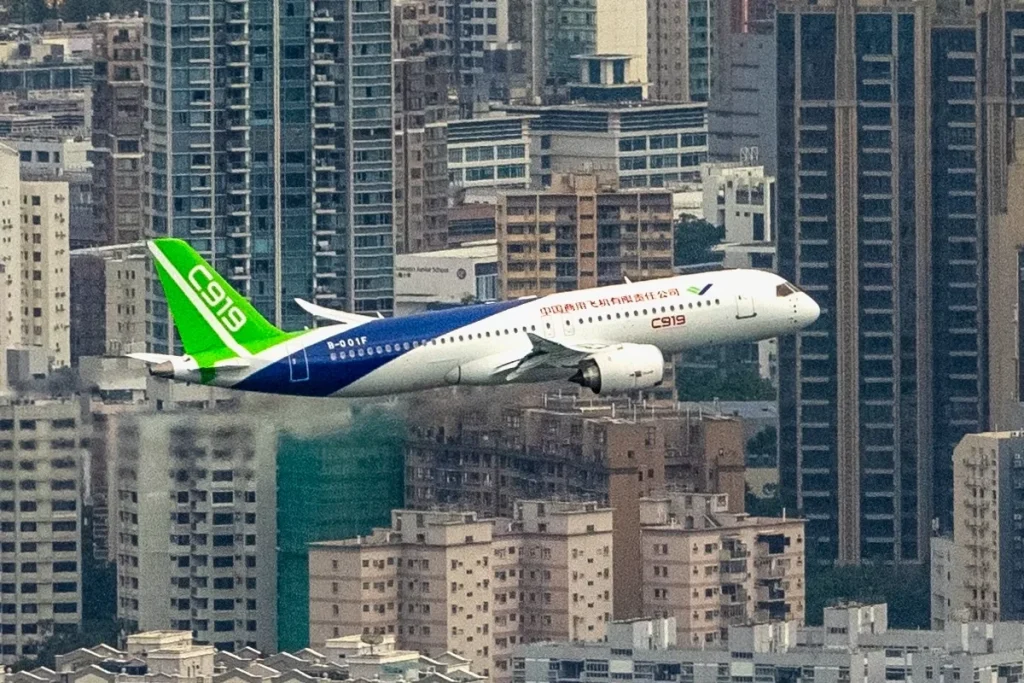
The impact is clear: COMAC and other companies cannot build up their own inventories to lessen the blow to operations and mitigate ongoing restrictions. As a result, COMAC’s production drops, and for the U.S., this is exactly the intended impact of the restrictions as leverage.
The COMAC C919’s production, and ultimately its success, depends on key equipment, which remains far higher than the manufacturer would ideally like to admit: engines from CFM International and, beyond that, components such as avionics and gear from Western suppliers.
While COMAC works with its Chinese suppliers to develop domestic alternatives to mitigate future trade-related risks, that isn’t the case currently, and the impact has been made abundantly clear.
Supplies the latest problem for COMAC
To compete with Airbus and Boeing and their respective A320neo and 737 MAX programmes, a stable and reliable supply chain is pivotal, especially since COMAC does not have the same market grip as the two frontrunners.
Unfortunately, the latest restriction on supply chains pushed by the U.S. represents just one of the many obstacles faced that have struck the ability of the C919 to scale its presence globally. Delays and concerns about the gap between ambition and reality have marked the jet’s development history.
Moving from certification to reputable production has been a problem for COMAC, and its hopes of a splash on the global scene have not yet progressed, as the type lacks certification from key governing regulators like the FAA. Work began in 2025 with EASA to secure type approval, but this slow-moving process has yet to deliver the results the Chinese planemaker wants.

Production rates of a hopeful 75 per year have been targeted; however, COMAC has fallen considerably short for two years in a row, with 30 aircraft delivered, then rising to 50 last year and then to 75; the planemaker didn’t reach half of that.
Production output hinged on the fate of suppliers, customers and stability, all of which have not been achieved, meaning that for COMAC the ability to present itself as a genuine disruptor to the established duopoly has not been possible.

ABOUT THE AUTHOR
Daniel Fowkes is a Melbourne-based aviation analyst and journalist with over a decade of industry experience. As founder of Dj’s Aviation, he delivers trusted analysis on aircraft, airline strategy and global aviation trends for djsaviation.net
Related Articles




Stay Informed
Get the latest aviation news, analysis and route updates delivered to your inbox.
We respect your privacy. Unsubscribe at any time.
Enjoyed this story?
Make us your go-to for aviation news
Add us as a preferred source on Google and see our latest stories first in Top Stories.
Add Us On Your News Feed