
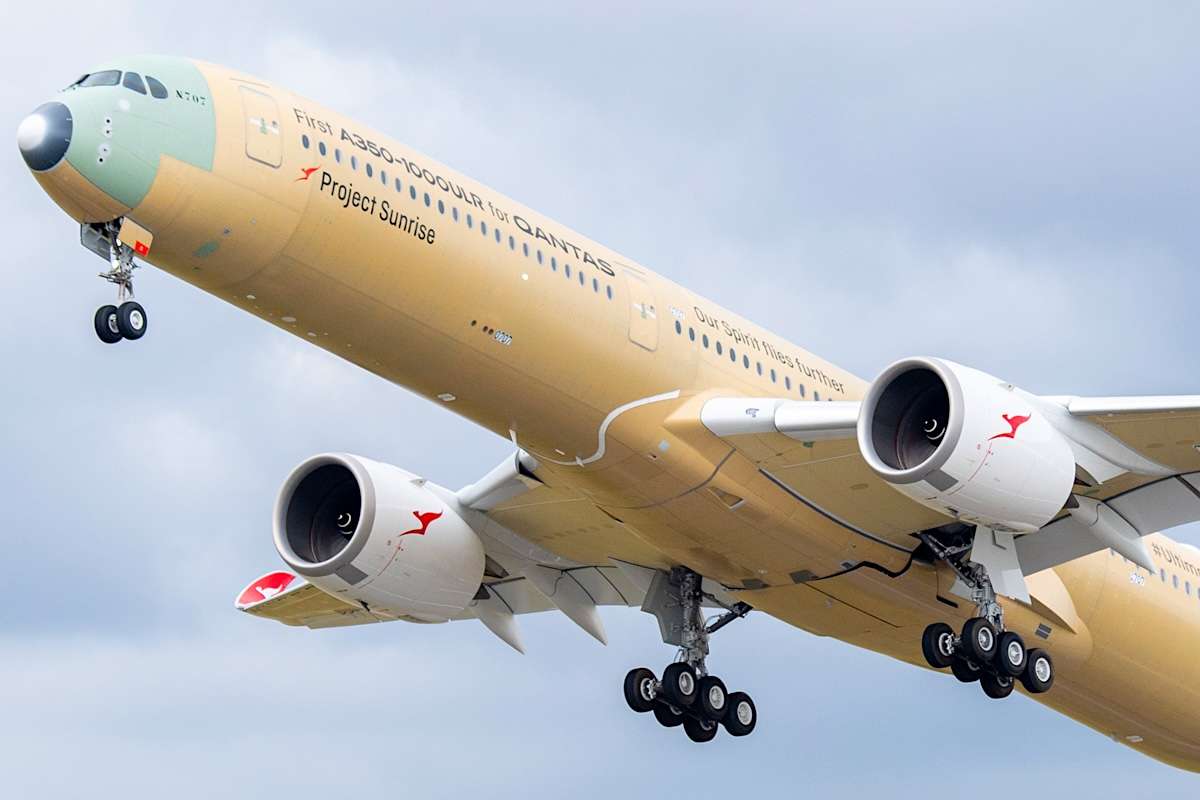
The boundaries of the final frontier of travel continue to get pushed further with the latest ultra-long-range aircraft soon to take to the skies, such as the A350-1000ULR.
For decades, aircraft manufacturers have developed specially designed ultra-long-range aircraft to satisfy a growing demand for nonstop, longer-haul flights.
Airbus is already a leader in the ultra-long-range space, but with the latest A350-1000ULR emerging, it’s set on beating its own record and achieving the most efficient 20+ hour flight ever.
From A350-900ULR & 787-9 To A Stretched ULR
The IATA defines ultra-long-range flights as routes with a minimum flight time of 16 hours. Ultra-long-range flights date back to 1936, when Pan American Airways achieved the first successful nonstop transpacific flight between San Francisco and Hawaii in 19 hours and 36 minutes, covering 3,871km.
Modern aircraft can complete the same flight in less than six hours, making this original record-breaker feel like flight training by today’s standards.
Today’s aircraft are eyeing even longer journeys, capable of connecting every corner of the globe with nonstop flights. With the design of next-gen aircraft, they’re achieving such feats with less fuel and emissions.
The newest models setting records for ultra-long-range commercial flights include the 787-9 Dreamliner, flying 15,750km. The A350-900ULR, flying 18,000km. And the soon-to-be A350-1000LR, with a max range of 18,520km.
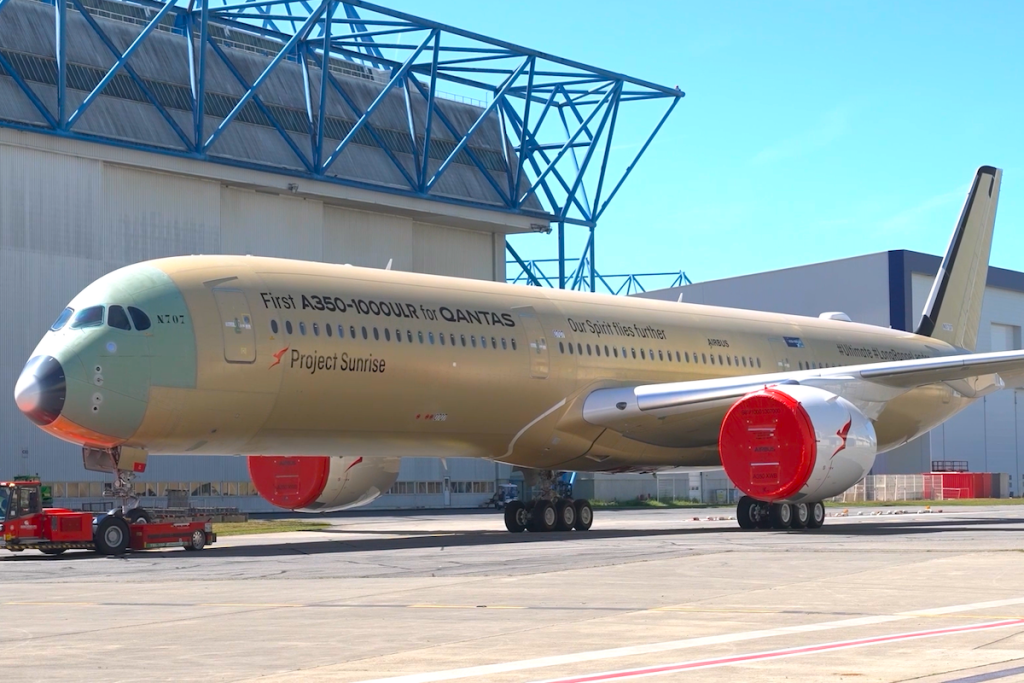
Air New Zealand operates the 787-9 on its Auckland (AKL) to New York (JFK) route, covering 14,207km in 18 hours. Singapore Airlines operates the A350-900ULR on a 15,349km route between New York (JFK) and Singapore (SIN) in just under 19 hours. Qantas expects to surpass both of these routes with the A350-1000ULR on flights longer than 20 hours to London and New York from its Sydney hub.
Qantas To Champion The A350-1000ULR
Qantas, the Australian flag carrier, is seeking to expand its international travel capabilities. Based in Sydney, it has the unique geographical challenge of being located in the middle of the Pacific Ocean. To reach any major destinations in Europe and North America, it must rely on the efficiency of its long-range fleet.
Its current fleet with long-distance capabilities includes the Boeing 787-9 Dreamliner operating Services between Perth and London Heathrow, its current longest route at approximately 14,500km in 17 hours 20 minutes. Other routes include Melbourne (MEL) to Dallas Fort Worth (DFW), Perth (PER) to Paris (CDG), and Auckland (AKL) to New York (JFK).
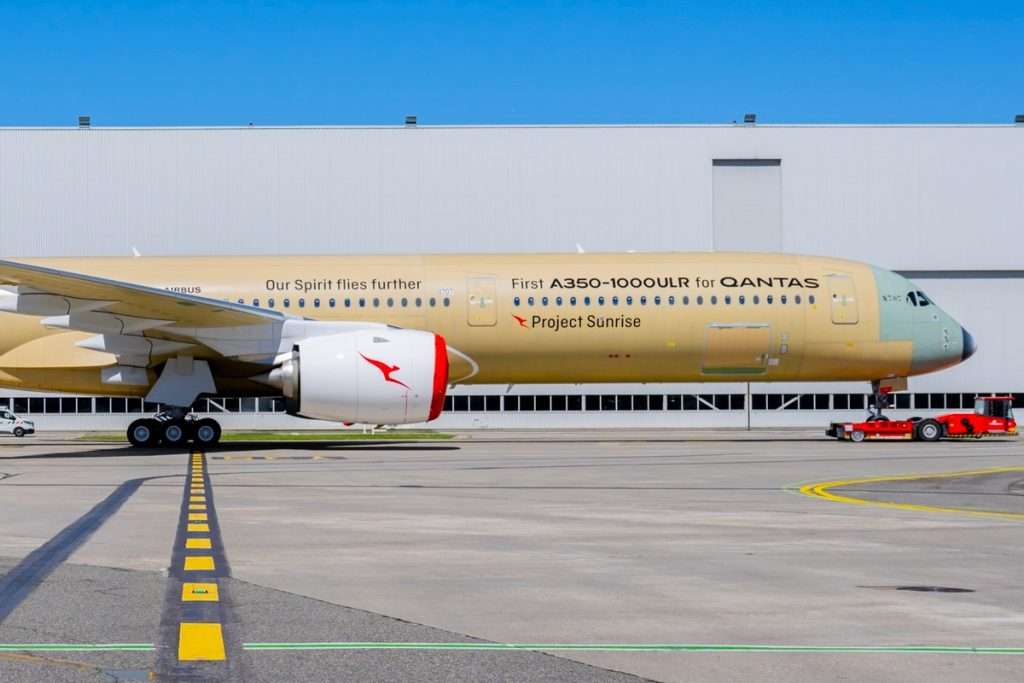
Project Sunrise is the Aussie carrier’s latest ambition to achieve more than 20-hour flights. This would connect Sydney to London and Sydney to New York in 22 hours nonstop. It’s a strategy to better connect Australia to global hubs and save passengers time from lengthy layovers. With the arrival of the A350-1000ULR, these routes are becoming more of a reality for travellers.
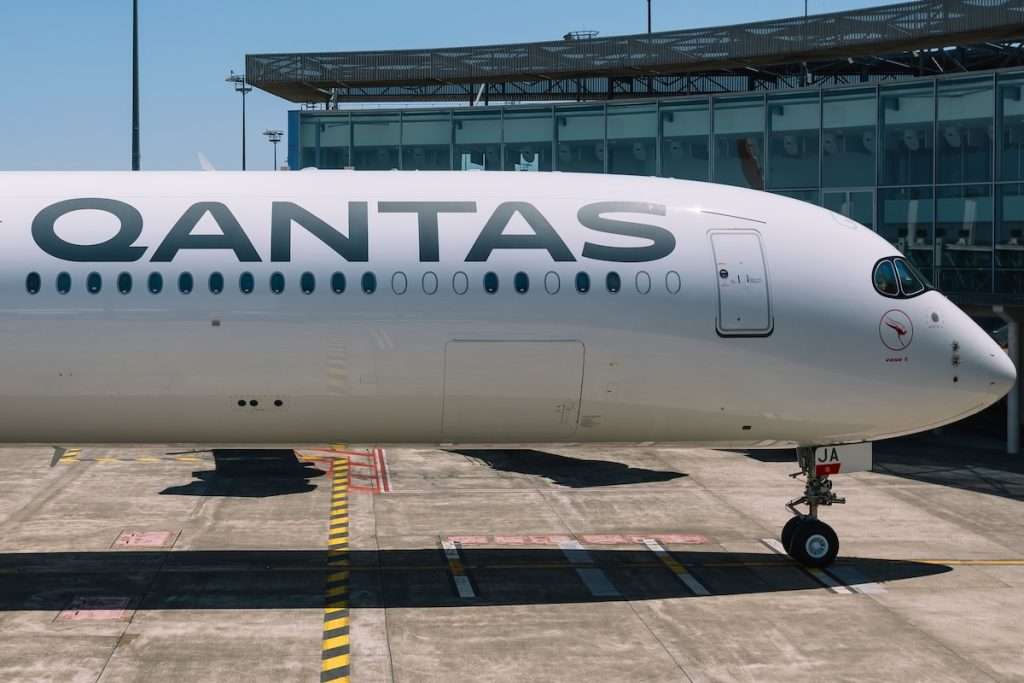
Qantas placed an order for 12 A350-1000ULR aircraft in 2022. Delivery dates continue to be pushed back as the plane undergoes certification testing. With the first successful flight completed in June 2026, the wait may soon be over as early as April 2027 for Project Sunrise to take off.
What 20-Hour Flights Demand From An Aircraft
So, why is the 20-hour flight considered the final frontier of travel? Because the technology required to achieve it will connect our globe in ways we never expected. It’s nearly an entire day in the sky nonstop, which will not only take a toll on the aircraft but also the passengers aboard it. Designing a commercial aircraft that manages these two factors is essential to making it possible.
Airbus had plenty of practice developing long-range aircraft, with models such as the A330neo family, the A380, the A350-900ULR, and now its latest A350-1000ULR. It requires engineers to maximise efficiency by optimising weight, air resistance, and fuel to make it a viable aircraft both operationally and economically.
It starts with the airframe. The A350-1000ULR is designed with 70% carbon fibre composite for a lighter, stronger frame. Next, it added the latest Rolls-Royce Trent XWB engines, the most powerful on the market, allowing more thrust with 25% less fuel burn and CO2 emissions.
Redesigned wings improve aerodynamics for maximum lift and minimum drag. One of the biggest differentiators from the original A350-1000 is the ULR’s addition of a 20,000-litre rear centre tank built into the fuselage, increasing fuel capacity.
Interior design is also a critical factor in achieving ultra-long-range flight capabilities. It reduced seating from 350 on the original -1000 to only 238 passengers to meet weight requirements. Passengers would have plenty of comfort on long-haul flights with regulated cabin temperatures, lighting adjustments, and seat adjustments to reduce fatigue.
Summed up, the A350-1000ULR builds on the long-range capabilities of the A350-1000 by adding a tank and redesigning features to balance the added fuel weight with passenger payload for efficient flying. The A350-1000ULR isn’t about wasting fuel, but about optimising every single factor on the jet.
Is There A Market Away From Qantas For The A350-1000ULR?
As the A350-1000ULR completes its first successful flight and nears its first delivery date, Qantas remains the only airline to have placed an order for the aircraft. It’s perfectly designed for the airline’s Project Sunrise to achieve flights over 20 hours. However, as we’ve seen with other niche models like the Airbus A380 superjumbo, interest from a single airline isn’t enough to sustain an aircraft program.
Other airlines in the region, hoping to expand their international reach, such as Air New Zealand and Singapore Airlines, may also consider the aircraft to open up nonstop routes to South America.
Only a select few routes would require nonstop service between major global hubs. However, if we set aside distance capabilities, exploring use cases with extended flying time could also open new possibilities for demand from airlines. The 20+ hour flying time can help airlines better divert routes due to unfavourable flying conditions or operating around restricted airspace.
The A350-1000ULR will undoubtedly transform the way we travel around the globe. If it can achieve this level of technology and design today, the final frontier of travel will become just another available destination.

ABOUT THE AUTHOR
Bryan Shelmon is an aviation journalist with 10 years of experience covering commercial aviation, private aviation, airports, aircraft and wider industry news. Based in the Detroit metropolitan area, he has contributed to publications including Lonely Planet, Matador Network and Visit Detroit.
Related Articles




Stay Informed
Get the latest aviation news, analysis and route updates delivered to your inbox.
We respect your privacy. Unsubscribe at any time.
Enjoyed this story?
Make us your go-to for aviation news
Add us as a preferred source on Google and see our latest stories first in Top Stories.
Add Us On Your News Feed