
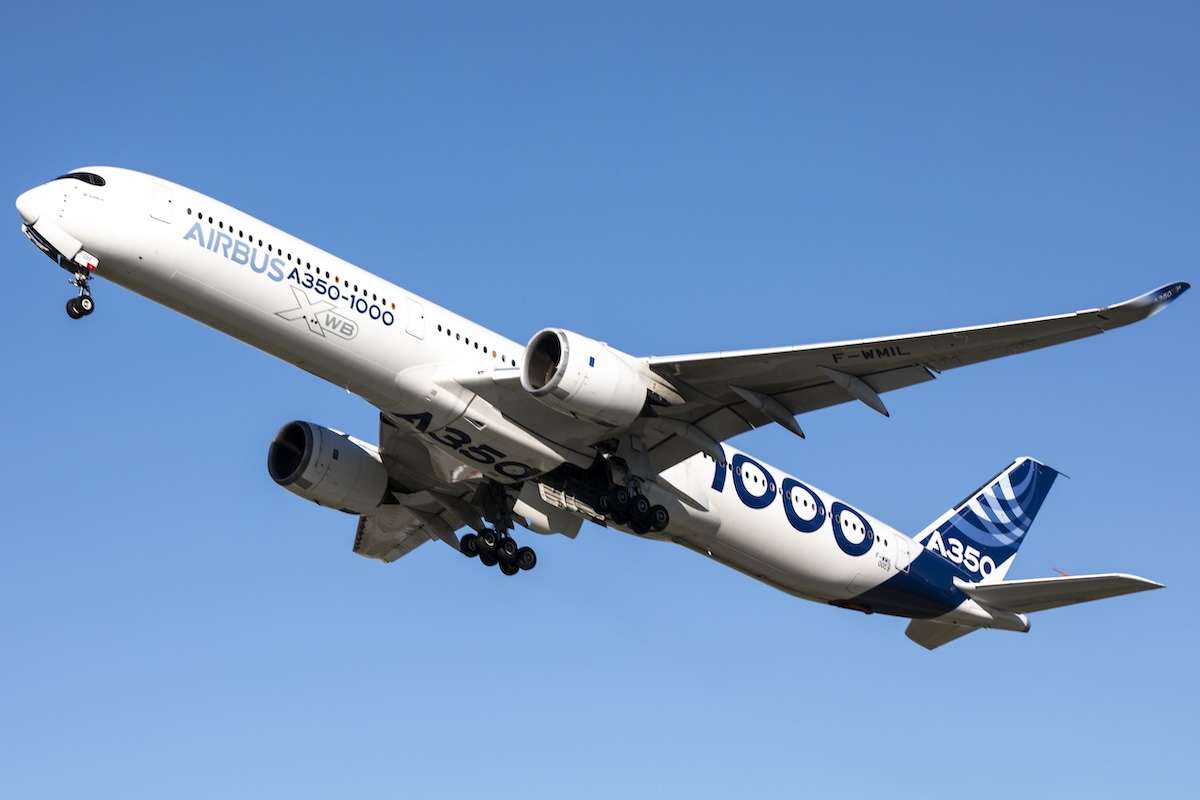
Airbus is seeing just how far it can stretch its A350 family with a new variant often dubbed the A350-2000. Just so long as the demand for such an aircraft stretches enough to make it a profitable program.
Rumours about the A350 Stretch have resurfaced after a brief hiatus, now based on shifts in aviation and passenger demand. This shelved project once again appears to be a solution for next-gen aircraft and Airbus’ answer to the Boeing 777-9.
Now the only question is: will we finally see the A350 Stretch become a reality?
What Is The A350 Stretch & Its History?
In the 2010s, Airbus hinted at expanding its A350 family with a new model. The A350 Stretch would take Airbus’ flagship aircraft and extend it to increase seating capacity.
The A350-1000 was the second addition to the A350 Family, serving as the manufacturer’s largest twin-engine aircraft by extending the fuselage of the original A350. This new project would stretch the body even further while maintaining its twin-engine efficiency.
When it was first announced, it seemed likely that the project would come to fruition. But doubts arose as it would be a direct competitor for Airbus’ own A380 superjumbo.
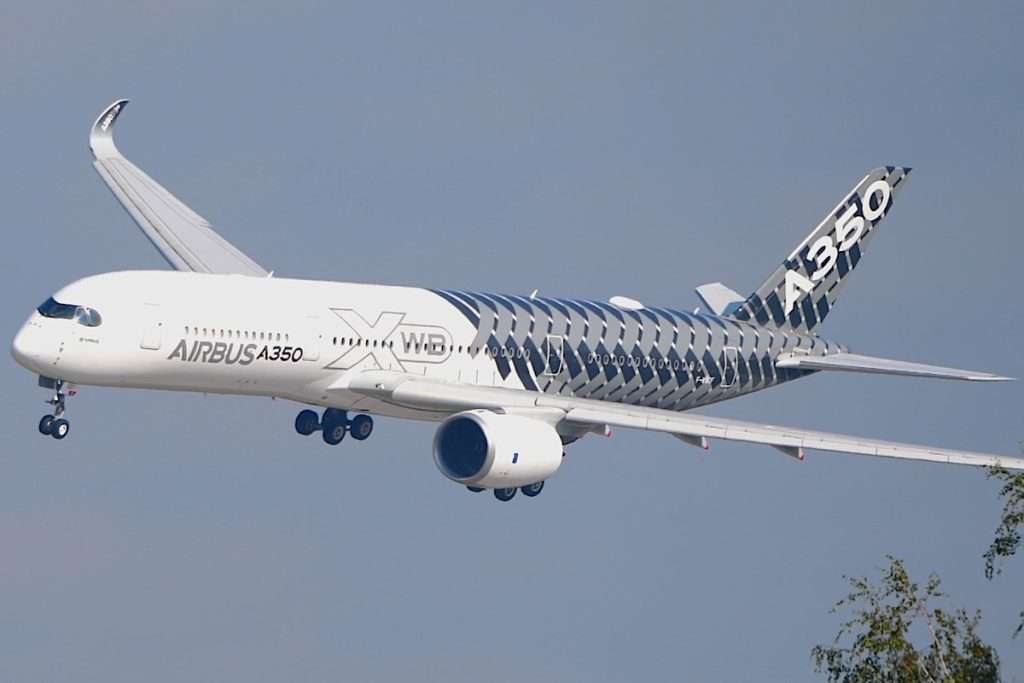
Eventually, all talk of the A350 Stretch was silenced by the COVID-19 pandemic. Uncertainty in the industry during this time shifted Airbus’ focus away from new aircraft programs to survive the turbulent period.
Fast-forward to today, and the airline industry has surpassed recovery expectations and, in the process, created an entirely new outlook over the future of air travel. Once a pipe dream ahead of its time, the A350 Stretch program is now being dusted off as a potential perfect fit for the direction travel is headed.
Why Would Airlines Want A Bigger A350?
Bigger and better seem to be the two words every airline touts. Many have perfected operations in domestic, short-haul flights. So, longer international flights are the next frontier as airlines continue to expand their networks. Airbus thought it solved this demand with the A350-1000, but the market is showing signs of demand for an even larger aircraft.
Ultra-long-range nonstop routes, such as Australia-to-Europe and Australia-to-North America, would be game-changers for airlines. It would save passengers hours by eliminating a layover, and a larger aircraft can ensure the flight is profitable per seat.
The Airbus A380 is a superjumbo with seating capacity and range for high-demand long-haul flights. Airlines including Emirates, Etihad Airways, British Airways, and Asiana Airlines each operated the aircraft. However, a lack of demand for such a large aircraft and a shift toward more fuel-efficient aircraft ended production of this quad-engine superjumbo jet in 2021.
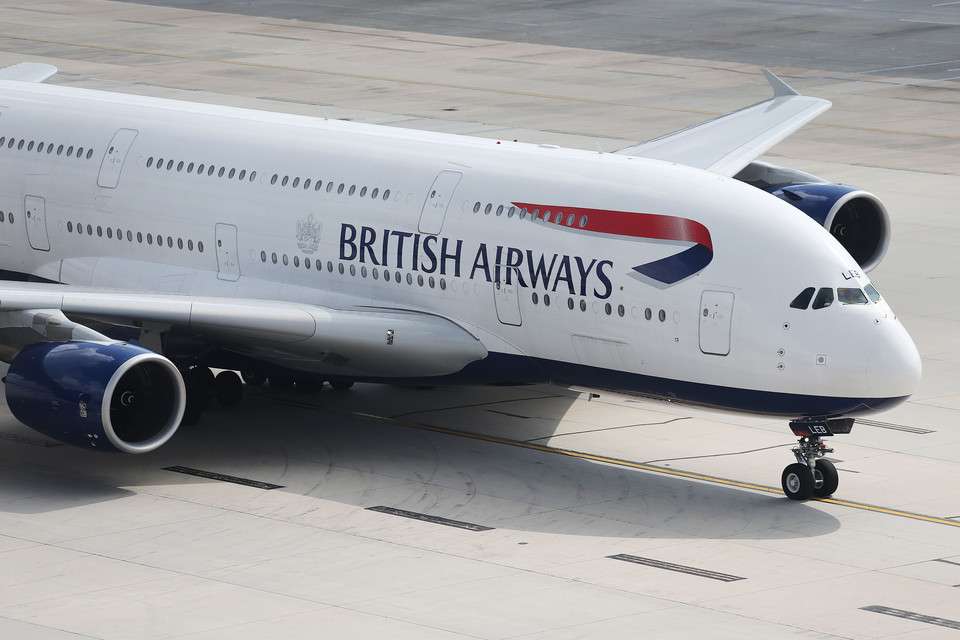
While airlines have been satisfied with more fuel-efficient twin-engine aircraft capable of long-range flights, there is now a gap in the market for an aircraft comparable in capacity to the A380.
Travel demand surged after the pandemic, and travellers have even changed their travel patterns. Airlines are seeing higher demand for longer routes. The current twin-engine widebody aircraft are reaching capacity to serve all travellers who want to fly these long-haul routes.
So, instead of adding more aircraft to the fleet, a larger A350 Stretch can meet the same demand with fewer planes.
Airbus Begins Studying The Plane, But Are There Challenges?
Renewed interest from airlines has finally revived the discussion about a potential A350-2000. The project has transitioned from a rumour to an active study, as confirmed by Airbus CEO Guillaume Faury. While no decision has been reached yet to put the project into production, the study shows it’s inching forward once again.
Studying the feasibility of a new aircraft is a very strenuous process. Airbus must examine demand for the aircraft, competitors, both internal and external, financial estimates of costs and profits, supplier capabilities, and the mechanics and technology necessary actually to build the aircraft.
Studies can take 5-10 years before they’re even accepted as official programs. Lost time due to shelving the original idea means Airbus has lost valuable time and is now seeing a competitor emerge before it even gets to the starting line.
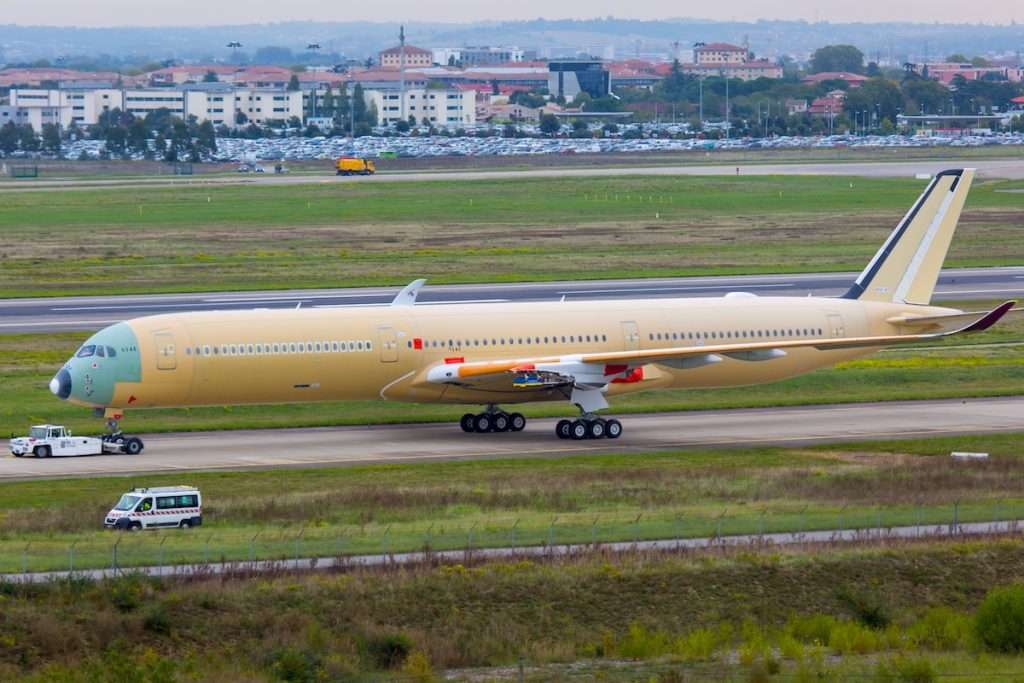
One of Airbus’ biggest concerns for the A350 Stretch is demand. Airlines have mentioned needing a larger widebody aircraft, but verbal interest does not always translate into an actual order once the aircraft is produced. Airbus already experienced this with the A380. From a profitability perspective, it was a complete failure, with only Emirates accounting for more than half the orders.
Another challenge is its competition. Before, their own A380 superjumbo jet would be a close rival to the A350 Stretch in terms of capacity. With Airbus’ delay in the program, Boeing has a head start on a larger widebody offering, with its 777-9 already being tested for delivery to Lufthansa in 2027. It can fit more than 425 passengers, which is the same market the A350 Stretch hopes to capture.
Launching a new aircraft program takes significant financial resources. Airbus must weigh the investment against potential threats to its success to determine whether it’s a viable option or opt for an entirely new aircraft design.
Will Airbus Pull The Trigger – When Would This Be & For Whom?
Airbus has a history of introducing stretched variants of its popular aircraft. The A321 expanded on the A320’s capacity, and it could potentially launch the A220-500 in the early 2030s. Stretched models have worked effectively for the manufacturer by minimising design changes, maintaining operational commonality across models, and accounting for new market demands.
With CEO Faury hinting at an official study of the A350 Stretch, it is very likely to be one of the newest aircraft projects in Airbus’s queue. With airlines already looking for a replacement for the retired A380, there is an opportunity to develop an even better aircraft to meet demand.
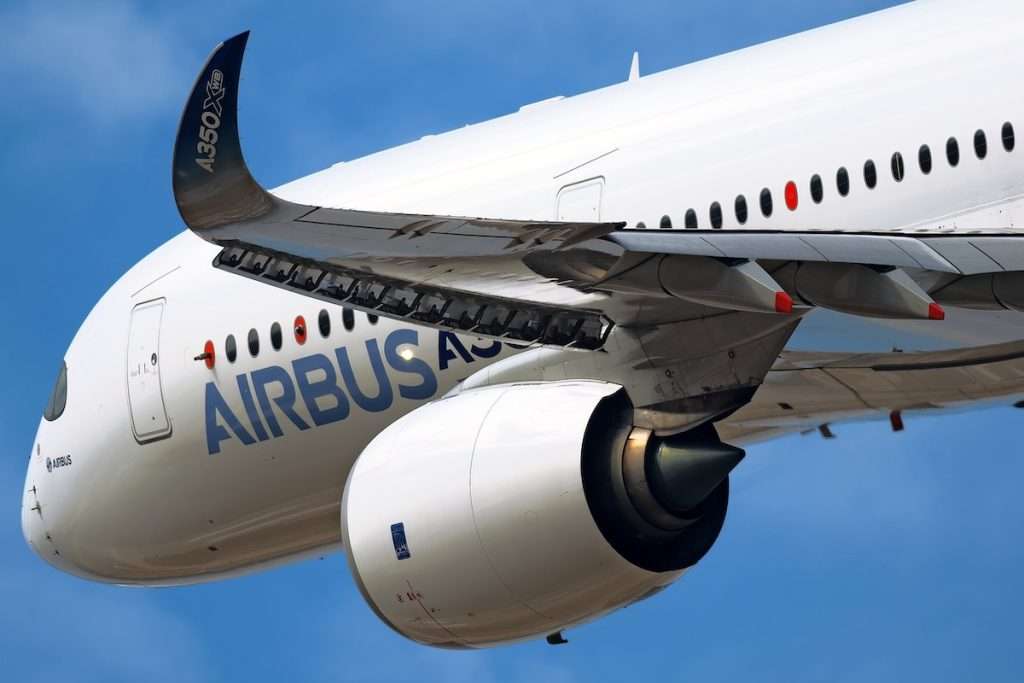
The A350 Stretch study is only the preliminary process before the aircraft program officially launches. Then, it could be another decade before airlines receive their first deliveries.
The launch gap could raises concerns, but with the future of travel moving in this direction, Airbus’ patience could pay off in the long term.

ABOUT THE AUTHOR
Bryan Shelmon is an aviation journalist with 10 years of experience covering commercial aviation, private aviation, airports, aircraft and wider industry news. Based in the Detroit metropolitan area, he has contributed to publications including Lonely Planet, Matador Network and Visit Detroit.
Leave a Reply
Related Articles




Stay Informed
Get the latest aviation news, analysis and route updates delivered to your inbox.
We respect your privacy. Unsubscribe at any time.
Enjoyed this story?
Make us your go-to for aviation news
Add us as a preferred source on Google and see our latest stories first in Top Stories.
Add Us On Your News Feed
I think the question you failed to ask or answer was is Boeing going to offer a 777-10 this would knock any stretched 350 variant out of the park.