
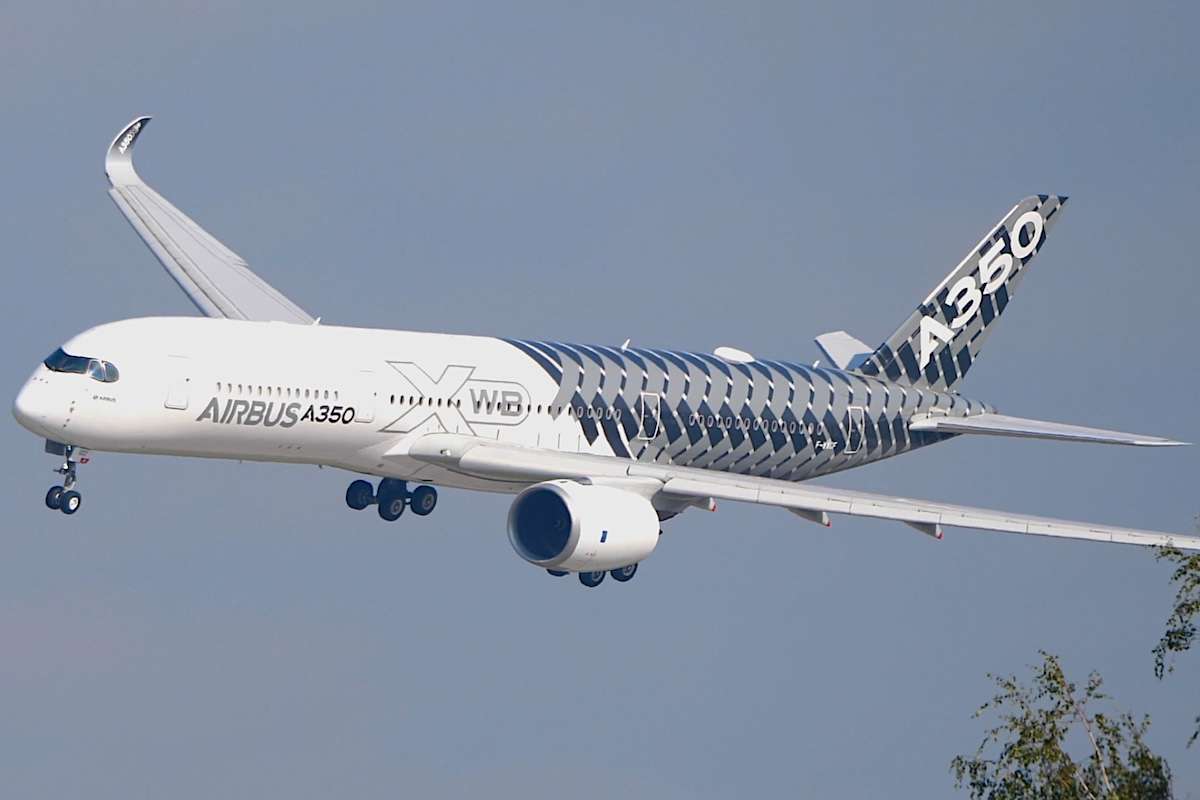
The Airbus A350-900 base variant is seeing the Rolls-Royce Enhanced Performance Trent XWB‑84 become a game-changer for the platform and the jet’s performance standards.
After an introduction, the jet has outperformed expectations, the EP variant is now the standard option for customers, and the original baseline XWB-84 is being retired from future sales campaigns.
These changes are common among aircraft manufacturers and their suppliers; in this case, the engine maker Rolls-Royce, throughout a program’s life, in a bid to improve overall offerings as much as possible.
The New Standard On The A350-900
The Trent XWB-84 EP was introduced with the view that it would become an optional, higher-efficiency version of the A350-900 on what remains an exclusive powerplant. The modest 1% fuel burn reduction over the baseline variant is nothing dramatic, but it still shows the innovation.
In service, while it was offered as a 1% baseline improvement, the actual results have been far better, with Delta stating that the jet with the revised engines sees average fuel savings closer to the 1.8% mark, almost double the initial target.
With those results and the positives, Rolls-Royce has stopped actively selling the baseline XWB-84 on new A350-900 orders and campaigns. Instead, it’s offering the EP as the standard variant, recognizing that the improvements are key to this.
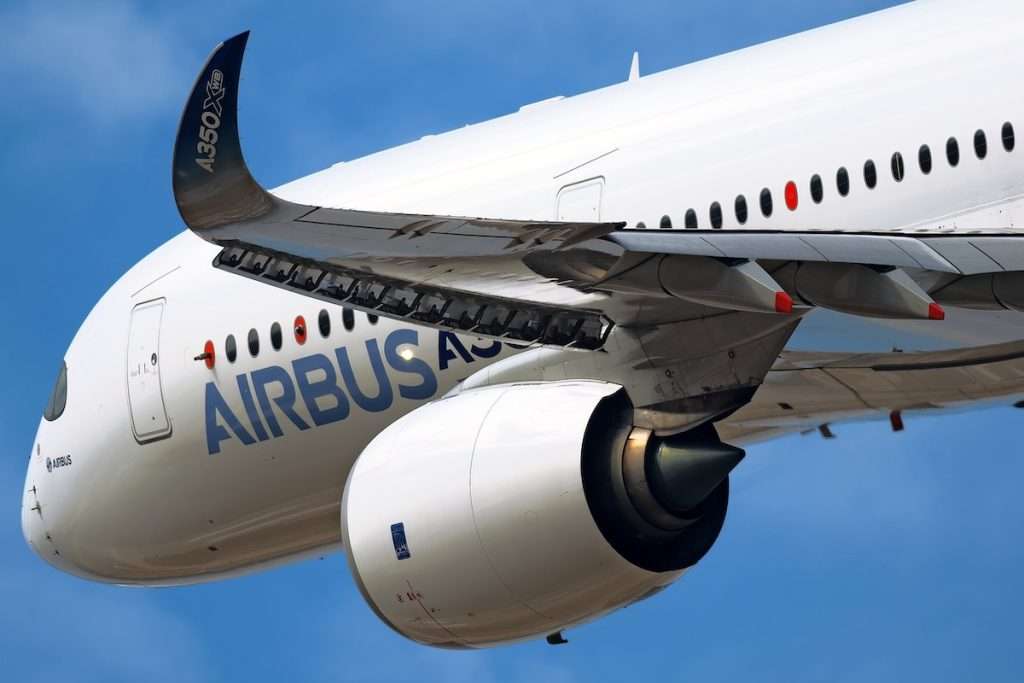
The Enhancement Performance being the default, as flagged by Flightglobal and others, means that while some airlines selected the EP from the outset, others have converted earlier commitments to the EP if they had yet to see their engines enter production.
Rolls-Royce says interest in the pre-build upgrades to the EP remains high, and the savings seen at Delta are sufficient to make this the only option moving forward. Over time, the backlog will become 100% the XWB-84 EP as the legacy baseline orders are worked out of the system.
What Happens With The XWB-84 Upgrades?
The Trent XWB-84 delivers the same 84,000 lbf (375 kN) of thrust as the baseline engine and bolts to the same A350-900 wing-band pylon. The changes are more surrounding the efficiency and internal aerodynamics.
Rolls-Royce has described the changes as a means to squeeze out further performance from the engine while keeping the same architecture, ensuring simplicity and enabling adoption far more easily.
Those improvements see optimised airflow through the engines, including subtle changes to the composite fan. Rolls-Royce has also fine-tuned the cruise performance, with long-haul engines naturally spending most of their time active and thus burning most of their fuel.

Redistributions of cooler air within the core have also improved cooling efficiency on the platform, reducing drag and losses. The modifications aren’t revolutionary, but they aren’t intended to be either. The 1% fuel burn improvement that has reached as high as 1.8% with Delta is enough to translate to around a $0.5 million saving per aircraft annually at fuel prices.
As a consequence, if the EP can reach closer to 2%, as seen with the U.S. carrier, the savings per aircraft per year will be significantly closer to the $0.9 million mark. These figures fluctuate depending on the percentage change that can be extracted and on fuel prices, which have been volatile in 2026.
Why The Airbus A350-900 Upgrade?
For Rolls-Royce, the decision to make these upgrades standard may have many reasons, but competitive pressure is a key one. The A350-900 sits in a space where next-generation jets continue to thrive, such as the Boeing 787 family, specifically the 787-9 and 787-10.
Engine efficiency across all these jets is a crucial metric that airlines compare and use to forecast lifetime costs and to understand what will suit their network. While not the only factor, it’s one of great importance in an industry so focused on efficiency.
By locking in these upgrades to the A350-900, Rolls-Royce and Airbus can demonstrate lower operating costs and a more efficient transition compared to earlier builds. Marginal improvements like these can strengthen the case for purchasing from an airline as the planemaker addresses the proposed widebody campaigns.
Those campaigns trace back to the value with customers. The EP has, since its entry into service, demonstrated better-than-advertised savings, and Rolls-Royce is continuing to advertise that. With real-world experience, the decision to make this standard was easy. Why offer something that isn’t the best available?
After a decade occupied by negativity and problems with engine manufacturers, whether it is Rolls-Royce and their Trent 1000, CFM or Pratt & Whitney, there has been a feeling at airlines that engine makers haven’t been holding up their end of the margin.
Therefore, investment in engine improvements aligns with Rolls-Royce’s view of continuing to raise the standards of what’s available to customers. It also ultimately shows the desire to innovate and put customers first amid rising pressures at most airlines, which is a high priority.

ABOUT THE AUTHOR
Daniel Fowkes is a Melbourne-based aviation analyst and journalist with over a decade of industry experience. As founder of Dj’s Aviation, he delivers trusted analysis on aircraft, airline strategy and global aviation trends for djsaviation.net
Related Articles




Stay Informed
Get the latest aviation news, analysis and route updates delivered to your inbox.
We respect your privacy. Unsubscribe at any time.
Enjoyed this story?
Make us your go-to for aviation news
Add us as a preferred source on Google and see our latest stories first in Top Stories.
Add Us On Your News Feed