

Thai Airways is gearing up for its next phase of growth and, as part of that, is seeking to acquire an aircraft such as the Boeing 777X, per Bloomberg.
With a deal in the early stages of being formulated, the Thailand flag carrier is looking to quietly go about its business and seek 10 new widebody jets, specifically high-capacity models, to support its future growth.
Airbus and Boeing will lock horns over a deal that’s not expected soon, as Thai Airways looks to position itself for its long-term ambitions with an achievable reality, which means new orders must be placed.
A decision on the order’s direction hasn’t been finalized, but Boeing will do everything in its power to prove it should be the chosen provider. That drive is given, Thai Airways already operates the 777 and thus has experience with the family.
With no rush on the final decision, Thai Airways is keen to wait until Boeing’s flagship product has been certified and possibly delivered so that real-world experience can be compared with the other competing jet in the order, Airbus’ A350-1000.
What Thai Airways Is Looking At?
The talks for Thai Airways‘ next flagship aircraft centre on two types that are not currently in its fleet; on the Boeing side, it would be the 777-9, part of the 777X family. The competing jet from Airbus, the A350-1000, is a step up from the existing A350-900 in the fleet.
With a total of 10 aircraft being studied to form the order, Thai Airways’ pitch is more about addressing an immediate capacity gap driven by the removal of older fleet types, which means new jets from the 2030s onwards are required.
The two frontrunners are currently the largest aircraft in production, as both Airbus and Boeing have said goodbye to quad-engined superjumbos in favour of more efficient twin-engine jets, which trade capacity for better 21st-century metrics that airlines want.

For Thai Airways, either type of aircraft it studies would help complement its existing next-generation fleet of widebodies, with the Boeing 787 and Airbus A350 featuring; the latter is the A350-900 rather than the largest, high-capacity A350-1000, which could be added to ensure commonality continues.
While the 777X or A350-1000 would complement the existing fleet, ultimately these are two jets that would sit directly above the existing widebodies and, for the next era of the business, importantly, become the true flagship platform.
The flagship title isn’t one to frown upon. For Thai Airways, it’ll mean they can once again have the size and capabilities to serve its busiest and longest routes with an efficient platform that won’t negatively impact them, such as the Airbus A380.
Why Does Thai Need A Jet Like The 777X?
For Thai Airways, a new commitment that could include the 777X comes with hefty risk, as the airline has been the centre of attention in recent years amid its own struggles following the COVID-19 pandemic and a turbulent financial position.
However, the need for a plane, and ultimately a flagship, couldn’t be more neccesary than now, as a gap has emerged in the airline’s fleet that needs addressing and is a direct consequence of the turbulent period over the last decade, which saw significant changes.
Fleet renewal is the heart of any business. Previously, Thai Airways operated many high-capacity quad-engined widebodies, including the Boeing 747-400 and Airbus A340s. The airline even had room for the Airbus A380.
All these planes were pivotal across its most in-demand international destinations, but were ultimately axed in quick succession as costs spiraled. The airline was forced to cut costs, reduce the fleet size, and stabilise what it had, but ultimately with less capacity.
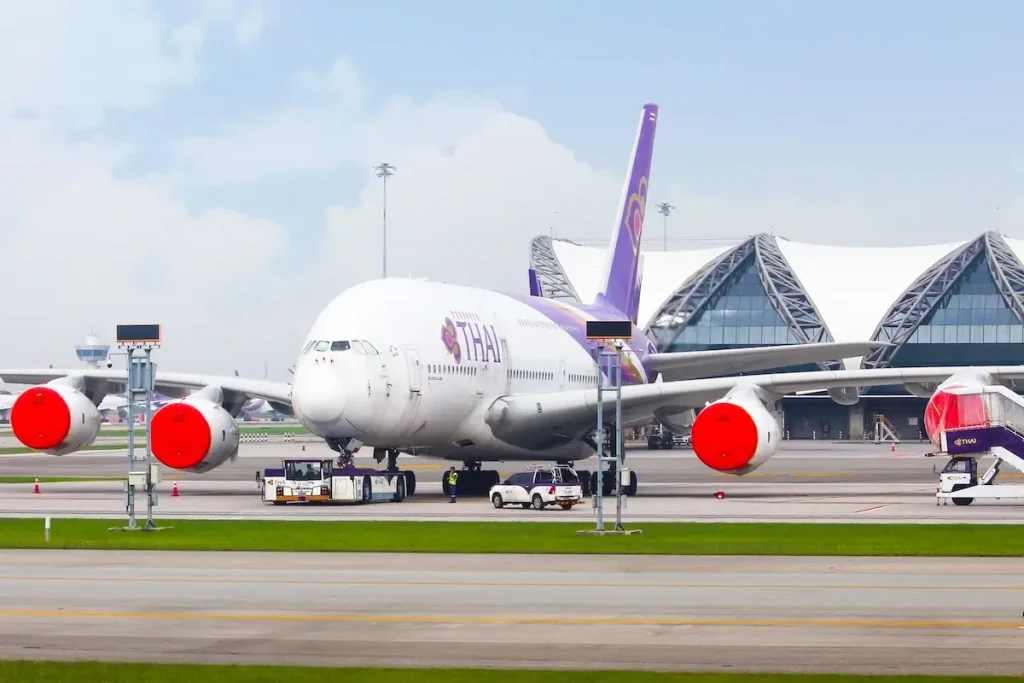
Even with existing orders for more mid-sized widebodies to remain competitive, there is still a need to bring in new equipment. The large twin-jets in the 350-400+ seat range can bring travellers from Bangkok to Europe and beyond as demand increases into the 2030s and 2040s, without pressure to increase frequencies to match demand.
While several years ago, Thai Airways may not have been ready to place a new order, especially for a plane like the Boeing 777X, given its pricetag and size, now the airline is conducting its due diligence to have, one day, a small fleet that would concentrate capacity on some of its more marquee routes.
The adoption of a larger widebody would therefore free up existing mid-sized jets, such as the A350-900 and 787, to serve other international markets. Ultimately, this is a risky transaction and will require patience, but it’s necessary to help the business grow and ensure profitability for decades to come.

ABOUT THE AUTHOR
Daniel Fowkes is a Melbourne-based aviation analyst and journalist with over a decade of industry experience. As founder of Dj’s Aviation, he delivers trusted analysis on aircraft, airline strategy and global aviation trends for djsaviation.net
Related Articles




Stay Informed
Get the latest aviation news, analysis and route updates delivered to your inbox.
We respect your privacy. Unsubscribe at any time.
Enjoyed this story?
Make us your go-to for aviation news
Add us as a preferred source on Google and see our latest stories first in Top Stories.
Add Us On Your News Feed