

The Boeing 787-9 serves as the mid-sized sweet spot in the long-established Dreamliner family, combining cutting-edge efficiency with passenger-pleasing innovations, enabling it to dominate long-haul fleets globally.
Shining as an example of what innovation paired with a drive to be more efficient than ever can create, the 787-9 offers fuel-burn reductions, a cabin that feels brighter and fresher than its predecessors, and a range fit for any mission.
Here’s a full breakdown of the Boeing 787-9: what it is, what it offers airline customers, its key performance metrics, and how it eroded the use case for its smaller sibling, the 787-8.
Boeing 787-9 Dreamliner Specs and Key Features
The Boeing 787-9 is the mid-sized variant of the Dreamliner family, offering a maximum range of 7,565 nautical miles and seating around 296 passengers. It dominates long-haul aviation by providing the perfect balance of payload capacity and a 20% reduction in fuel consumption compared to older generation aircraft.
For Boeing, the aircraft is positioned as a next-generation offering that directly competes with the Airbus A350 as the two primary choices for airlines seeking to unlock the future of their long-haul networks, with a priority on efficiency and flexibility.
Specifications At A Glance
Boeing’s 787-9 has become a fleet-planning favourite, and its key features have helped cement its role in the industry through significant advancements.
- Fuselage: 50% composites, 6.1m stretch vs 787-8 with a diameter of 5.77m
- Wings: 60.1m span, raked tips and a flex for up to 7m in flight
- Engines: GE Genx-1B74/75 or Rolls Royce Trent 1000 with 66,500-74,000lbs of thrust
- Systems: All electric, with HEPA filters and a cabin altitude of 6,000ft
- Cabin: 20% larger windows with 15-20% humdiity thanks to new controls, LED mod lighting
Unpacking The Game-Changing 787-9
With a strong payload and a 20% reduction in fuel consumption compared to older-generation aircraft, it has become a pillar piece for airlines looking to either grow or renew their operations.

K65987-02
However, the aircraft’s true winning characteristics have been the innovations that have made it a pioneer in the 21st-century travel era. Boeing has adopted materials, systems, and the passenger experience to deliver an efficient and comfortable platform with proven operating economics.
At its core, the 787-9 leverages 50% composite materials by weight and features carbon fibre-reinforced polymer (CFRP) fuselage and wings that are substantially lighter yet equally resistant to corrosion and fatigue over time compared to aluminium.
The composite wings themselves span 60.1 metres and, with their raked wingtips, allow for substantial flex that reduces drag and improves fuel efficiency. Not only that, but over a 25-year lifespan, Boeing forecasts a 30% reduction in overall maintenance costs with its advancements.
Electrification of the Boeing 787-9 has further helped define the aircraft’s edge, with Bleedless systems replacing engine-driven pneumatic systems and improvements in cabin air, wing ice protection, and hydraulics cutting weight and boosting reliability.
But how does the aircraft perform in terms of range, capacity, and economics?
Boeing 787-9 Range, Capacity, and Performance
Building upon the innovation and electrified systems, the 787-9 also excels thanks to its operational metrics, which have made it a leading choice for airlines seeking to optimise their point-to-point networks with a versatile jet.
With a high maximum takeoff weight and operating empty weight, the aircraft has been specifically balanced for payload, enabling transoceanic hops. Its fuel capacity enables a range of 7,565 nautical miles (14,010km) in a typical two-class configuration and thus can be seen across Sydney-to-Los Angeles and Perth-to-Rome routes, as seen with Qantas.
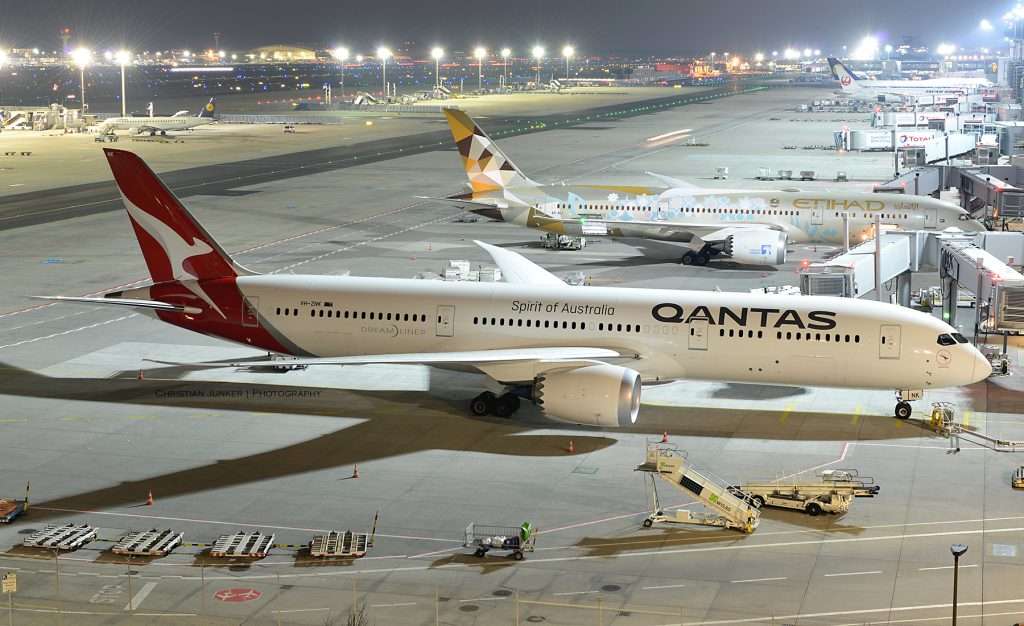
These long-haul legs are a key focus for airlines as they evolve their own networks, enabling non-stop flights while consuming less fuel per seat than predecessors such as the Boeing 777, which is critical in volatile markets where fuel prices continue to surge amid global conflict in Iran.
Airlines Love The Boeing 787-9 Capacity
Capacity also shines for the 787-9. In a standard two-class layout, the aircraft can carry 290 passengers, while high-density single-class variants can cram 300+ seats across a 242ft (73.8m) fuselage. The cargo hold also accommodates 4,490 cu ft (127 m³) in LD3 containers, with 28 positions, supporting further revenue maximisation.
The 787-9’s capacity, therefore, from a passenger standpoint, certainly proves profitable for mid- to ultra-long-haul routes, whether across Europe and Asia or the U.S., unlike the shorter 787-8 or the heavier 777X, which is yet to be certified as of early to mid-2026.
That fuselage stretch over the 787-8 proves to be the perfect way to maximise revenue per flight without needing to handle oversized gates or runways, which means ground handling can be slashed while opening up the chance for a premium configuration meeting high-yield business traffic, or a more dense economy base where operators can best meet their network requirements.
Performance Highlighted
With cruise speeds hitting March 0.85 (488 knots/903km/h true airspeed), the initial climb rates are also strong, thanks to the thrust of the GE GenX-1 B or Rolls-Royce Trent 1000 engines that give the jet the performance jump customers would come to expect.
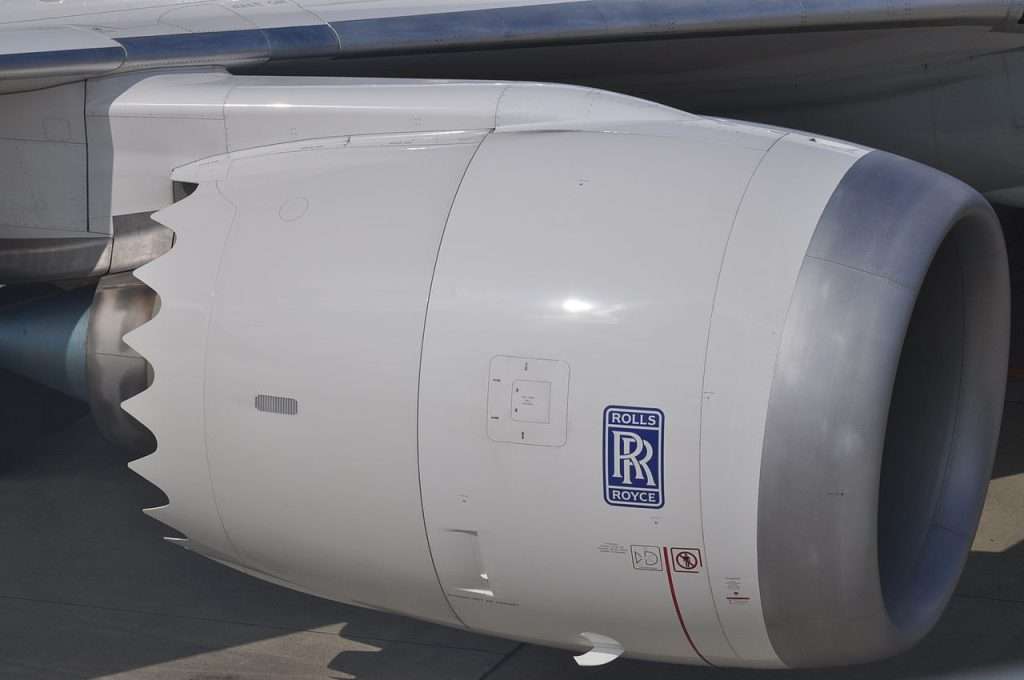
Performance metrics further highlight that the aircraft focuses heavily on its efficiency, too. The aircraft requires just 9,800 ft at MTOW and has rapid ascent, yet it can minimise nose and emissions, with a 25% edge over the A330-300 and ETOPS-330 certification, enabling twin-engine flight over water and key routes.
Even with its game-changing performance, the 787-9 and the broader 787 series haven’t been without their problems, with a history filled with niggles that have affected the output, status, and finances of the planemaker and airlines alike.
Despite these, the 787 has pushed on, and with it being a sweet spot for airlines, how does the mid-range 787-9 compare with its siblings today?
Differences Between 787-8, 787-9, and 787-10
The Boeing 787 lineup offers a trio of widebodies that are ultimately tailored for a diverse long-haul array of opportunities. At the same time, the 787-9 emerges as the heart of the lineup; its siblings equally offer something unique. The nimble 787-8 and the more capacity-heavy 787-10 see the 787-9 as the perfect bridge between them.
Boeing’s 787-8 has been viewed as an agile scout that, in its own niche, can zip passengers across a range of 7,355 nautical miles and is perfect for deployment on thinner routes, highlighted by a length of 186ft and the smallest capacity in the program.
Whereas the midground, often seen as the sweet spot, the Boeing 787-9 steals the show in terms of balance: not only is it capable of a strong capacity count that allows for premium and economy seating configurations, but it also has a maximum range of 7,565nm that opens up a host of long-haul possibilities.

The 787-10, meanwhile, known for further fuselage strength and a jump in capacity at the expense of range, is seen as the perfect aircraft for high-density trunk routes, the jet to be adopted by Qantas and viewed as a natural A330 replacement thanks to its advanced seat capacity.
| Variant | Length | Seats (2-class) | Range | Best For |
| 787-8 | 186ft | 248 | 7,355nm | Thin Routes |
| 787-9 | 206ft | 290-330 | 7,565nm | Mid-Long Versatile |
| 787-10 | 224ft | 330-350 | 6,430nm | High-Density Trunks |
Airlines That Operate the 787-9 Dreamliner
Over 70 airlines operate the Boeing 787-9, and with an order book exceeding 1,450 and 725 total deliveries, the variant is the most successful in the Dreamliner family thanks to its ideal balance.
Airlines are buying it because of its perfect mid-sized profile and range, paired with capacity that’s enough for their most successful point-to-point routes without wasting empty seats.
Many airlines, as a result, have leveraged the 787-9 for their network renewal and development, some leading airlines more so than others; however, they looked to redefine themselves as a business thanks to the acquisition.
Qantas: Australia’s Game-Changing Widebody
Qantas’ Boeing 787-9s are now the backbone of their long-haul operations, especially following the removal of the Boeing 787, and enable some of their most ambitious routes yet, including Perth to London, and in other markets replace the thirstier A330 jets.

The airline’s 787 fleet is frequently seen across US routes, shaving hours off journeys thanks to its newfound viability, and has been central to expansion into Europe over the years. These aircraft are being prepared for the 20-hour endurance Project Sunrise flights that’ll open a new corridor of opportunities.
United Airlines: The New Era Of Widebody
United Airlines boasts a strong fleet of the 787-9; however, it also flies every other variant of the widebody and, for the moment, has the series positioned as its only commitment, bar a doormat A350 order, to larger next-generation jets, showing just how much it relies on the jet.
The 787 Dreamliner not only helps replace older 777s on high-yield markets but also, with a stronger cabin product thanks to the Polaris suites, has driven up loyalty, prompting the airline to lean into the premium market to become sustainable over the long term.
British Airways: A Transatlantic Option
Meanwhile, British Airways deploys the 787-9 and other variants on Heathrow-to-Boston, Heathrow-to-Tokyo, and Heathrow-to-Nairobi services, allowing the 777 to be replaced with a more efficient aircraft.
Ultimately, the jet is key for transatlantic flying too, with its flexible nature, lower cabin noise, and other advantages, meaning the airline can leverage the jet for frequency over capacity and boost oneworld connectivity in the United States.

Each airline ultimately has a different reason for the acquisition, and many more use the jet worldwide. For good reason, bottom-line fuel efficiency is a key factor in acquisition efforts, but what makes the 787-9 so efficient?
Why the 787-9 Is So Fuel Efficient
The Boeing 787-9 has been able to rewrite the previously established and restrictive economics of long-haul flying because of its efficiency, headlined by a 20-25% reduction in fuel consumption per seat compared to legacy widebody jets.
Those advancements have been made possible by Boeing’s engineering and innovation teams, who created the aircraft with a view to offering metrics that would be game-changing for airlines that adopted it, with priorities placed on lightness, the jet’s aerodynamic performance, and its overall power.
The jet’s revolution is first seen in its composite airframe, with over 5% of the fuselage and wings crafted from carbon fiber-reinforced polymers, which are 20% lighter than their aluminum counterparts. Ensuring not just strength but long-term fatigue resilience is key to a long operational life and lower maintenance costs as the jets age.

These materials enable weight savings in empty operating weight, which gives more opportunity to increase payload for fuel and more without hurting the structure. Its aerodynamic efficiency is enhanced by a wingspan with raked, adaptive wingtips that reduce drag by 8% and allow the wings to flex in flight to smooth turbulence while optimising lift.
This means there’s no more energy wasted through bleed air, and efficiency continues through the electric architecture within the cabin systems, anti-icing, and brakes, which aim to trim another 500kg from weight and boost overall output.
Maintenance savings are also highlighted, with savings predicted to reach 30% over 25 years. The composites can shrug off corrosion concerns and, when paired with efficient engines and other advancements, make the jet more capable and agile at meeting airlines’ requirements in the 2020s.
Passenger Experience on the Boeing 787-9
It’s not just airlines that rave about the 787-9, but passengers alike who applaud the aircraft for transforming what were previously grueling long-hauls into journeys where the priority is placed on wellness, and, for airlines, a high level of comfort in the product they put out.
Unlike the dryer and dimmer cabins found on older legacy widebodies such as the 777 and A330, the Dreamliner has ushered in a new era of a brighter, fresher interior that is also somehow more spacious.
The massive 28×47-inch electrochromic windows, which are 20% larger than rivals’, dimming electrically at the touch of a button, ensure the cabin can be filled with natural light without bulky shades, making it perfect for marathon journeys exceeding 15 hours.

Cabin altitude can also stay at a comfortable 6,000 feet above the 8,000-foot standard, and, paired with 15-20% humidity from advanced HEPA filters, this setup delivers nearly 100% particle scrubbing to slash jet lag, headaches, and dehydration during long-haul marathons.
Dynamic LED lighting has also been applauded, with the shifts in lighting conducted by airlines able to sync with body clocks, so that whether sleeping or welcoming breakfast, these experiences are met with the appropriate colour tones.
The Insider’s Verdict: Why the 787-9 Killed the 787-8 Market
The Boeing 787-9 can strike the perfect balance between three core fundamentals that airlines and passengers want, whether it be range, efficiency, or comfort, and it means it is positioned as the most versatile aircraft in the manufacturer’s lineup.
The decisive nail in the 787-8’s coffin has been the evolution of the -9. While the -8 pioneered composites and electrification, the seat-limited design meant that post-launch airlines struggled to fill the jets with lucrative premium seating on their mid- to long-haul routes, prompting a hard pivot.
Furthermore, with aircraft like the 777 retiring and the upcoming arrival of the 777X, the Boeing 787 has, compared to this much larger widebody, proven to be a less risky alternative.
With a focus more than ever on ensuring that capacity and range complement each other, the 787-9 has quickly outpaced the -9 and now accounts for 90% of total orders, with operators like United and Qantas leaning heavily on this aircraft.
The -8 lingers across thinner routes; the -10 is perfect for capacity on high-density trunk routes, but the -9 is the variant that dominates globally and has proved the platform for bigger but measured is-better, key to achieving profitability.
Frequently Asked Questions
Why is the 787-9 more popular than the 787-8 or 787-10?
The 787-9 is considered the “sweet spot.” It has a longer range than the -10 and more seating capacity than the -8. This versatility allows airlines to use it for “long and skinny” routes (long distances with moderate demand) where larger planes would be unprofitable.
How many passengers can a Boeing 787-9 carry?
In a standard three-class configuration, the 787-9 typically carries around 290 to 300 passengers. Some low-cost carriers or two-class configurations can push this capacity closer to 350.
What makes the Dreamliner’s windows different?
Unlike traditional planes that use plastic pull-down shades, the 787 uses electrochromic dimming technology. This allows passengers to tint their windows at the touch of a button while still being able to see outside, and it gives flight attendants the ability to dim the entire cabin for sleep cycles.

ABOUT THE AUTHOR
Daniel Fowkes is a Melbourne-based aviation analyst and journalist with over a decade of industry experience. As founder of Dj’s Aviation, he delivers trusted analysis on aircraft, airline strategy and global aviation trends for djsaviation.net
Leave a Reply
Related Articles




Stay Informed
Get the latest aviation news, analysis and route updates delivered to your inbox.
We respect your privacy. Unsubscribe at any time.
Enjoyed this story?
Make us your go-to for aviation news
Add us as a preferred source on Google and see our latest stories first in Top Stories.
Add Us On Your News Feed
Wow that was strange. I just wrote an extremely long
comment but after I clicked submit my comment didn’t
appear. Grrrr… well I’m not writing all that over
again. Anyway, just wanted to say great blog!
Author
Wow sorry about that, but thank you so much for your support.