

Since its introduction to the industry, the Boeing 787 Dreamliner has redefined what long-haul travel means, with efficiency that has set a new standard for planemakers.
As one of the most advanced widebody jets in history, the 787 has become a pillar of many airlines’ fleets worldwide; however, despite its innovation and commercial success, the 787’s journey hasn’t been smooth.
Over the years, a range of Boeing 787 problems has drawn scrutiny from regulators, airlines and passengers alike. Despite this, Boeing has persisted in rebuilding the widebody, and now the jet is positioned for a big end to the 2020s, with deliveries, orders, and even planned production growth.
But to understand how the Boeing 787 achieved stability after over a decade of instability requires a closer look at the challenges that arose, how they were addressed, and what they meant for airlines and passengers.
What Problems Has the Boeing 787 Faced?
Since its launch, the Boeing 787 Dreamliner has faced several high-profile issues, including early lithium-ion battery fires, manufacturing quality-control flaws, and fuselage-gap concerns. However, following strict FAA directives and halted deliveries, the major safety flaws were addressed, and it remains one of the safest widebody jets in active service.
Timeline of Boeing 787 Problems
| Year | Problem |
| 2007-2011 | Initial Production Delays |
| 2013 | Lithium-ion Battery Fires |
| 2020 | Fuselage Gaps and Shims |
| 2021-2023 | Fuselage Fastening & Stabilisers |
| 2024 | Fasterner Torquing |
| 2025 | Titanium Defects & Fuselage Concerns |
Battery Issues and Early Groundings
Some of the early issues that plagued the Boeing 787 Dreamliner were the high-profile lithium-ion battery fires. The saga began in early 2013, just a year after the 787 had entered commercial service, when a Japan Airlines 787-8, registered as JA829J, arrived at Boston Logan International Airport from Tokyo.
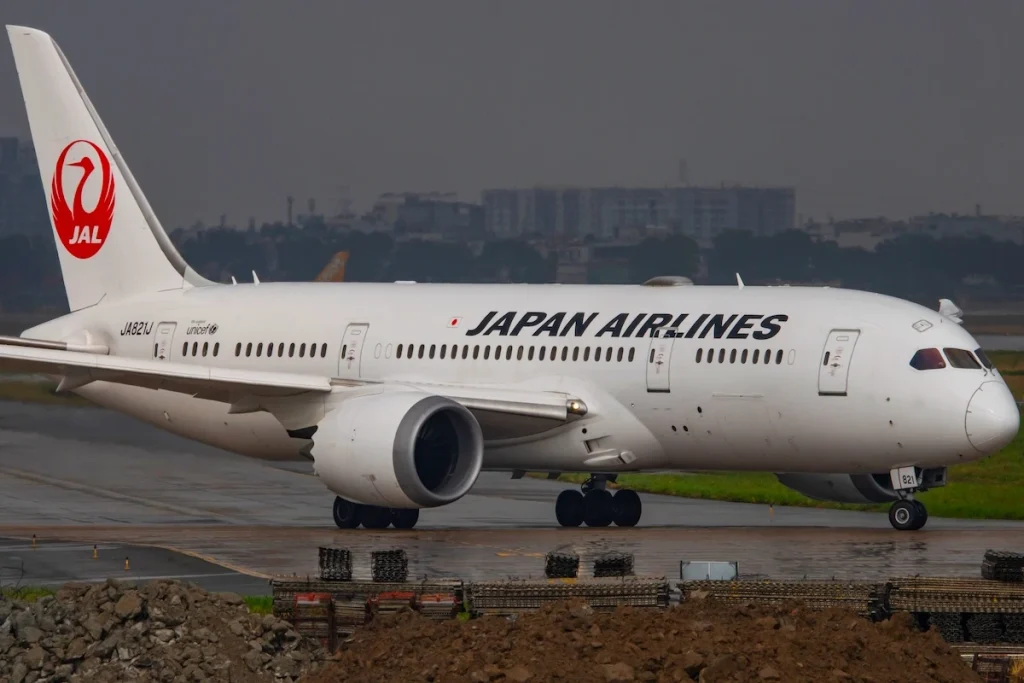
However, after the 183 passengers and crew disembarked, the ground crew at the airport observed smoke and flames from the auxiliary power unit (APU). A mechanic who initially used a fire extinguisher was later relieved by airport fire services, who had to employ a full supply.
The battery continued to emit heat and was removed for further analysis. While no injuries occurred, it raised fresh concerns about the deployment of lithium-ion batteries in an era when weight and cost savings were pivotal for aircraft.
Days late, United Airlines would report a writing fault in the same battery compartment of one of its own Dreamliners. This prompted an extensive probe by the NTSB and was later elevated when, a week later, on January 16, ANA’s 787-8 made an emergency landing at Takamatsu Airport after a cockpit warning signalled a main battery malfunction and smoke in the electrical compartment.
Problems Prompt Groundings & Blame
As a direct consequence of these fresh findings and incidents, ANA and Japan Airlines grounded their fleets, even amid daily losses exceeding USD 1 million due to the parkings, and the grounding prompted an unprecedented investigation by regulators.
On January 17, 2013, the Federal Aviation Administration issued an emergency airworthiness directive that, at the time, grounded the only 50 operational 787s and was the first worldwide full-fleet grounding in nearly 40 years.

Regulators around the world follow the FAA, with deliveries halted and customers expecting this game-changing plane acquisition to be delayed. In a report published by the NTSB on 1 December 2014, following lengthy investigations, blame was placed on multiple fronts.
GS Yuasa of Japan was blamed for its battery manufacturing methods, which could introduce defects that inspections might not catch. Boeing’s own engineers were also questioned about failing to test for the worst-case scenario, and the FAA was singled out for failing to conduct a proper test as part of the certification process.
Production Delays and Manufacturing Concerns
Beyond the battery crisis that affected the 787’s early life, the program has been plagued throughout its production by manufacturing concerns and delays in the widebody’s output, spanning nearly two decades.
Fundamentally, the concerns have challenged the supply chain and Boeing’s own ambitious attempts to hike production rates. The program launched in April 2004, with a first delivery promised 4 years later. The first slip was due to supplier shortages of bolts and was compounded by software glitches; then a machinists’ strike in 2008 worsened the blow.
By 2011, with the maiden flight completed, initial deliveries had been pushed back by three years, costing Boeing $10 billion in overruns. As a consequence, customers of ANA and United Airlines expressed frustration and saw trust erode due to missed deadlines, similar to the nearly $15 billion in charges the 777X program has incurred.
Boeing’s Troubled 2020s
These setbacks at the beginning of the 787’s life would foreshadow the troubled teens and the turn into the new decade, which would magnify the production issues and cast a dark cloud over the popular widebody jet, which, while game-changing, could not enjoy clear air.
In 2020, Boeing was amidst the COVID-19 pandemic, halting deliveries of its 787 for five months after it discovered fuselage gaps at aft body joints that exceeded tolerance levels (up to 0.0005 inches). This was caused by undersized shims and wavy inner mold lines on the composite barrels. While the jet deliveries were halted during the pandemic, 8 in-service aircraft were also affected by the findings and required fixes.

This pattern in 2020 continued into 2021, when a whistleblower alleged improper fuselage fastening at the North Charleston facility, prompting the FAA to step in and conduct audits. By mid-2024, over 900 fasteners on undelivered 787s were found to have been incorrectly torqued from the wrong side, which delayed aircraft and, while not posing immediate safety risks, highlighted long-established sloppy quality.
These cronci issues, especially throughout the 2020s, have seen a culture hell-bent on rushed assembly erode quality across the Dreamliner, something Boeing has now, in the last 24 months, actively been pushing to correct.
Quality Control and Delivery Slowdowns
These chronic manufacturing concerns, which have persisted throughout the 787’s life, have escalated and become headline-making quality control failures that have, as a result, culminated in delivery slowdowns, crippling the 787’s targeted output rate and further amplifying security concerns from not just customers but also onlookers and regulators.
Production rates, once targeted at over 10 per month, stagnated in the single digits for years, with deliveries frequently halted for month-long periods, leaving the series backlog in the hundreds and growing as orders outpaced output.
With understaffing, oversight from the Federal Aviation Administration (FAA), and a long-standing culture that has prioritised profit over safety, the 787, alongside its most popular 737 MAX program, has borne the brunt of the impact, with deliveries persistently slowed and failing to match demand.
Is the Boeing 787 Safe Today?
The Boeing 787 has never, despite its long-standing issues since its conception, been “technically unsafe” in the sense of an imminent safety risk, unlike the MCAS groundings that followed the 737 MAX after two crashes that killed 346 people.
However, the 787’s history is full of recurring quality niggles, headlined by a broader misplacement of priorities by the planemaker, where speed over patience and execution damaged the widebody series.

The 2013 battery fires marked the program’s closest call in terms of intervention arriving in time. However, the 2020 issues, such as fuselage gaps, misdrilled holes, defects, and more, were often structural non-comforts that were caught either pre-delivery or during inspections rather than in-service failures.
However, in 2025, Air India flight A717 crashed shortly after takeoff from Ahmbedebad, the first hull loss and fatal accident involving the Dreamliner. Investigations have since revealed that both engine fuel control switches were unexpectedly moved to the “cutoff” position.
Immediately following this, inspections were undertaken not only on Air India’s 787 fleet but also on aircraft worldwide, and the aircraft were safely returned to service once cleared of issues.
What These Problems Mean for Airlines and Passengers
Boeing’s long-running issues, from the 2013 groundings to the 2020 delivery halts, have inflicted a cascading line of financial, operational, and reputational pain on not just the planemaker but also airlines and passengers alike.
The January 2013 groundings halted flying worldwide, and put ANA and Japan Airliens as the hardest hit, these airlines losing in excess of $1 million daily due to the forced cancellation of long-haul flights to some of their most important markets in Europe and the United States.
Chronic delivery delays, having become a larger problem across the 2020s, have forced airlines to rely more heavily on older, less efficient aircraft, such as Lufthansa with its Boeing 747-400s and A340-600s, thus eroding the 25% fuel-saving goals and pressuring the bottom line as costs surge.

Lufthansa was forced, in its own case, to resort to leasing, ground aircraft, and more. Qantas and KLM are also experiencing significant delays in delivering their Boeing 787s, which were meant to be integral to their renewal efforts. Still, the delays have impacted scaling efforts on their long-haul networks.
Customer Confidence Also Drops
For passengers, the disruptions have been significant, with fewer aircraft being delivered, resulting in a lower chance of getting. Newer planes have been eroded; additionally, trust has been eroded post the 737 MAX crash, and the revelation of several quality lapses on the Dreamliner has resulted in much pushback for Boeing to be better.
With surveys showing at times a 20-30% dip in Boeing confidence, this has fueled a shift in appeal towards Airbus aircraft. While the American planemaker rebuilds and shows strong progress, the last 15 years have highlighted how the race for profit can come back to bite.
Bottom Line: How the 787 Problems Changed Boeing’s Reputation
The Boeing 787 Dreamliner’s rocky saga, spanning battery struggles, endless days and quality problems, has undoubtedly contributed to the deeper cultural shift that followed the uncovering of years’ worth of poor practices.
With program overruns, Boeing appeared aggressive, outsourcing key components and ignoring several whistleblowers who flagged fuselage concerns and 787 probes, such as the late John Barnett, to focus more heavily on profits rather than sticking to its guns of the safety-first ethos previously ingrained in the business.
From a reputation standpoint, this positioned Boeing as a brand perceived as unreliable amid scrutiny from the FAA and others, leading to a dip in its stock and prompting hesitancy in the wake of persistent struggles.

Yet, recent strides signal that redemption is on the cards. Post-2024 woes, Boeing has invested heavily in its $1 billion South Carolina facility, where it is achieving higher production rates, building new assembly halls, and creating over 1,000 jobs, on track to surpass pre-COVID production rates for the widebody.
Additionally, the stabilisation of the backlog under new leadership and a strong cultural reset have once more emphasised mandates that aren’t aligned with quality at the forefront. This, however, will rebuild slowly after so many scandals.
Ultimately, the 787 is resilient and is Boeing’s leading widebody in production; its innovation is at the forefront of why customers love it, but its problems are a stain on its history within the industry and are now being corrected. That correction sees a callback to the golden age, where safety over speed was paramount and needed if the business is to get back in the race for the throne of the leading planner that Airbus has taken from it.
Frequently Asked Questions:
Was the 787 Dreamliner ever grounded?
Yes. In 2013, the entire global fleet was grounded for four months following a series of lithium-ion battery fires. Boeing redesigned the battery housing and charging system.
Are the production “shims” and “gaps” a safety risk?
While the FAA and Boeing identified manufacturing flaws regarding fuselage joins (gaps larger than five-thousandths of an inch), these were classified as long-term fatigue concerns rather than immediate flight safety risks. All delivered aircraft have undergone rigorous inspections to meet structural requirements.
How can I tell if I am flying on a Boeing 787?
The easiest way to identify a Dreamliner from the ground is by its scalloped (chevron) engine nacelles and its raked wingtips. Inside, look for the oversized windows and the absence of physical window shades.

ABOUT THE AUTHOR
Daniel Fowkes is a Melbourne-based aviation analyst and journalist with over a decade of industry experience. As founder of Dj’s Aviation, he delivers trusted analysis on aircraft, airline strategy and global aviation trends for djsaviation.net
Related Articles




Stay Informed
Get the latest aviation news, analysis and route updates delivered to your inbox.
We respect your privacy. Unsubscribe at any time.
Enjoyed this story?
Make us your go-to for aviation news
Add us as a preferred source on Google and see our latest stories first in Top Stories.
Add Us On Your News Feed