
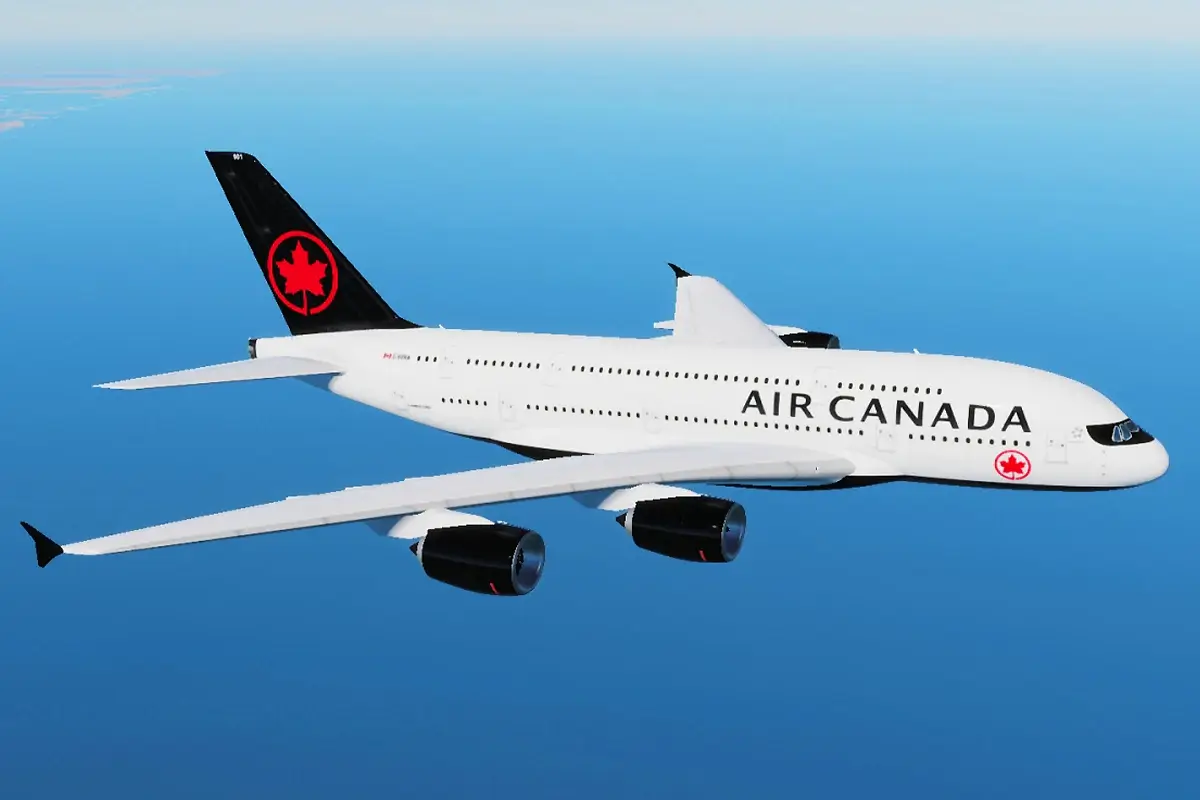
Air Canada is one of North America’s largest airlines, but it never so much as considered the Airbus A380, the world’s largest passenger plane.
With no order for the superjumbo, what led to Air Canada’s lack of interest, and are there parallels to the neighbouring United States, with its lack of adoption of the aircraft as well?
A Model That Works For Air Canada
While the Airbus A380 has been acquired by airlines around the world, some of the largest airlines have never quite believed that the jet is the best choice for their international network, Air Canada being one of them.
While Air Canada once flew larger planes, including quad-engine ones such as the 747 and A340, the days of operating those planes have long come to a close and represent a very different era than the one the industry has found itself in for now in excess of 15 years.
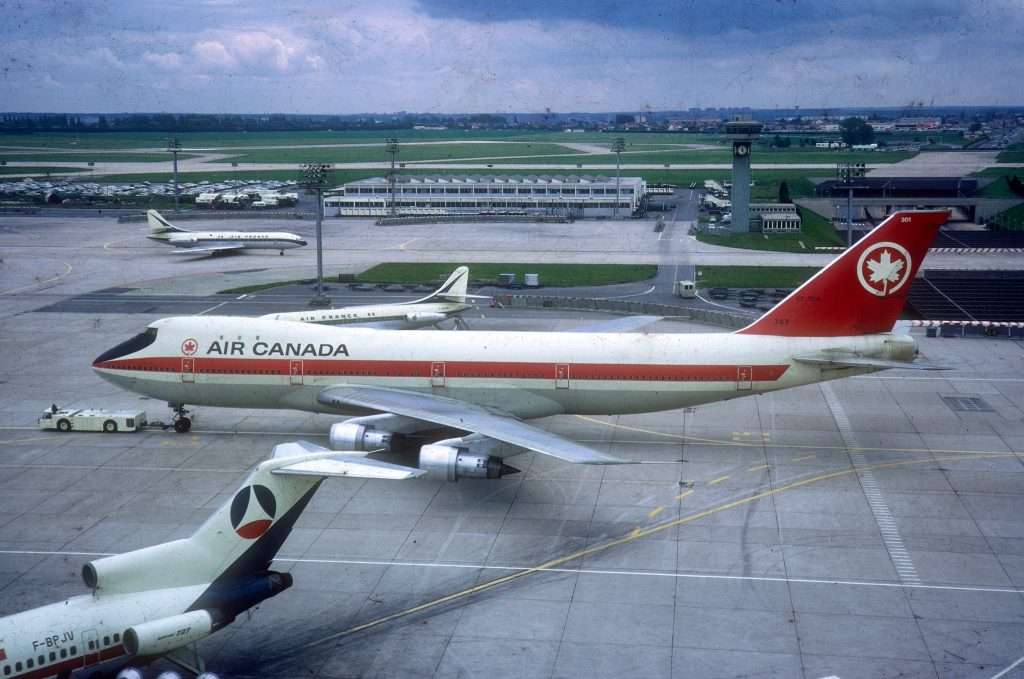
In reality, the jet was never considered internally for a host of reasons, beginning with the airline’s day-to-day operational structure, which aims to leverage multiple hubs to enable connectivity across regional, short- to medium-haul flying and international transpacific or transatlantic options.
Air Canada doesn’t operate through just one hub; instead, it ensures that, as the flag carrier of a country spanning so far, it can provide regional, domestic, and international connectivity from as many markets as possible, whether in Toronto, Vancouver, or Montréal.
These cities are significant, and so are their airports, but unlike airports such as London Heathrow, Singapore Changi or Dubai International, they don’t face the same slot constraints. Additionally, they are not airports like these above that require size over frequency because of the airlines that call these locations home.
A Drive To Be Flexible With Flying
While there are mainstay routes on the airline’s network from these markets, it loves the flexibility that its current fleet composition offers to respond to demand across medium- to long-haul routes; these responses can come on a seasonal basis if required, which wouldn’t be possible with an aircraft like the A380.

The pressures with the A380 are the requirement to fill this every single flight, for an airline like Air Canada that offers, among other areas, efficiency, far too much risk for it to be considered as a possible option.
Instead, Air Canada has, in recent memory, preferred to utilise aircraft deemed much safer, enabling the launch of new long-haul routes and the possibility to adjust capacity as demand shifts.
Whether through the Boeing 777 and, now, the next-generation 787, these two aircraft in the airlines’ operations offered not just suitable range and capacity for most missions but also lower overall trip costs and greater efficiency.
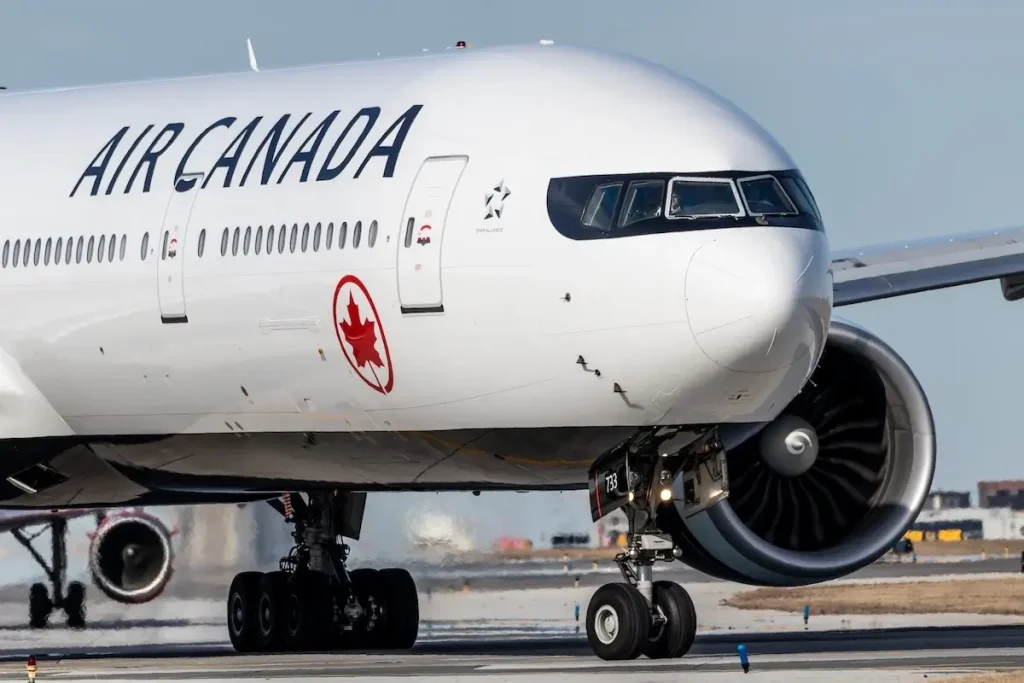
These aircraft, if neccesary, can be very easily swapped across the network if one unit is temporarily grounded, or if summer seasonal trends require a larger plane for six months of the year, that same flexibility cannot be achieved with the A380.
A Risk That Is Too Big
Even if there were a handful of routes that could work with the Airbus A380, that doesn’t mean, when push comes to shove, that the investment in an aircraft of this scale would make much sense.
Adopting a new fleet type is always a challenge, and nowadays, airlines are big on fleet simplification to improve their bottom line and won’t add a new fleet unless necessary, let alone one as large as the A380-800.
If Air Canada were to take on the jet, it would need not just to bring on staff capable of flying the Airbus A380, but also to train its cabin crew to serve the plane, with complications even in managing the staff for rostering.

Airport infrastructure would need to be overhauled, from gates to terminal upgrades with dual-level boarding bridges and reinforced gates. While some airports in Canada can accommodate the A380, there would not be enough gates to accommodate Air Canada’s fleet.
Even on the ground, runway and taxi compatibility would be a big part of the infrastructure changes, which would not come cheap and would not be completed overnight; also, specialised ground handling equipment would need to be purchased.
This does not factor in the overhauls needed for airport maintenance facilities, from staff to hangar modifications, to allow these planes to be serviced and managed where required.
For a plane of this size, pricetag, and limited upside within the airlines’ operations, it never made any sense to acquire this plane as the business steered in a different direction, away from superjumbos and towards more flexible alternatives.
A Theme Shared In The United States
Air Canada’s decision not to opt for the world’s largest passenger plane, despite its strong passenger network, is a move shared across the border in the United States.

Despite having some of the biggest airlines in the world across this country, a move to order the Airbus A380 never quite arrived, and it stems from many of the same reasons as the Canadian flag-carrier.
At its core, whether American Airlines, United Airlines, or Delta, these companies have a business that does not rely solely on one city to funnel all their long-haul and short-haul operations, thus operating more point-to-point.
The adoption of aircraft in the past, like the 777, and now the A350 and 787, enable these airlines to open routes deemed thinner on long-haul flights and avoid the associated risks of operating the A380.
These U.S. carriers would need to ensure their A380s were filled every single day, which would limit the availability to deploy multiple flights a day to cater to onward travel and connectivity across the United States, something these airlines aim to do.
For the big three, there are many cities that they look to offer international travel from, rather than strictly one, and that’s where aircraft such as the 777, 787 and A350 shine through as perfect options to serve the network from either primary hubs or secondary cities, something not possible with an acquisition of the A380.

As airlines developed their business models, it became clear that flexibility was crucial, and with that, having planes that offered it was a priority; the A380, unfortunately, represented the opposite. While it has worked for airlines leveraging a hub-and-spoke model for these U.S. companies, it is not quite the same.
This is not to mention other efficiency concerns for these U.S. airlines, which knew that the jets with double the number of engines required more complex maintenance and the development of airport infrastructure, which would be costly to make it a more widespread option for flying.
To Conclude
Air Canada, while having a robust and continuously growing international network, never opted for the Airbus A380, and never considered it either.
It joins a long list of airlines that outright rejected the prospect of taking on this plane because of the many associated risks, which were just too high, not forgetting the sheer scale of the product that would not work across the network.

Instead, looking further into the future, the Canadian flag-carrier will leverage vastly more efficient twin-engine aircraft to prioritise flexibility across its network and serve customers around the world, year-round or seasonally.

ABOUT THE AUTHOR
Daniel Fowkes is a Melbourne-based aviation analyst and journalist with over a decade of industry experience. As founder of Dj’s Aviation, he delivers trusted analysis on aircraft, airline strategy and global aviation trends for djsaviation.net
Related Articles




Stay Informed
Get the latest aviation news, analysis and route updates delivered to your inbox.
We respect your privacy. Unsubscribe at any time.
Enjoyed this story?
Make us your go-to for aviation news
Add us as a preferred source on Google and see our latest stories first in Top Stories.
Add Us On Your News Feed