

The Airbus A380 is the world’s largest passenger plane, and United Airlines is among the world’s largest airlines.
However, this aircraft and airline combination never made the major U.S. carrier purchase the plane for its international operations or even high-capacity domestic routes.
United’s decision not to order the A380 highlights a broader trend across other U.S. carriers whose business models don’t favour the Airbus A380.
However, was this the right decision for United? What led to their decision not to order the aircraft, and are there parallels being seen with some larger aircraft nowadays as well?
The Importance Of The Airbus A380
When the world’s largest passenger plane launched, it was marketed primarily as a solution for airlines operating in highly congested corridors.
The significant capacity levels the A380 offered also meant that airlines with major international hubs could operate to other major global cities without requiring as many daily flights. Ultimately, this would benefit slot-constrained airports, a hot talking point at the time of the A380’s introduction.
Emirates, for example, adopted the A380 as a cornerstone of its business model and leveraged the aircraft to develop itself as an airline and its home city of Dubai into a global powerhouse for aviation, tourism, and trade.
However, the size and operational requirements came with significant trade-offs. Its immense capacity necessitated a concentration of passengers that only certain airports and markets could support.
Additionally, the quad-engine design meant higher fuel consumption and operating costs than smaller, twin-engine widebodies, a trade-off that some airlines were unwilling to make and a key catalyst for why the aircraft underperformed commercially.
Airlines were unwilling to make the colossal investment because of the associated risks, and for those who had purchased the aircraft, there were even cases where the A380 didn’t work.
The A380 Never Worked At United
United Airlines operates a multi-hub system spread across the U.S., with significant bases in Chicago, Newark, Denver, Houston, and San Francisco. Unlike Emirates or Singapore Airlines, which funnel passengers through a single hub, United’s model distributes traffic across multiple hubs.
This strategy prioritizes frequency and flexibility over capacity, allowing United to leverage multiple aircraft to meet substantial levels of demand and thus benefit its network and customers.
The A380, designed for high-capacity, high-density routes, did not align with this approach at any point for United Airlines. Deploying such a large aircraft would require consistent demand between specific city pairs, such as New York to London.
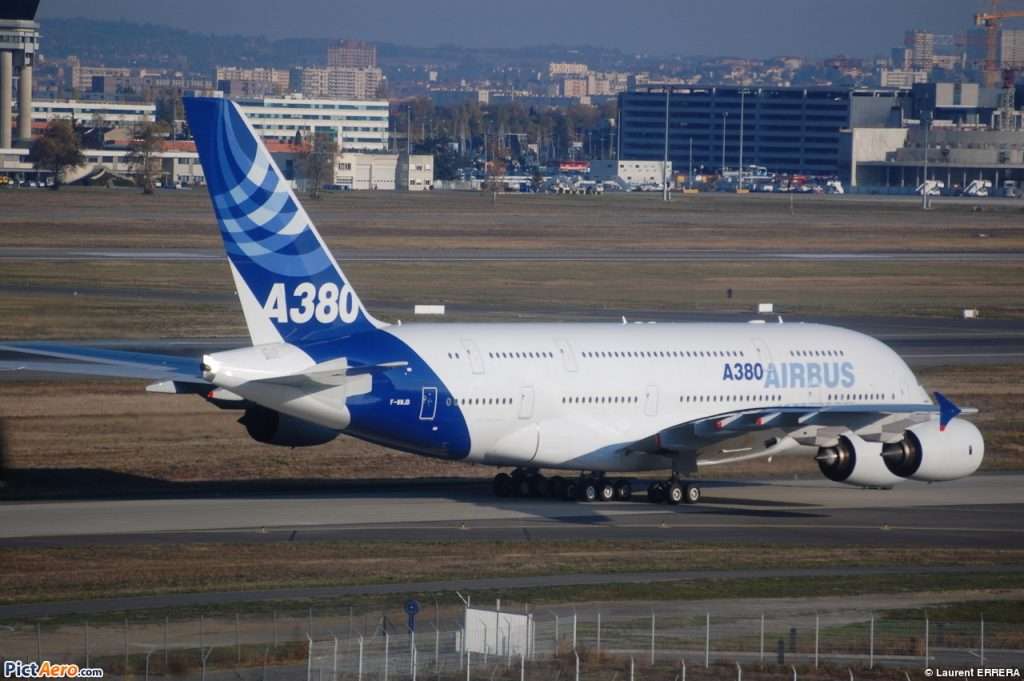
However, even on these routes, United knew it could achieve similar profitability with more versatile twin-engine aircraft like the Boeing 787, which offered better economics and greater flexibility for frequency adjustments.
By operating these smaller aircraft, the airline could swap around the usage of these planes and offer greater connectivity from each of its hubs across the country to major cities worldwide. The A380 would restrict much of that flexibility.
Additionally, the A380’s operational requirements, such as airport infrastructure and longer turnaround times, added complexity and costs that the carrier likely deemed unnecessary.
While the A380 does fly into cities across the United States, if a U.S. carrier adopted the aircraft, even further infrastructure work would need to occur, costing money and taking up valuable resources.
Airbus A380 Struggles In The United States
United’s decision not to order the A380 was not isolated to its region; it represented a broader trend among U.S. airlines. American Airlines and Delta, like United, have avoided the A380, opting for more versatile aircraft that fit their networks.
The U.S. industry sector faces colossal competition daily, and much of the focus is on point-to-point travel rather than the hub-and-spoke model, which analysts argue has become more dated in specific locations.
While international carriers like Emirates thrive on funnelling passengers through a single hub, U.S. airlines have leveraged their networks to connect smaller cities with major international gateways.
This model reduces the reliance on ultra-high-capacity aircraft like the A380, which ultimately played an important role in the airline’s decision not to purchase such a plane.
United Also Passes On The Boeing 777X
United Airlines’ decision to bypass the A380 is also not isolated from its thinking regarding more efficient twin-engine alternatives.
Ultimately, their stance on high-capacity airliners such as the Boeing 777X is driven by their desire not to operate the Airbus A380. While the 777X offers significant improvements in fuel efficiency, it still represents a high-capacity, hub-oriented solution.
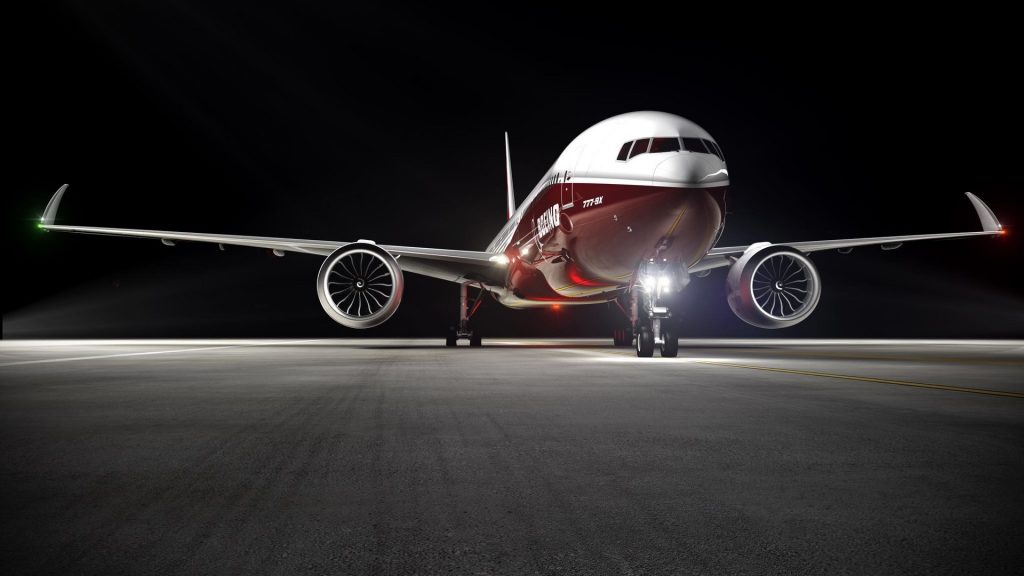
Instead, United has focused on modernizing its fleet with aircraft like the Boeing 787 Dreamliner and the Airbus A321XLR, which offer the flexibility and efficiency needed for its hub-and-spoke network.
Essentially, United Airlines can utilise three variants of the Boeing 787 for differing types of missions across its short-haul and long-haul network, interchange aircraft, offer different cabin products, and much more.
Did United Airlines Make The Right Decision?
United’s decision not to purchase the Airbus A380 would always be right. While iconic, the A380 program struggled to achieve widespread adoption and was ultimately discontinued in 2021 due to dwindling orders.
For United, avoiding the A380 allowed the airline to maintain a leaner, more adaptable fleet. The carrier has successfully utilized aircraft like the 787 to serve long-haul routes efficiently.
While the A380 is considered a great aircraft, it has only worked with specific airlines, and United executives, alongside analysts, believe that this pair would’ve never been the perfect match.

ABOUT THE AUTHOR
Daniel Fowkes is a Melbourne-based aviation analyst and journalist with over a decade of industry experience. As founder of Dj’s Aviation, he delivers trusted analysis on aircraft, airline strategy and global aviation trends for djsaviation.net
Leave a Reply
Related Articles




Stay Informed
Get the latest aviation news, analysis and route updates delivered to your inbox.
We respect your privacy. Unsubscribe at any time.
Enjoyed this story?
Make us your go-to for aviation news
Add us as a preferred source on Google and see our latest stories first in Top Stories.
Add Us On Your News Feed
Are kidding, American airlines ever will take A380 for them; first Boeing treat them will lower cost, second; they love the 737s and A320s all them are overflow and saturated with them, and third an the last they love to go small they’re hoping for a Tuk Tuk offer, it’s very weird I don’t see any American airlines great and big jets in foreigner airports. Sad 😭