

Over five years ago, Australian flag-carrier Qantas grounded the majority of its fleet of Boeing 787s.
This decision decimated the airline’s international resources, also coming during one of the most challenging periods in the company’s history.
A move saw jets head to the United States for long-term storage, complications in the reactivation, fleet changes and more, so what was the full story?
The COVID-19 Pandemic Arrives
When the COVID-19 pandemic arrived, Australia was one of the early responders, deciding to shut borders and limit non-essential travel.
Restrictions were placed on each respective state that lasted years, while the limits were on and off; in total, their duration extended far beyond other countries.
With each state having a different set of restrictions, it meant interstate travel was hard enough, let alone with harsh government-imposed conditions for those arriving in the country as well.
While Qantas operated a handful of repatriation flights with its larger aircraft, for the most part, aircraft were grounded, and its internationally scheduled passenger network was dramatically slashed.
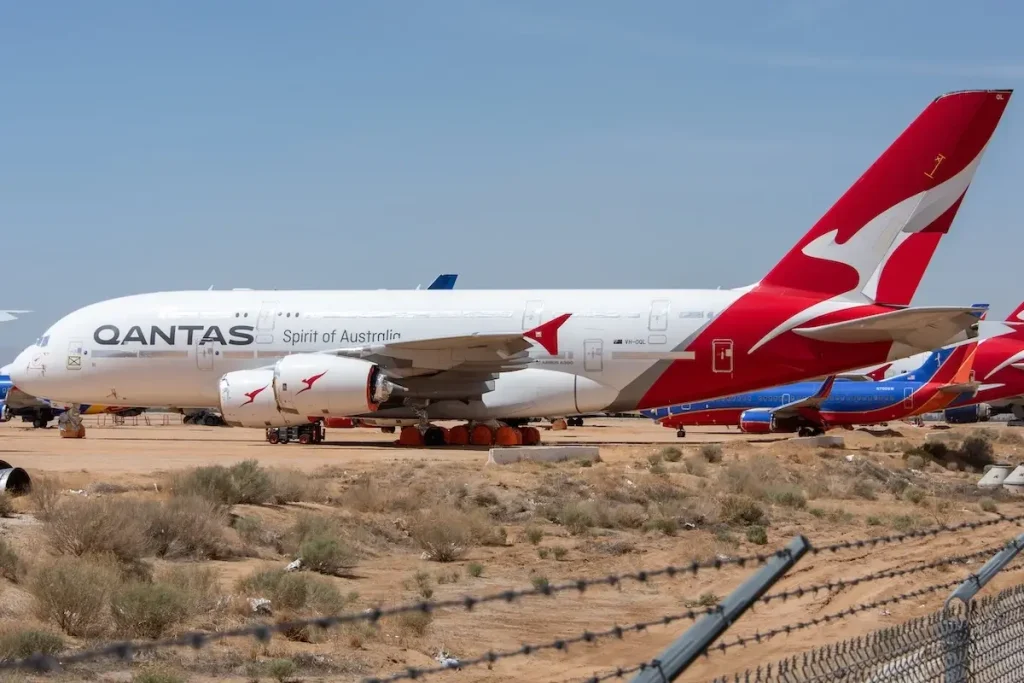
In fact, in mid-2020, in response to the worsening situation around the globe, the airline confirmed it would cancel essentially all of its international flights through March 2021.
With many of its aircraft already parked up locally or having been flown to long-term storage to preserve the aircraft for a hopeful return to service, the business was utterly decimated.
For Qantas, while domestic travel is essential, so is international flying, whether to Asia, across the Tasman, or North America. However, restrictions put in place significantly limited operational capabilities and hampered the financial position of the business.
The toll on the fleet was visible through the 100 of at the time its 126 planes being put into long-term storage, limiting the ability to fly considerably, paired with a generalised lack of markets to serve as well.
Qantas Sends The 787 To Storage
In mid-2020, after analysing the situation and seeing a worsening picture unfold, Qantas decided to send its Boeing 787 fleet ot the desert.
Victorville remained the ideal climate for the long-term storage of many of the airlines’ widebody jets, thanks to its low rate of humidity; thus, locations such as these became a hub for many airlines’ fleets to be transported.
Initial forecasting suggested the aircraft would spend quite a period in storage without any intention of returning the jets to service anytime soon.
This draws back to the work put into moving the aircraft to long-term storage, a decision not taken lightly and one that’s a strong commitment at this stage, indicating what Qantas’ plan was moving forward.
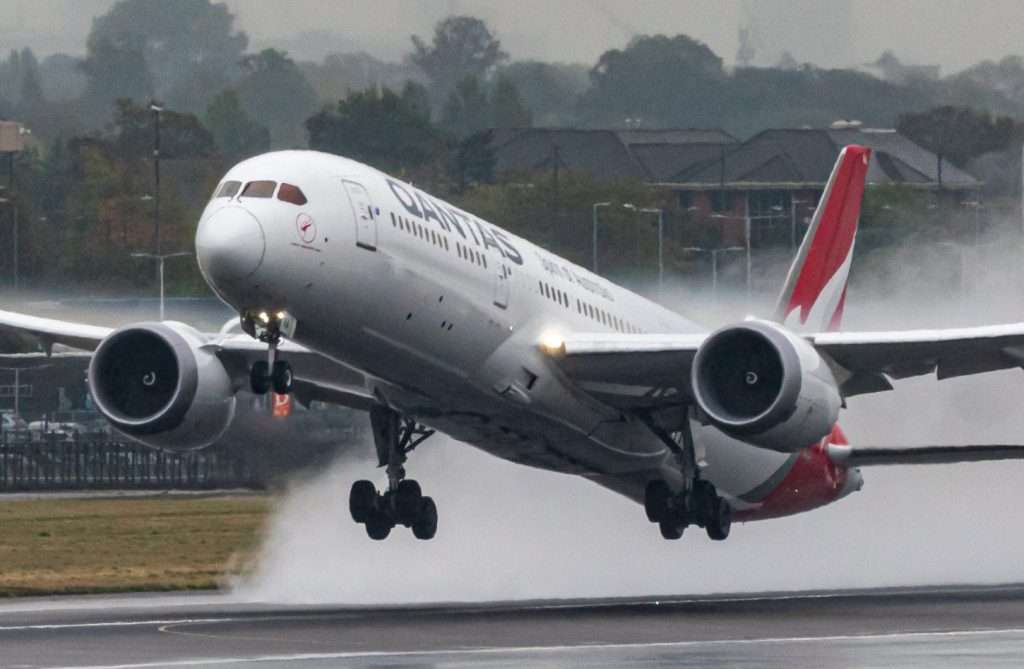
A decision to send most of the 787 fleet came as well because of the optimal conditions. Alice Springs, a local spot where Singapore Airlines parked its planes, was not used due to the airline’s concern about the high humidity.
Additionally, with Los Angeles being a crucial global port for the airline, with A380 and 787 maintenance equipment, it’s only a couple of hours away from where the 787 was to be stored in Victorville; this is also where the A380 was parked.
What this meant for Qantas was that sending the 787s here for an eventual return would be better suited because of the facilities and also engineers located in California to help begin prepping the aircraft to return to Australia for further checks safely, and then an eventual re-entry into service.
Any Other 787 Plans?
Qantas confirmed, however, that it would not send all its 787s to storage when it announced the decision, saying that some would stay in Australia as a contingency in case international services were to resume.
A matter of days later, the airline confirmed that it would charter out flights for tours of Antarctica, which has long been part of the Qantas operation.

Antartica Flights confirmed as the charter operator with initial schedules saying they would begin in November of 2020, these flights at the time were permitting the allowances of the situation at the time with the pandemic and necessary health checks for passengers.
Farewell 747, Time To Rely On 787
A casualty of the COVID-19 pandemic was the Boeing 747, a longstanding aircraft with Qantas, which was grounded and then permanently retired.
While retirement was already planned, the timeframe was accelerated in response to the lack of available demand. This put increased pressure on the 787 Dreamliner moving forward.
Qantas believed that by retiring the 747, it would streamline its operation, and as demand slowly returns, more 787s would be delivered; therefore, having a smaller long-haul fleet would match the global recovery from the COVID-19 pandemic.

While a decision to retire the 747 made sense, there were many risks associated with predicting how demand would track during the midst of a global pandemic, and hindsight shows those risks to have been more significant than first imagined.
The Return & Struggles After
Unfortunately, by the time Australia weakened its restrictions on travel, many other countries had long done the same, meaning their recovery was well ahead of the flag-carrier’s.
Additionally, for Qantas, due to global supply chain troubles, there had been new impacts on the delivery of aircraft, hampering fleet renewal hopes.
For example, if the pandemic had not occurred, many 787 deliveries would’ve happened during this window, but that did not eventuate; instead, Qantas was short on aircraft, and with supply chains hurt, Boeing’s woes, and more, it lacked the necessary amount of 787s.
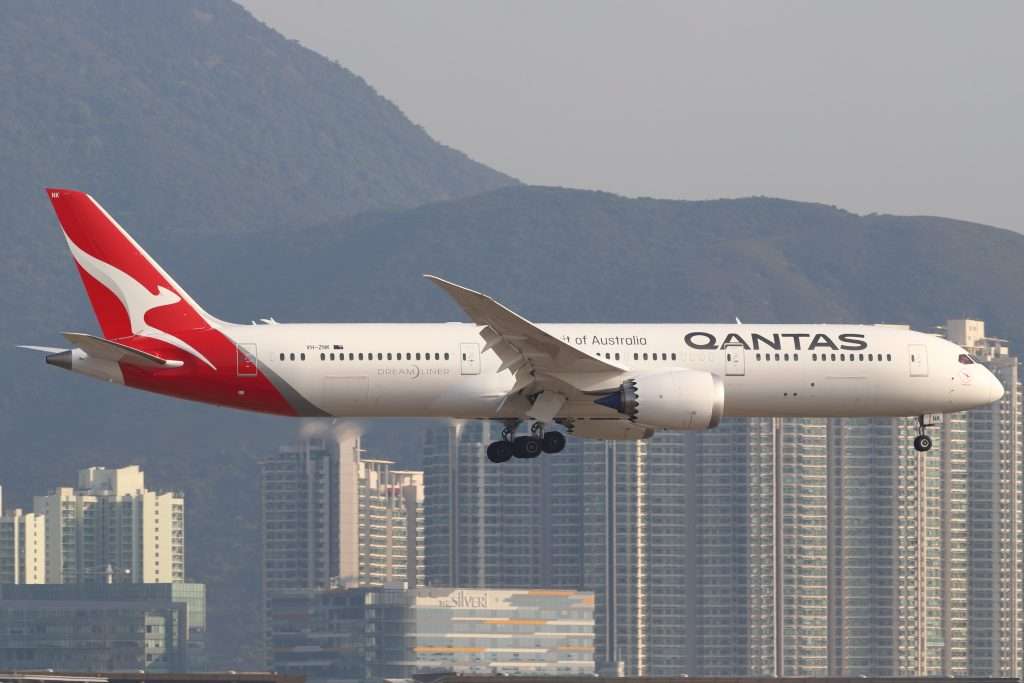
Boeing, in the early stages of 2023, said to the flag-carrier that its 787s would still arrive, but with bans on the delivery of the Dreamliner due to struggles at the planemaker, there were significant risks.
Additionally, for Qantas, the planes were coming with two-year delays due to the emergence of the COVID-19 pandemic.
In the end, with substantial delays, these 787s were delivered to the business, and the airline returned the series to service to help meet emerging demand.
The airline often describes the reactivation process of its planes as one of the most gruelling tasks undertaken and something that couldn’t be done quickly enough as people raced to travel after years locked away.
Now, in the mid-2020s, the 787 remains a fundamental part of the airline’s international network. With purchases for the 787-10, this will continue long into the future, with two variants instead of the currently just one.

ABOUT THE AUTHOR
Daniel Fowkes is a Melbourne-based aviation analyst and journalist with over a decade of industry experience. As founder of Dj’s Aviation, he delivers trusted analysis on aircraft, airline strategy and global aviation trends for djsaviation.net
Related Articles




Stay Informed
Get the latest aviation news, analysis and route updates delivered to your inbox.
We respect your privacy. Unsubscribe at any time.
Enjoyed this story?
Make us your go-to for aviation news
Add us as a preferred source on Google and see our latest stories first in Top Stories.
Add Us On Your News Feed