

Emirates has one of the largest widebody fleets in the world. However, the airline once requested that a new aircraft, the A380neo, be built.
But why did the Dubai-based carrier push to create a new superjumbo, aiming to rebuild its fleet, renew it, and revive the dying A380 program?
Emirates Eyes Greater Efficiency
Emirates remains the largest operator of the A380-800, having ordered well over 100 units and, at its peak, flying over 120 units, far exceeding any other airline’s commitment to the series.
The airline built its brand around this aircraft, leveraging its high capacity and passenger appeal to help grow its network and Dubai, its home, into a powerhouse for transit travel.
However, the A380-800’s efficiency was a recurring concern that plagued the type since its conception and contributed to its smaller adoption than might have been envisaged.
At the time of its development, the A380 was powered by cutting-edge engines, but later, its designs were surpassed by next-generation designs. As a result, the A380 struggled to compete with twin-engine aircraft like the Boeing 787 and Airbus A350 in terms of operating costs.
Emirates envisioned the A380neo (new engine option) as a solution to the problems in the predecessor model. With new-generation engines and aerodynamic improvements, the A380neo was Emirates’ bid to significantly reduce fuel consumption, better aligning with its drive to be more efficient.
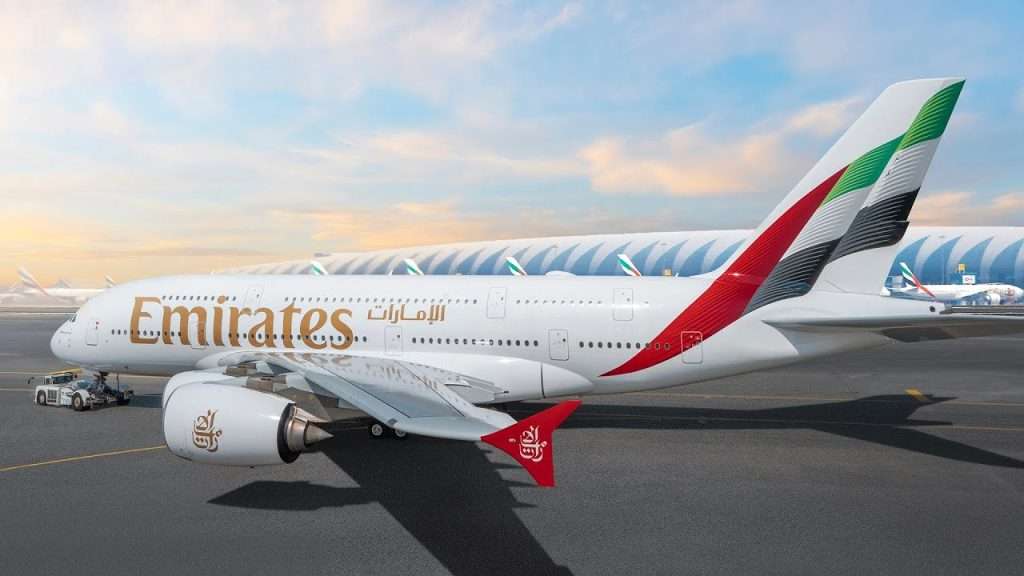
The company believed these improvements would lower costs and address growing environmental concerns, making the aircraft more viable for decades and opening up fresh opportunities for other airline customers.
What made Emirates’ interest unique was that the planemaker didn’t pitch the A380neo but was instead an option presented by an airline customer as a solution. Internally, Airbus’ interest remained relatively low throughout.
The Airbus A380-800 Weaknesses
Despite its appeal, the A380-800 faced several notable challenges from conception until production concluded in the early 2020s.
The aircraft consumed a lot of fuel, required costly maintenance, and was limited in airport compatibility. Moreover, its sheer size limited the airlines that could operate it profitably.
Emirates believed the A380neo could mitigate these issues by incorporating newer, more efficient technologies, as would typically happen with any next-generation aircraft replacing an existing model.
An upgraded A380 would support Emirates’ long-standing hub-and-spoke business model, which had served it well. However, this operating model has diminished due to the accessibility of next-generation smaller aircraft.
While Emirates saw the A380neo addressing weaknesses with the A380-800 and attempting to lower costs per seat mile to improve profitability across long-haul routes, no other airlines followed their interest.
The Push For The Airbus A380neo
Despite expressing interest in an A380neo, Emirates did play a role in Airbus’ announcement at the beginning of 2019 to confirm production would cease on the A380-800 in the coming years.
The Dubai carrier was the only valid reason production had kept up as long as it did, and their backlog still included upwards of 30 units. However, they decided they had enough of these types and cancelled orders at the beginning of 2019.
As a result, Airbus knew production rates would no longer be sustainable. Despite sales pushes, they could not acquire new orders from airline customers and thus had to begin finding an exit strategy for the world’s largest passenger plane.
Despite contributing to the demise of the -800 model, Emirates faced a pressing question: What could replace this flagship aircraft, considering plane makers were moving away from quad-engined aircraft in the 21st century?

None of the alternatives—even the largest twin-engine airliner—offered Emirates the same capacity or passenger experience, and they knew they would not be able to continue flying the A380-800 model forever.
Emirates sought to extend the life of the A380. Their answer was this revamped A380neo model, which ensured that they, as a business, would have the means to continue flying the beloved aircraft.
For Emirates, the A380 remains not simply an aircraft but something that differentiates its brand from the rest. The company has successfully made the plane an icon of the skies, featuring it in commercials and more.
The company has been able to implement iconic onboard features, such as the shower spa and bar lounge, to set it apart from competitors. The A380’s unparalleled size made these experiences possible.
Emirates feared that the demise of the A380-800 would result in its loss of the competitive advantage it had gained over other airlines in the last couple of decades. While the carrier was excited about the move towards smaller aircraft for flexibility, it still believed a plane like the A380 was pivotal for the long term.
Airbus Offers The A380plus
Given that Emirates drove the A380neo concept, Airbus did, at one point, propose its genuine concept to help revolutionise the A380 program. In 2017, it was revealed that the plane was known as the A380plus.
The A380plus featured modest improvements, including winglets for better fuel efficiency, an increased maximum takeoff weight, and minor interior upgrades to boost seat capacity, addressing the capacity requirements of international airlines.
While Airbus stated these changes reduced costs per seat, they did not offer the transformative efficiency gains that a new engine option would have delivered, per Emirates. Moreover, they attracted no interest from customers.

Emirates’ response to an A380plus was not one of the positives but the negatives. The airline didn’t express any interest in Airbus’ answer to the challenges with the A380, with Emirates believing that its answer in the A380neo would hold actual improvements for the program.
A380neo Launch Challenges
Creating an A380neo would have required significant investment and coordination, arguably one reason Airbus never seriously considered Emirates’ interest or progressed with the model.
Engine manufacturers would have been required to develop and certify new technologies for the aircraft, a costly and time-consuming endeavour. Furthermore, these engine manufacturers were at a point where studies of the long-term future and net-zero travel were more critical than an engine for the A380neo.
Additionally, Airbus would’ve faced equal challenges convincing key supply chain partners to commit to helping develop another plane on the scale of this A380 model, which has limited market appeal despite interest from Emirates.
The space to take on a project like the A380neo towards the backend of the 2010s would arguably have been a mistake. The planemaker was beginning to see other programs advance, and the space required for such an aircraft could’ve been better utilised to grow production rates of smaller in-demand jets to meet backlog requirements.
The A380’s niche status meant that few airlines were interested in such an aircraft from the beginning, let alone something like the A380neo, which was only driven by Emirates.
While Emirates’ order potential was substantial, it alone could not offset the massive costs of redesigning the aircraft and the time it took to bring the new variant to market, let alone the eventual emergence of the COVID-19 pandemic.
Despite Emirates’ interest, Airbus faced substantial risks in terms of the loss on investment that such an endeavour would have caused. Ultimately, that risk outweighed any potential return.
Emirates Loves The A380
Despite the end of production of the A380, Emirates remains committed to the type and the program, even if it cannot see the aircraft launch.
The airline plans to operate its fleet of A380-800s well into the 2040s, a stark departure from its usual strategy of maintaining a youthful fleet. Such an aircraft brings decision highlights that such an aircraft brings to Emirates’ operations.
Furthermore, it highlights how Emirates knows that replacing the type will be a challenge unlike any other. Heavy investments will continue to maintain and upgrade the aircraft to ensure modernisation and that the plane offers competitive products onboard.

ABOUT THE AUTHOR
Daniel Fowkes is a Melbourne-based aviation analyst and journalist with over a decade of industry experience. As founder of Dj’s Aviation, he delivers trusted analysis on aircraft, airline strategy and global aviation trends for djsaviation.net
Leave a Reply
Related Articles




Stay Informed
Get the latest aviation news, analysis and route updates delivered to your inbox.
We respect your privacy. Unsubscribe at any time.
Enjoyed this story?
Make us your go-to for aviation news
Add us as a preferred source on Google and see our latest stories first in Top Stories.
Add Us On Your News Feed
Of course, what a great site and illuminating posts, I will bookmark
your blog.All the Best!