

As more airlines move away from the Boeing 747, affectionately known as the ‘queen of the skies,’ can the 777X be considered its replacement?
Why Airlines Are Retiring The 747
Before understanding why airlines may look towards the 777X as a 747 replacement, just why are airlines retiring the queen of the skies?
The Boeing 747 burst onto the scene over half a century ago as a game-changing widebody aircraft that would aim to redefine long-haul travel, something it did successfully.
The aircraft has enjoyed a lengthy lifespan within the industry and has outlived several aircraft programmes that followed its launch.
Spurred on by the Incredibles and a team led by Joe Sutter, who helped put together and advocate for the first 747, the legacy of this type will forever be etched into the industry.

However, as the 2000s approached, airlines began moving away from quad-engined aircraft despite an attempt to increase the lifespan of jet aircraft.
Unfortunately, this resulted in a plane like the Boeing 747 and the last iteration of the 747-8 being hardly a favourable option for airlines assessing their future flying.
The trend away from this jumbo jet came as airlines prioritised efficiency across their network to streamline finances, among other things. The 747, while an icon of the skies, no longer offered those fundamental points for airlines and thus couldn’t be viewed as a long-term option.
Introduction To The Boeing 777X
After a successful debut in the 1990s, the 777, a twin-engine aircraft offered by Boeing, developed into a leading widebody aircraft at the turn of the century.
Built on the successful development of ETOPS, as seen on the 767, the 777 aimed to push the boundaries of long-haul travel further with half as many engines.
While Boeing wasn’t necessarily killing its 747, the 777 showed airlines what the future could and would look like.
So, in the early 2010s, Boeing progressed with enhancing the 777 further with the 777X.
The 777X, equipped with new engines, folding wingtips and greatly refined and updated technologies, promises to offer customers even greater efficiency across the long term.

Unfortunately, the series has struggled to enter service for many reasons, and delays out of Boeing’s control have ballooned out by some six years.
Despite this and several slow periods in the programmes, it has already been 11 years since launch, and orders have steadily come through. The series has racked up an impressive array of customers, from Emirates to British Airways, Cathay Pacific, Air India, and Qatar Airways, to name a few.
What Else Is Available To Airlines
One major complication arises as airlines begin seeking replacements for their Boeing 747s and other aircraft, such as the A340 and A380.
The complication is replacing these aircraft. As industry trends have shifted, so have airlines’ desires for aircraft of this size.
As a result, there are no dedicated replacements for aircraft of this size, and no other superjumbos are being produced or in the pipeline.
So, what options are available to these airlines looking to replace their 747s? There are two general choices.
Airlines can opt for the Boeing 777-9 or the A350-1000 if they are after a high-capacity alternative. The two variants above are the airliners currently in production and have the highest capacity.
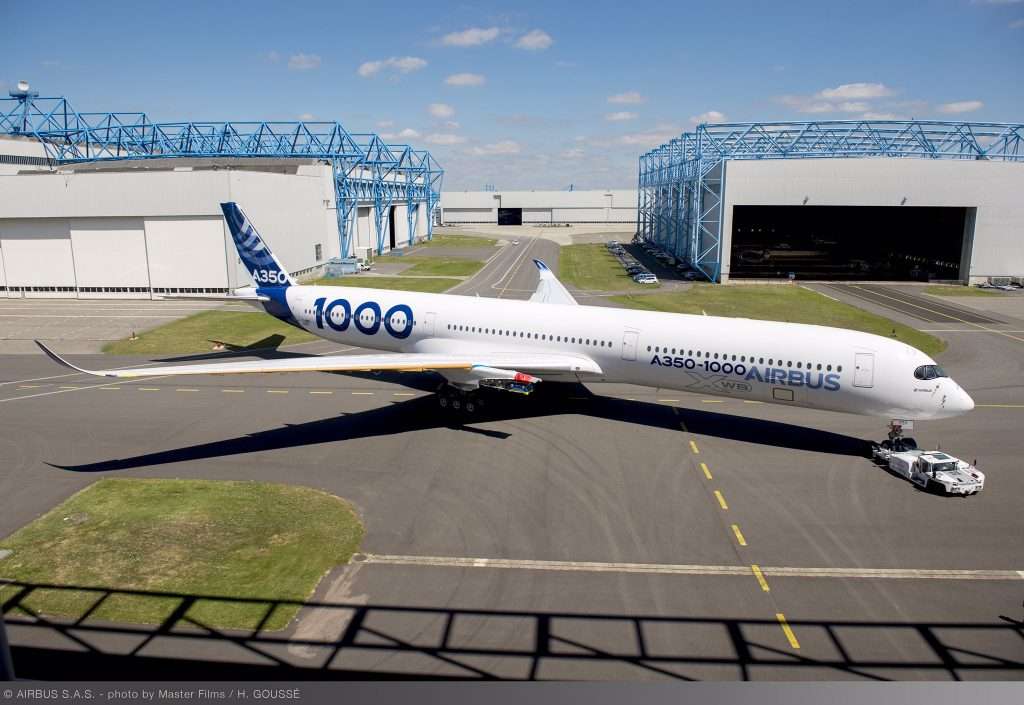
While these aircraft may, to some, be incapable of replicating what jets such as the 747 did, they are more efficient and still an ideal solution for long-term flying.
If airline customers want a more streamlined option, look no further than the United Airlines operation. The major U.S. carrier has adopted the 787 Dreamliner for long-haul efficient flying and uses every available variant for various missions, from the 787-8 to the high-capacity 787-10.
Generally, the flexibility of these next-generation aircraft, visible through the available variants, has proven to be an incredibly successful option for airlines.
Is The 777X The Perfect Replacement?
So, is the 777X the perfect replacement for the outgoing Boeing 747? This is a hard question to answer as many airlines are still calculating their next move for future flights.
Furthermore, the 777X is still unproven from a commercial flight standpoint, so its overall performance has yet to be officially measured, and it is rather reliant on metrics.
British Airways is one of the airlines that publicly stated in the latter stages of the 2010s that it would order the 777X to replace the 747.
While the global pandemic accelerated the retirement of its Jumbo jet, the intention remains with the 777X viewed as the replacement.
Other airlines replacing the 747 have looked towards the 777X, A350, and even 787, with any available widebody part of the next generation being considered.
Ultimately, each airline’s circumstances are different, and this will influence the decision-making process when committing to the next all-important aircraft order.

ABOUT THE AUTHOR
Daniel Fowkes is a Melbourne-based aviation analyst and journalist with over a decade of industry experience. As founder of Dj’s Aviation, he delivers trusted analysis on aircraft, airline strategy and global aviation trends for djsaviation.net
Related Articles




Stay Informed
Get the latest aviation news, analysis and route updates delivered to your inbox.
We respect your privacy. Unsubscribe at any time.
Enjoyed this story?
Make us your go-to for aviation news
Add us as a preferred source on Google and see our latest stories first in Top Stories.
Add Us On Your News Feed