

Boeing was known for its innovation during the mid-to-late 1900s; however, some argue that this has gone missing. What will Boeing’s next aircraft be? Will it be the 797?
Despite a persistent chase to understand what Boeing’s next aircraft will be, there are ones still coming. The 777X remains uncertified and thus unproven. Once this aircraft enters service, it’s expected to massively elevate the status of the long-haul offering from the manufacturer.
The 777X remains prominent with the upcoming 777-8F, the newest long-haul freighter expected to compete with the A350F. Away from these widebodies, Boeing still has two uncertified 737 MAX variants. It’s hard to believe that through everything, the 737-7 and 737-10 remain uncertified; however, once delivered, they’ll almost act as new aircraft.
The Boeing NMA or 797
So, what’s after these aircraft? One of the biggest talking points has been the NMA, dubbed the 797 across the last decade. This proposed aircraft would’ve been a clean sheet and likely came in two variations: the NMA-6 and NMA-7, which would seat 228 or 267 in a two-class configuration, respectively.
There was a lot of appeal for such a plane that many would’ve said would finally replace the 757 and even the 767 to a certain extent. Some airlines even believed it would be crazy for Boeing not to launch such a plane as it would cede market share to competitor Airbus.
Meanwhile, aircraft lessors around the world screamed for the plane, believing it could redefine airline operations.
Delta, a long-time customer of Boeing and the 757, also expressed their desire for such a plane. But, for several reasons, Boeing never proceeded with such an aircraft. Thus, it has left the market very much open to Airbus to pitch their middle-of-the-market offerings to customers uncontested.
A New Era With The TTBW?
So, with no NMA coming, what is currently being studied and does it correlate to their future plane?
Boeing’s Truss Braced Wing study is an important avenue worth analysing as it highlights the company’s current focus. Many believe that if the TTBW is successful, it can play an essential role in the future of aircraft.

The TTBW has an essential goal: to enable more efficient travel through wings that are not as chunky as current wings. Look at gliders, which many people will compare when studying the TTBW.
It’d be hard to have wings like that on gliders on commercial airlines, but can a plane maker adopt a similar initiative and have it work on a commercial airline? If you were to throw on a brace for these wings, Boeing and NASA, who are running the study, believe that you have something to work on and build upon.
The TTBW is a perfect example of Boeing attempting to innovate and ensure that their next edition to the market is a true game changer. Ultimately, this game-changer feeling has been missing for some time with persistent re-engines that have posed more problems than good.
By 2028, the hope is a full-scale demonstrator of this will fly. It has already been officially designated the X-66A. The project has been developing since the 2010s but is now gaining pace as it all becomes more real. This demonstrator will utilise an MD-90 as a base.
The 2030s Are Approaching.
What’s next after TTBW? The demonstrator getting in the air will provide a lot to study. Still, by the time the 2030s roll around, the American plane maker will have already considered its next move in the industry.
With a massive view of sustainable travel and making the next aircraft more revolutionary, the TTBW could be an important moment. However, there’s still much to consider when understanding the next aircraft, as limitations and technology will play a role.
Factors such as the end size of the aircraft and how it works in airports will all be considered. You can have the best aircraft in the world for customers, but if it can’t fit into existing gates at the airport, there will be question marks.
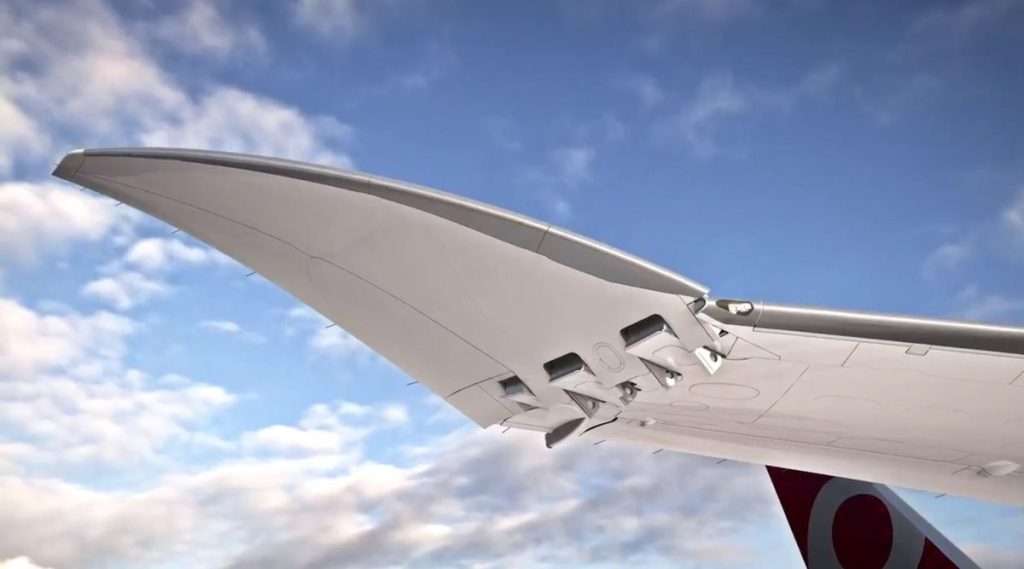
Notably, look at the Boeing 777X and how the folding wingtip technology has made its way to this plane to allow it to fit into tighter spaces. What you want to avoid is what was seen with the A380, where it was challenging to slot into spaces and thus became even less attractive to specific customers.
To Conclude
Boeing’s next aircraft could very well be Boeing’s or an NMA. Whatever the designation, according to current studies, Boeing will look to take its time and adopt relatively new technology to redefine our industry.
Ensuring the next aircraft is efficient through the 2060s will be important. As a result, the remainder of the 2020s will be important for key testing, among other things.
One thing is absolutely for sure: Boeing will need to address the persistent growth seen in the middle of the market sector at some point. Currently, Airbus has an uncontested grip on this market that could lead to further negative ramifications for Boeing if they aren’t careful.

ABOUT THE AUTHOR
Daniel Fowkes is a Melbourne-based aviation analyst and journalist with over a decade of industry experience. As founder of Dj’s Aviation, he delivers trusted analysis on aircraft, airline strategy and global aviation trends for djsaviation.net
Leave a Reply
Related Articles




Stay Informed
Get the latest aviation news, analysis and route updates delivered to your inbox.
We respect your privacy. Unsubscribe at any time.
Enjoyed this story?
Make us your go-to for aviation news
Add us as a preferred source on Google and see our latest stories first in Top Stories.
Add Us On Your News Feed
I forsee TTWB may face tough questions on:
1) Noise transfer from engine to cabin as it being closer to the fuselage.
2) There are still incidents of parts flying of the jet engine. Those flying parts are much easier to hit the fuselage, elevator, etc
3) Engine fire can reach the fuselage and damage the windows made of plastic-base material.
4) Inspection, checking and Maintenance of the engine, being at an elevated height would consume more time while aircraft is in-between flights.
Actually, the “797” is just a next gen of the “757 Plus”. When the 757 Plus was aborted due to “New 737 Max variants”, Boeing just started to work on the NMA.