
Aircraft Guide · Seat Map
Boeing 737 Max 10
The Boeing 737 MAX 10 is the largest and highest-capacity member of Boeing's 737 MAX family, stretched from the MAX 9 to compete directly with the Airbus A321neo family. Powered by twin CFM International LEAP-1B engines and fitted with a semi-levered landing gear to protect tail clearance on the longer fuselage, the MAX 10 has not yet entered commercial service. It remains in FAA certification testing as of mid-2026, alongside its smaller sibling the MAX 7. Dj's Aviation covers its specifications, certification status and future operators below.
Ordered 1,400+
Certification Expected 2026 (not yet in service)
Cruise M 0.79
Range ~3,300 nmi
Latest NewsBoeing 737 Max 10

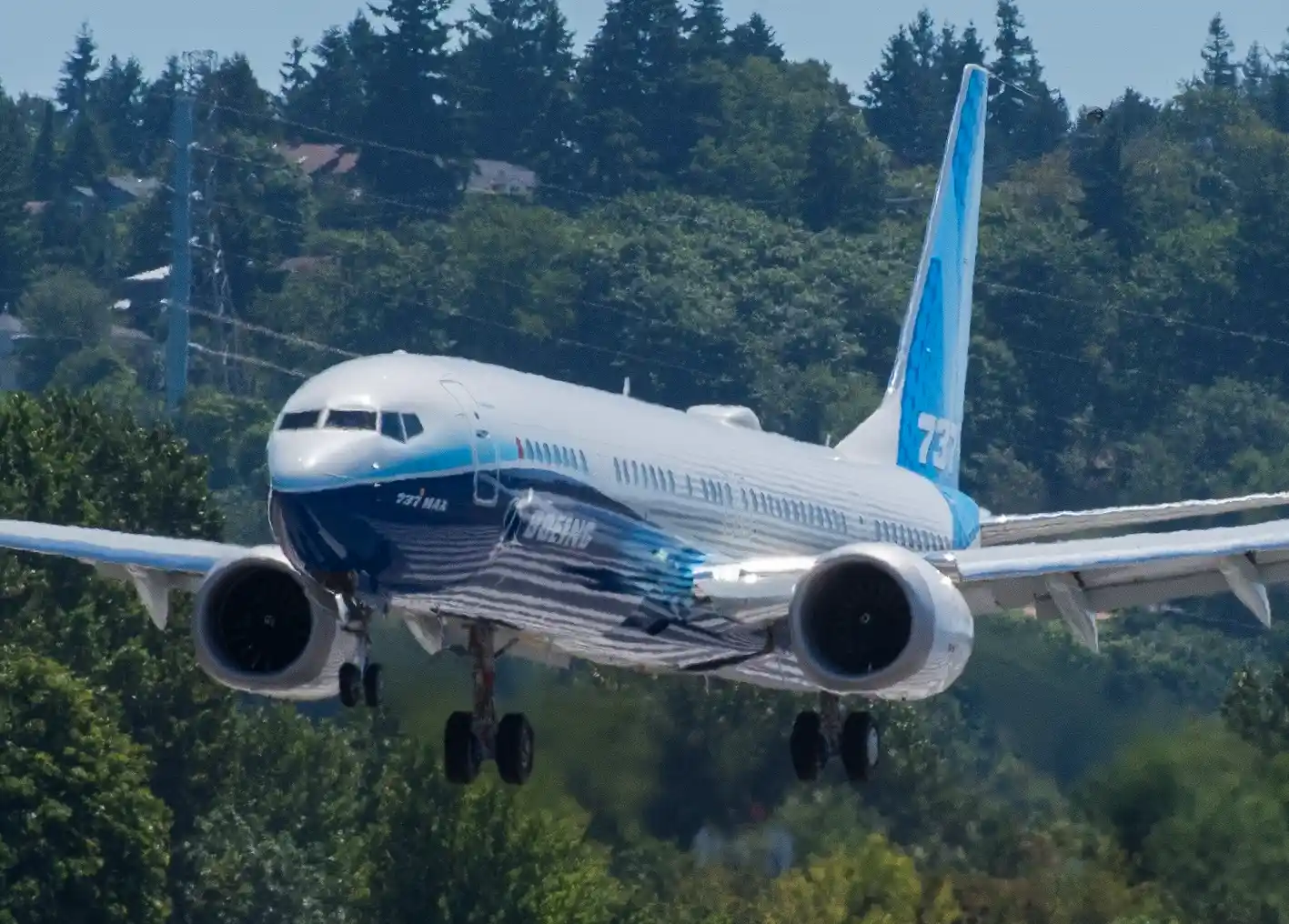

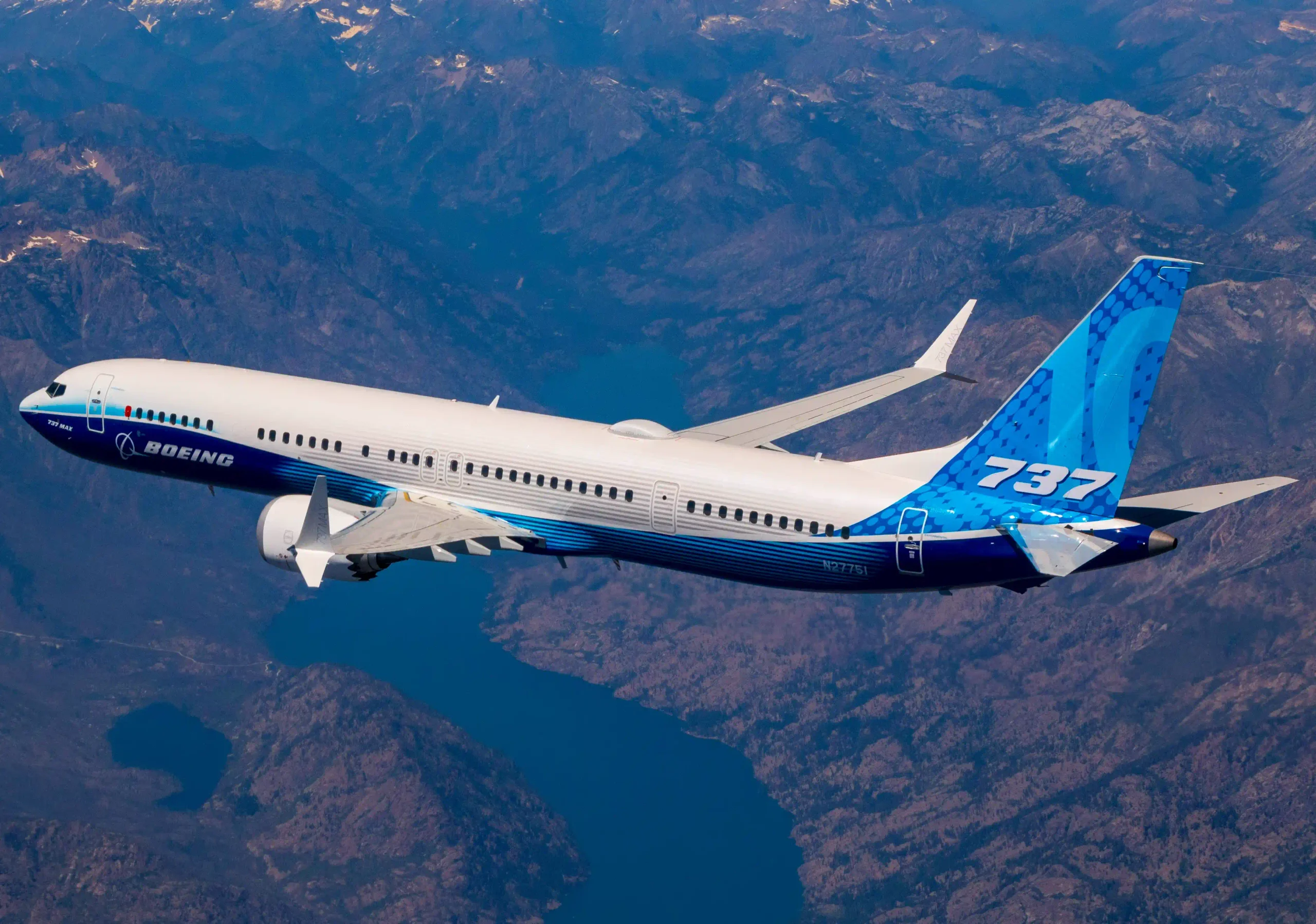
Boeing 737 Max 10 Quick Facts
ManufacturerBoeing
TypeNarrow-body twinjet
First flight18 June 2021
StatusAwaiting FAA certification
DimensionsL 43.8 m (143.70 ft)
W 35.9 (117.78 ft)
H 12.9 m (42.32 ft)
W 35.9 (117.78 ft)
H 12.9 m (42.32 ft)
MTOW~89,800 kg (198,000 lb)
Cruise / RangeM 0.79
~3,300 nmi
~3,300 nmi
Ceiling41,000 ft
EnginesCFM International LEAP-1B
Total ordered1,400+
CustomersUnited Airlines
Ryanair
Alaska Airlines
Delta Air Lines
American Airlines
Pegasus Airlines
WestJet
Ryanair
Alaska Airlines
Delta Air Lines
American Airlines
Pegasus Airlines
WestJet
First deliveryTargeted for 2027
Variants
Seat Map
Hover or tap a seat for details
Business
Economy
Exit Row
Galley / Lav / Doors
16Business2-2 · 36-in pitch
188Economy3-3 · 30-in pitch
204Total46 seats at 29-in
Illustrative layout. Exact seating varies by operator and cabin fit.
History & Development
Boeing launched the 737 MAX programme in August 2011 as the fourth generation of the 737 family, positioned to compete with the Airbus A320neo. The MAX 10 was formally launched in 2017 in response to airline demand for a larger MAX variant to rival the Airbus A321neo, and was unveiled to Boeing employees in November 2019. It uses the standard 737 MAX wing and LEAP-1B engines, with a modest fuselage stretch and a new semi-levered landing gear as the primary structural change. The type made its first flight on 18 June 2021.
Development of the MAX 10 was significantly disrupted by the two fatal 737 MAX 8 accidents (Lion Air Flight 610, October 2018, and Ethiopian Airlines Flight 302, March 2019), which led to a worldwide grounding of the entire MAX family from March 2019 to late 2020. Certification of the MAX 10 was further delayed by a required redesign of the engine anti-ice system and by a Congressionally mandated redesign of the crew alerting system, incorporating a computed third angle-of-attack reference to help flight crews identify faulty sensor data. Both fixes were substantially finalised during 2025–2026.
As of mid-2026, the FAA has indicated certification is on track for later in the year, with Boeing targeting first deliveries to WestJet and other launch operators in 2027.
Cabin: Seating & Configuration
The Boeing 737 MAX 10 retains the standard 737 fuselage cross-section, configured six-abreast in economy (3-3), consistent with other 737 variants. Because seating totals depend on each operator’s chosen layout, exact configurations have not yet been publicly confirmed for any airline.
Based on Boeing’s specifications, typical two-class seating capacity is expected to range from 188 to 204 passengers, with a maximum single-class high-density configuration of up to 230, the highest capacity of any 737 MAX variant.
Specifications
The dimensions and weights below are for the standard 737 MAX 10 production specification.
The 737 MAX 10 features Boeing's Advanced Technology (AT) split-tip winglets, shared across the MAX family, which improve aerodynamic efficiency over the blended winglets fitted to the previous 737NG generation. To preserve adequate tail clearance on takeoff and landing given its longer fuselage, the MAX 10 is fitted with a semi-levered landing gear system unique to this variant within the MAX family.
Performance & Range
With a maximum range of approximately 3,300 nautical miles (6,110 km), the 737 MAX 10 trades some range for maximum passenger capacity compared with the shorter-fuselage MAX 7, 8 and 9 variants. This positions the MAX 10 for high-density, high-frequency domestic and regional trunk routes where capacity is prioritised over ultra-long range.
Engines & Fuel
The Boeing 737 MAX 10 is exclusively powered by the CFM International LEAP-1B, a high-bypass turbofan developed as the successor to the CFM56-7B that equipped the 737NG family.
Metric
Value
2× CFM LEAP-1B
~26,785–29,320 lbf each (variant dependent)
Not independently confirmed for this specification tier
Certification pending alongside overall type approval
Family Variants
737 MAX 7
Shortest fuselage, longest range
The smallest and longest-range member of the family, replacing the 737-700; not yet certified or in service.
737 MAX 8
High-capacity, standard range
The most widely ordered and delivered MAX variant, in service since 2017.
737 MAX 8-200
High-density
Ryanair-launched high-density derivative of the MAX 8.
737 MAX 9
Stretched fuselage
Larger-capacity variant, in service since 2018.
737 MAX 10
Largest fuselage
The longest and highest-capacity MAX variant, also awaiting certification alongside the MAX 7.
In-Seat Amenities & Tech
As the Boeing 737 MAX 10 has not yet entered service, no operator-specific in-seat amenities or cabin technology have been confirmed. Based on the shared 737 MAX cabin standard, expected features include the Boeing Sky Interior, LED mood lighting, larger pivoting overhead bins, and Wi-Fi connectivity, with specific entertainment and power options to be determined by each launch operator.
Production & Timeline
Boeing assembles the 737 MAX family at its Renton, Washington facility, which has been the 737’s only home for almost 60 years. A new fourth 737 production line has just opened at Everett, Washington, to support planned rate increases.
Milestone
Date
August 2011
18 June 2021
Expected later in 2026 (not yet certified)
Targeted for 2027
Targeted for late 2026/early 2027
Fleet & Operators
The Boeing 737 MAX 10 has no operating fleet, as the type has not yet been certified or delivered to any customer. The table below reflects confirmed order commitments rather than active operators.
Customer
Role
Notes
Launch customer (orders only)
Designated launch operator for the MAX 10, targeting entry into service in late 2026 or early 2027
Orders only
Holds 277 MAX 10 aircraft on order, among the largest commitments for the type
Orders only
150 firm orders plus 150 options; sees the MAX 10 as a growth aircraft for high-density European routes; deliveries guaranteed by spring 2027
Orders only
105 MAX 10 aircraft on order as part of a record fleet agreement with Boeing
Orders only
Among the airlines with 100+ aircraft commitments for the type
Fleet figures reflect order commitments as of mid-2026 rather than active operators, since no 737 MAX 10 has yet been delivered.
Incidents & Safety
The Boeing 737 MAX 10 has no incidents or accidents to report, as it is still undergoing certification testing and has not entered commercial passenger service as of July 2026. This section will be updated with any relevant safety information once the type achieves certification and begins operations.
It is worth noting that the wider 737 MAX programme was grounded worldwide from March 2019 to late 2020 following two fatal accidents involving the 737 MAX 8 (Lion Air Flight 610 and Ethiopian Airlines Flight 302), which led to sweeping design, software and oversight changes applied across all MAX variants, including a redesigned crew alerting system with an added angle-of-attack reference specifically required before the MAX 10 could be certified.
Related News
Aircraft News
Latest Airlines News
Carrier strategy, fleet moves & financial updates
Aircraft News
Latest Aircraft News
Programmes, retrofits & next-gen narrowbodies
Route News
Latest Route Updates
New launches, cuts & network shifts
Freight Orders & Delivery
Latest Freight Orders & Delivery News
Cargo conversions, orders & deliveries