
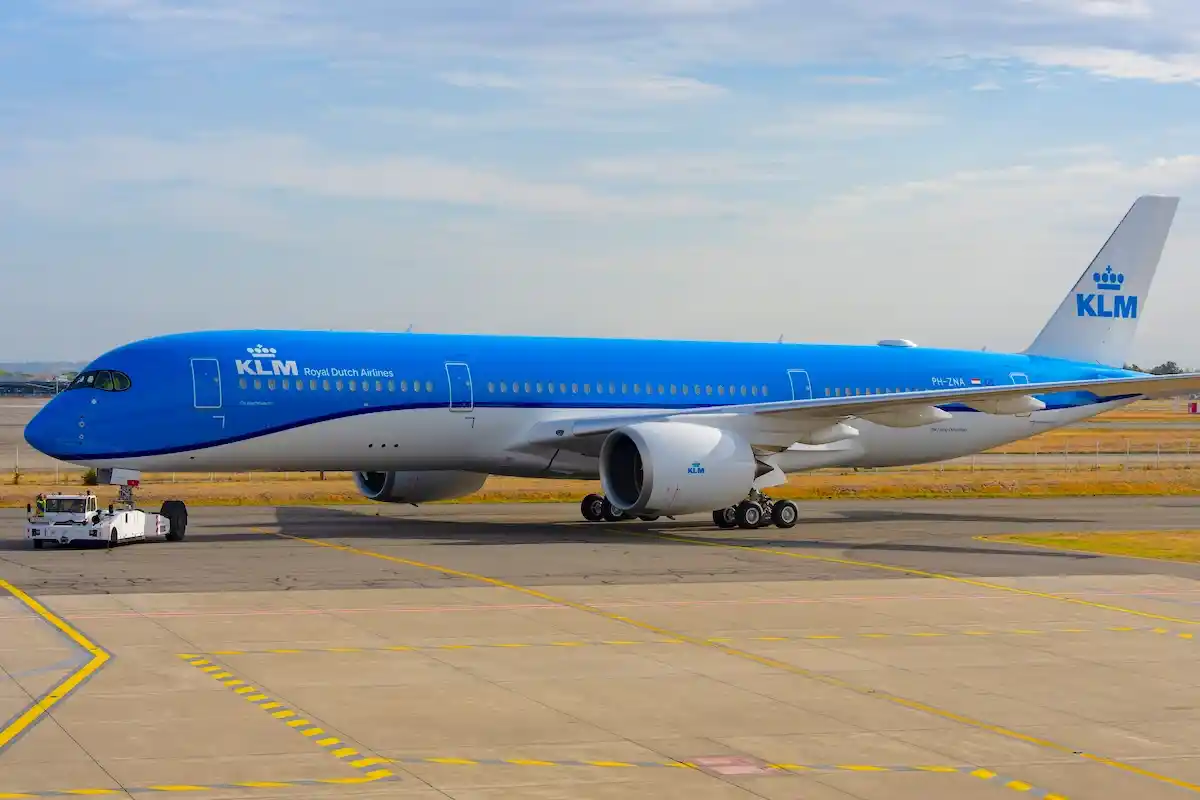
KLM has taken delivery of its first Airbus A350-900, but with launch expected in the coming weeks, the airline is selling these flights without its World Business Class cabin available.
The availability, or lack thereof, of the airline’s new flagship product comes after months of delays in certifying the seats installed on the aircraft.
While the Dutch carrier has confirmed in a fresh update that progress has been made, with the European Union Aviation Safety Agency approving the seat test results, this does not yet grant final clearance for passengers in the 34-seat cabin.
Registered as PH-ZNA and named The Night Watch, the Airbus A350-900 arrived in Amsterdam at the beginning of the month and, after familiarization, will begin operating routine long-haul passenger flights to Toronto Pearson International Airport.
Toronto was selected as the first destination, heightening anticipation for a widebody set to be pivotal in the long-term renewal of the airline’s operations and the phase-out of types such as the Airbus A330 and Boeing 777.
KLM Works Towards Certification Of World Business
In its delivery celebrations, KLM confirmed progress on certifying the World Business seats, with EASA approving the test results. The EASA approval was vital to starting the certification process, but it also means time is ticking until the first flights to Toronto.
During the lengthy delays, KLM has consistently provided updates on the delayed certification of the seats and has largely attributed the problem to miscommunication in the regulatory process over the years, from the seats’ birth to the needed green light.
The World Business Class, designed and confirmed for installation years ago, has seen what KLM says are shifting goalposts, and the approval parameters have become harder to meet. However, with Business Class vital to the airline’s revenue and brand image, and with these blocked on its new plane, this is not ideal.
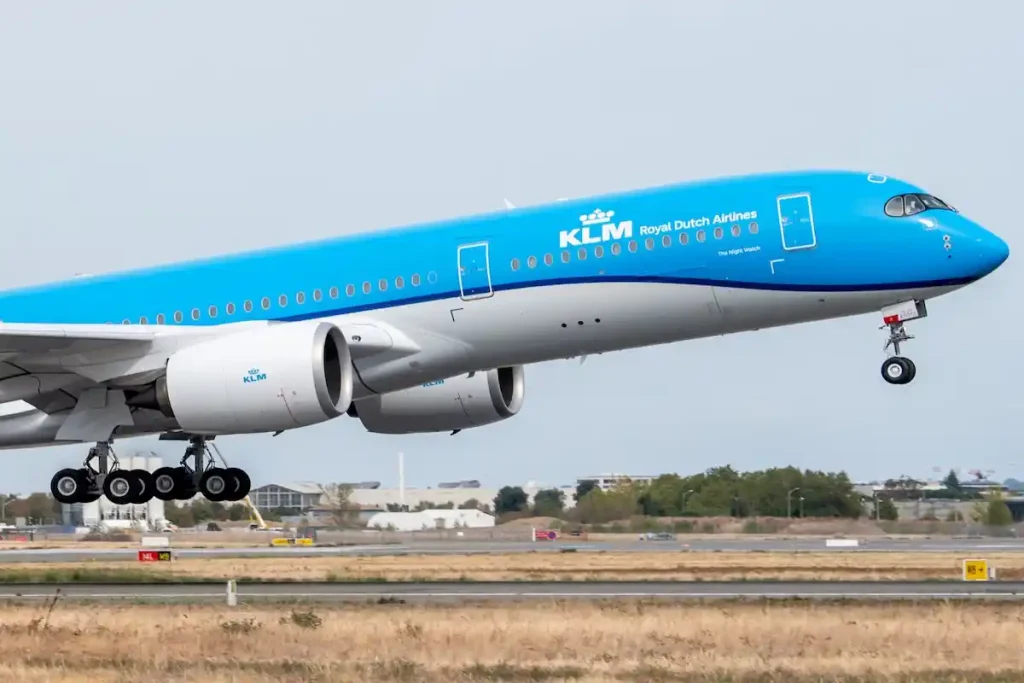
The A350-900 has 331 seats: 34 in World Business, 26 in Premium Comfort, and 271 in Economy Class. In its current state, with business class blocked, the available seat count drops by over 10% and falls below 300, but critically, it excludes the most expensive and best-performing seats.
KLM, in its latest certification update on the seats, has not confirmed a timeline for completion, but its dialogue is trending toward a more positive outlook, with test results approved and a path to certification emerging rather than uncertainty.
Why the delays for the new seats on the A350?
KLM’s Airbus A350-900 fate follows the path of other airlines that have faced similar problems, as design issues have directly challenged approval throughout the 2020s. As focus remains heavily on passenger comfort, neck and support, assessing how shoulder restraints are imposed is important; their interaction with crash test dummies on now-more-broadly angled seats has also been emphasized.
KLM’s World Business Class seats use the Stelia Opera platform; this widebody platform was introduced on the Air France A350 fleet. As a result, there’s relevant background, but just because another airline’s using the type doesn’t mean KLM’s configuration has been approved.
The commercial impact of the delays extends beyond just the simple lack of seats for passengers that may want a taste of the premium product. If KLM cannot sell its highest-rate cabin on new A350 departures, it removes a revenue source and critically impacts the debut of a brand-new type intended to represent a fresh slate for long-haul operations.
Ultimately, the financial effect remains hard to determine. While the seats remain blocked today, the financial implications will become clearer when the A350-900s launch to Toronto, whether approval arrives, and, if not, how many seats are blocked weekly.
A reliable loss estimate doesn’t come only from the 34 seats that aren’t bookable, but from an analysis of overall operating costs, revenue brought in through other cabins, and more. KLM is working closely with regulators, Airbus and seat providers to solve this last problem with its new aircraft, but it has yet to receive the decision it so desperately needs.

ABOUT THE AUTHOR
Daniel Fowkes is a Melbourne-based aviation analyst and journalist with over a decade of industry experience. As founder of Dj’s Aviation, he delivers trusted analysis on aircraft, airline strategy and global aviation trends for djsaviation.net
Related Articles




Stay Informed
Get the latest aviation news, analysis and route updates delivered to your inbox.
We respect your privacy. Unsubscribe at any time.
Enjoyed this story?
Make us your go-to for aviation news
Add us as a preferred source on Google and see our latest stories first in Top Stories.
Add Us On Your News Feed