
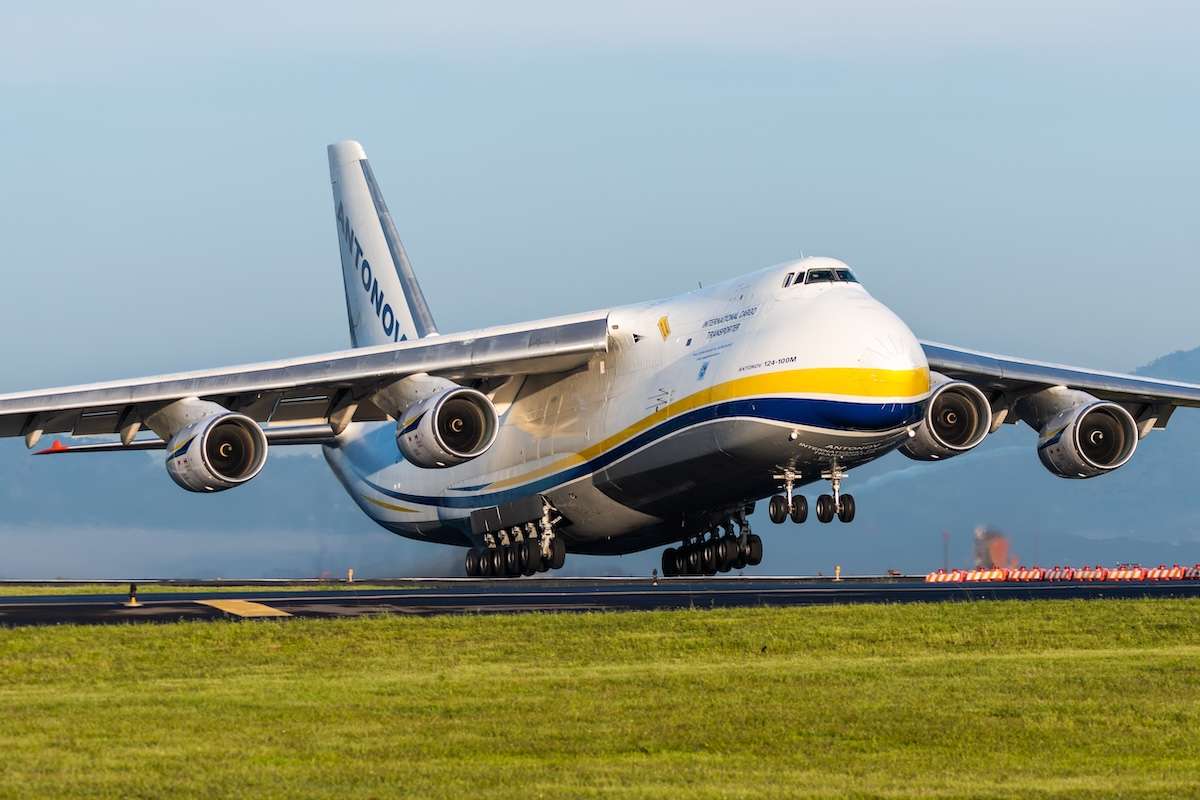
Airbus and Boeing have turned to one of the world’s largest cargo aircraft providers, the Ukrainian Antonov, and its AN-124 to support their production schedules.
With the two leading planemakers seeing improved performance across 2025 but still facing supply chain challenges, Antonov has emerged as a solution to bypass some of the pressures by using the jet to cross the Atlantic.
The unusual flying sees the outsized freighter operate to manage the tight margins for Airbus and Boeing, and to combat the delayed arrival of parts or those at the wrong places by providing additional support.
What was flown for Airbus and Boeing?
According to Reuters, in exclusive reporting aired in mid-July, Airbus and Boeing have both chartered Antonov AN-124 flights to move some of their larger aerostructures that would normally be transported by sea or road.
For Antonov, the AN-124 was used to ferry sections of the A350 from Kinston, North Carolina, to the long-haul final assembly line in Toulouse, France.
This plant, which was formerly part of Spirit AeroSystems, has now come under Airbus’ control as part of the global consolidation of suppliers that Airbus and Boeing have pursued over the last 12 months.
With Kinston responsible for the shipment of components such as fuselage panels, centre wing boxes, and more, these are imperative to building a jet like the A350, and delays impact delivery windows promised to customers and the planemaker’s own output targets.
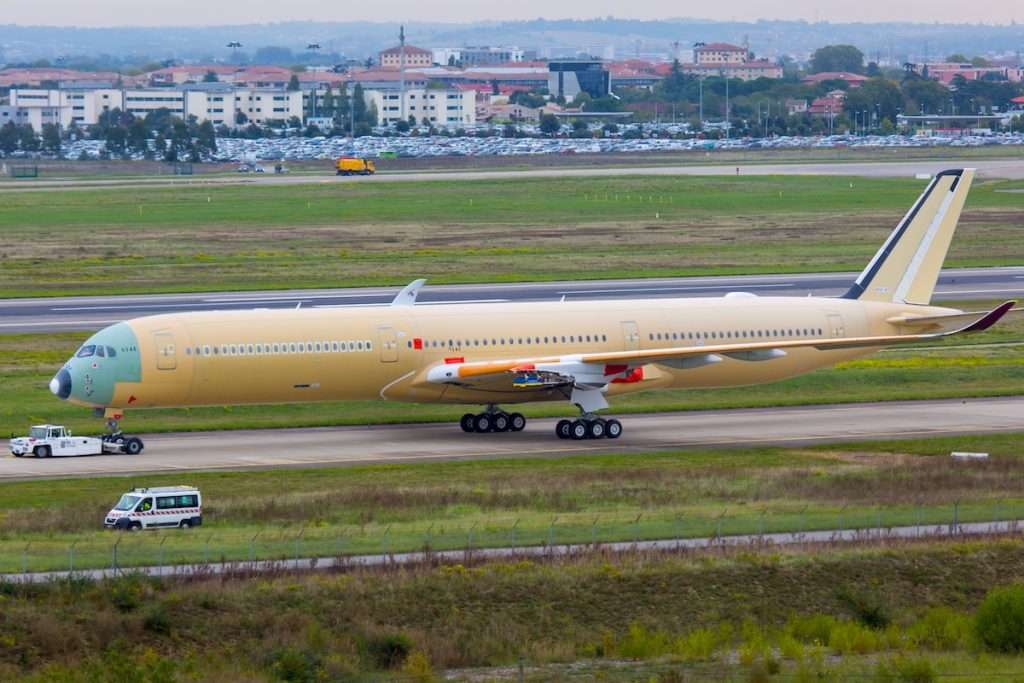
The buffer that would’ve been present was eroded because Airbus was forced to add sections to Antonov planes to avoid further delays on the A350 programme. This comes after the planemaker already informed airlines to expect further delays on the widebody through to the end of the decade.
Boeing was also seen in late June chartering an AN-124, the same model, to bring two upper fuselage sections from the Daher Aerospace plant in Florida to the widebody facility in Everett, Washington.
These sections are typically transported by road, but because of ongoing supply disruptions, Boeing has been pressured to meet deadlines. Moving them by air gave them the chance to keep assembly of their 767 freighter on track.
This wasn’t the first time with the AN-124, also leveraged at the beginning of the year to help move structural components for the larger 777 freighter programme, which was also facing supply chain pressures and forced the extreme move.
Why are these planemakers resorting to Antonov?
Switching from sea or road travel for Airbus and Boeing isn’t uncommon; however, selecting Antonov to handle the heavy lifting is noteworthy, as standard transport modes were deemed insufficient to meet supply chain pressures.
Two industry sources who spoke with Reuters said Airbus’s decision to fly A350 parts directly reflects the deterioration in output and stability at the Kinston plant after the planemaker took it over from Spirit AeroSystems.
Under Spirit, the site shipped parts by sea with a buffer in Europe, but that cushion has shrunk, and any slippage at the production site in Kinston has an immediate impact on the production rhythm of the A350 and, in turn, deliveries.
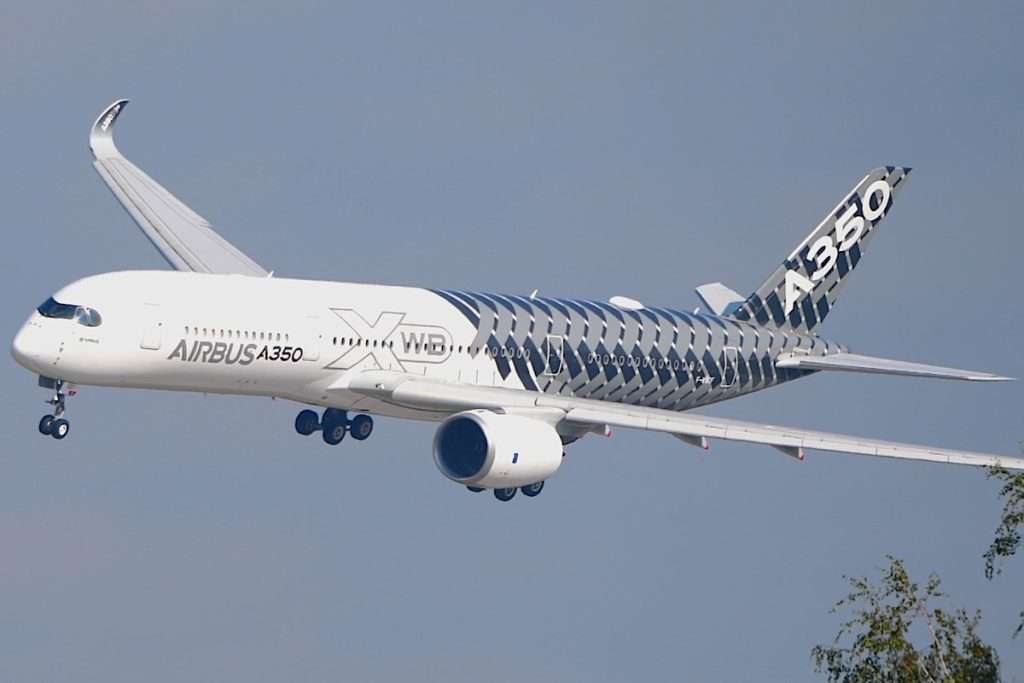
Airlifting sections by Antonov is essentially a measure to rebuild buffer stocks and help support the lines while management teams look to stabilise operations. That same push can be said for Boeing, which is, in its own right, still under pressure, with road logistics and its own fuselage delays impacting the production build sequence.
The AN-124, as with any aircraft capable of carrying oversized loads, is presented as an option to avoid a further gap in the line that would have ripple effects on deliveries and output. Both Airbus and Boeing, after years of discomfort in their output, cannot afford to take further hits and are thus more desperate.

ABOUT THE AUTHOR
Daniel Fowkes is a Melbourne-based aviation analyst and journalist with over a decade of industry experience. As founder of Dj’s Aviation, he delivers trusted analysis on aircraft, airline strategy and global aviation trends for djsaviation.net
Related Articles




Stay Informed
Get the latest aviation news, analysis and route updates delivered to your inbox.
We respect your privacy. Unsubscribe at any time.
Enjoyed this story?
Make us your go-to for aviation news
Add us as a preferred source on Google and see our latest stories first in Top Stories.
Add Us On Your News Feed