
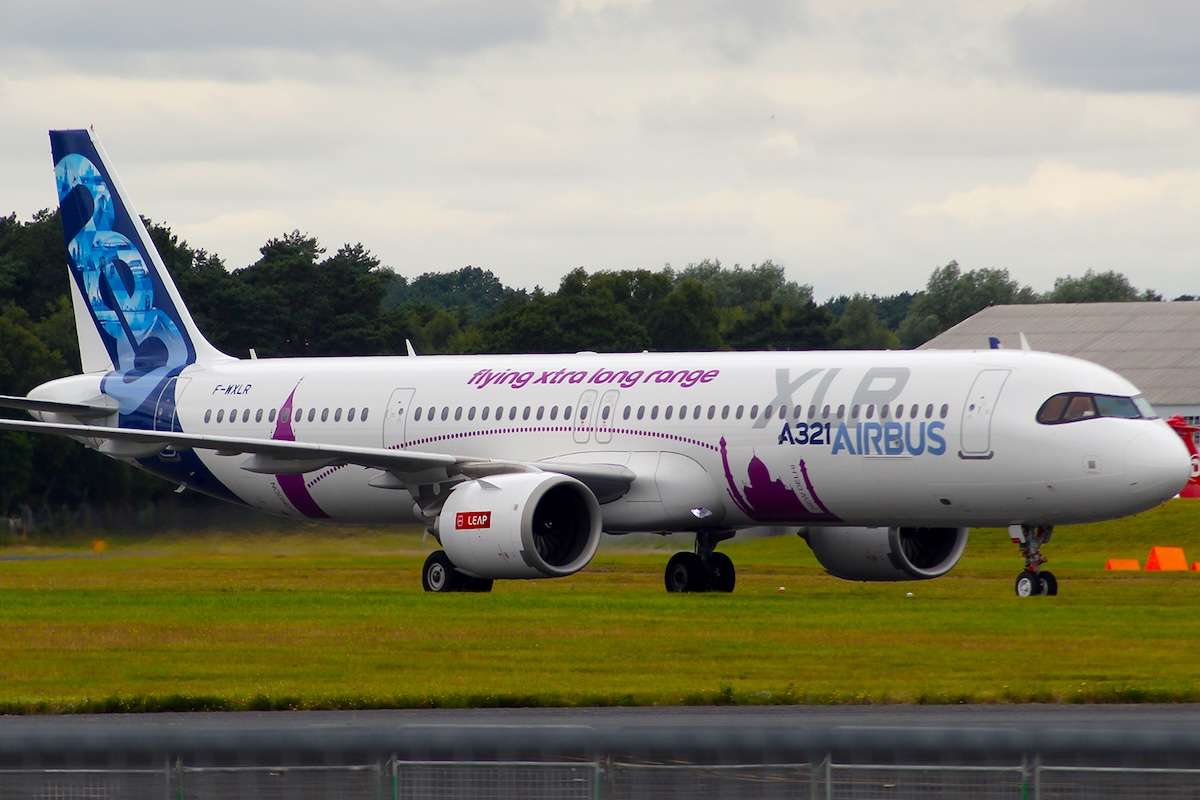
Airbus may well begin targeting a new order for its A321XLR, as Oman Air prepares to take the next step in its fleet renewal and expansion.
The Chief Executive of the Gulf carrier, Con Korfiattis, has said that an evaluation is currently underway to determine which new narrowbody jet would best serve the airline in the coming decades.
The requirements meant the airline needed a narrowbody tailored for long-haul flying but also capable of a premium-heavy cabin configuration. This single-aisle aircraft is to be kitted with lie-flat seats.
Oman Air’s vision is to have a single-aisle aircraft with business seats and beds, but also equipped with sufficient range to serve international destinations that are not viable with a widebody.
Oman Air Has Big Ambitions For Its Future
With a fleet of just over 30 aircraft, Oman Air is positioned in the Gulf as a relatively small player compared to some of its neighbours; however, with a rich history, its fleet has evolved into a Boeing-only fleet as of 2026.
Fleet data shows the airline has nine Boeing 787s active and three units listed as parked, for a total of 12 aircraft in its name to date across the 787-8 and 787-9 models. On the single-aisle side, the business operates three variants of the 737 family, totaling 24 units, including the 737-800, 737-900ER, and 737 MAX 8.
However, while the 737 MAX and 787 help drive the next generation of the fleet, there’s a strong appetite for the next phase of growth to be centered on long-haul flying, achieved with a narrowbody aircraft.
That ambition is backed by a recent period of growth that has focused on using narrowbodies to launch international flights. This move wasn’t common for the business in the past, but now presents a fresh opportunity.
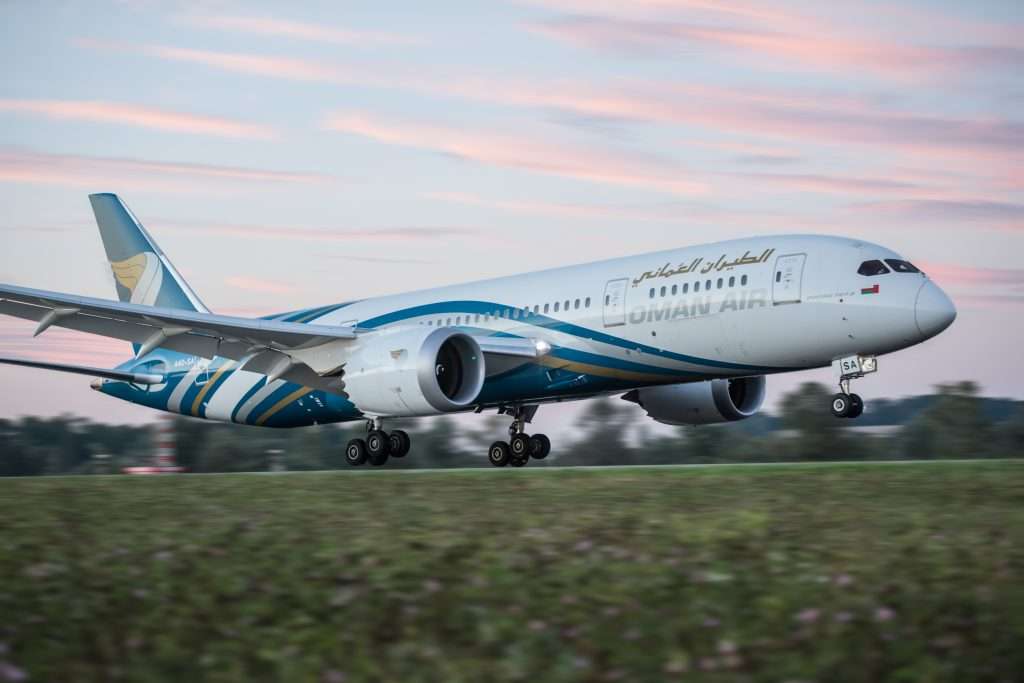
As a result, the airline wants to pounce on the opportunity in the future, but with an aircraft more optimised for this. Leveraging a single-aisle to maintain its premium experience but still bring efficiency on these international flights without needing a widebody for costs and capacity pressure.
With the airline’s home airport never having been so full, even in the wake of the Iran conflict, as passengers reroute, there’s an operational challenge that means new planes are needed. What has always been a relatively small fleet is facing the crunch and is being stretched thin.
A Switch Back To Airbus & The A321XLR?
Oman Air previously operated Airbus aircraft, including the A310, A320, and A330, all of which are still in service; it has since transitioned to an all-Boeing operation with the 737 and 787 families. However, the European manufacturer will be licking its lips at the opportunity that has presented itself.
With Oman Air not naming specific models, nor having provided a tally of aircraft it has after in total, the need for. narrowbody with long-haul range and lie-flat business class seat potential is the synopsis of a lucrative contract that Airbus would argue perfectly matches its own A321XLR.
This model comes with a strong range of up to 4,700 nautical miles in a two-class layout, which provides room for premium business-class seats that convert into lie-flats. Additionally, the range that can be covered while flying deep into Europe, Africa, or Asia can still be within a suitable cost and capacity range.
Thinner-route opportunities would also be present, where cities that cannot be served by a product like the 787 year-round could be served by a single-aisle aircraft like the A321XLR. Additionally, an XLR-type plane eases pressure on other jets to be redeployed to markets better suited to their intended purpose.

There are hurdles, though. While the XLR may be deemed the optimal fit, Oman Air has gone heavy on Boeing and is a narrowbody operator. Additionally, its CEO has stated that, given its size, working with a single planemaker is more beneficial at the moment.
That means if Airbus wants to stand a chance in this new deal, it needs to craft a pitch that is compelling and offers enough benefits to persuade the Gulf carrier to shift away from the 737 MAX for narrowbody operations.
The strongest case for Airbus to push for an order from Oman Air and convince it to shift away from the American plane maker may very well be the lack of an adequate competitor to its A321XLR in Boeing’s line-up.
While Boeing works to certify its 737-10, a high-capacity model in the MAX family, the aircraft has a range of only 3,100 nautical miles. As a result, its possible deployment would strain the reach for an airline like Oman Air even if it enjoys a strong bump in capacity from the -8.
With the A321XLR having a huge maximum 1,600-nautical-mile jump, if Oman Air truly wants to become a leaner and disciplined business that can execute its desired strategy of long-haul narrowbody flying, a purchase of the A321XLR and therefore switch to Airbus and become a multi-manufacturer airline again may be needed.

ABOUT THE AUTHOR
Daniel Fowkes is a Melbourne-based aviation analyst and journalist with over a decade of industry experience. As founder of Dj’s Aviation, he delivers trusted analysis on aircraft, airline strategy and global aviation trends for djsaviation.net
Related Articles




Stay Informed
Get the latest aviation news, analysis and route updates delivered to your inbox.
We respect your privacy. Unsubscribe at any time.
Enjoyed this story?
Make us your go-to for aviation news
Add us as a preferred source on Google and see our latest stories first in Top Stories.
Add Us On Your News Feed