
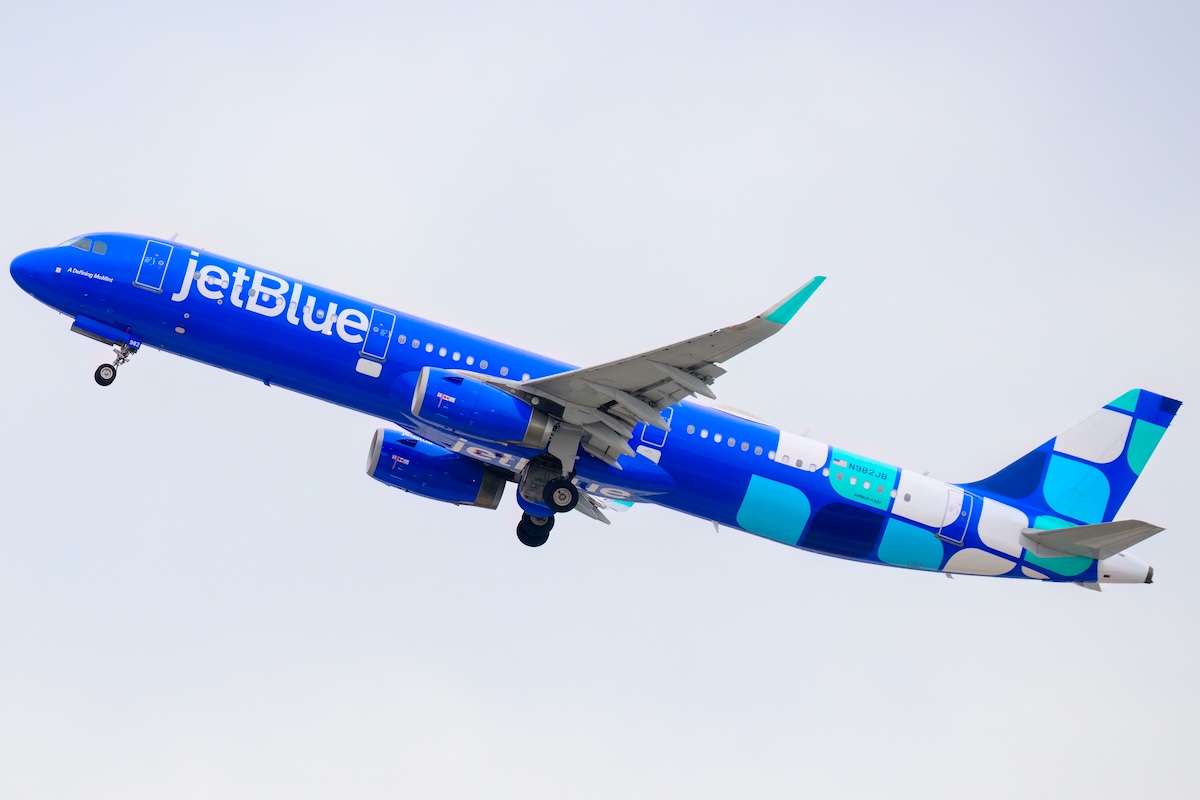
JetBlue has confirmed it’ll axe even more underperforming routes and shift away from one city entirely as it redeploys capacity and builds up Fort Lauderdale.
Looking to capture demand left behind by the collapse of Spirit Airlines in an unforgiving market, JetBlue is being forced to make calculated choices to survive, or at least give itself the best chance to do so.
Here’s What JetBlue Is Cutting
As part of a summer schedule shift, especially focusing on the peak-demand period, the changes confirmed with Business Insider are part of a move that will see it completely leave Manchester Boston Regional Airport in New Hampshire.
The other changes will see the airline end services from Manchester to Orlando, Fort Myers, and Fort Lauderdale; the Orlando service is also scheduled to end on 8 July, 2026. This is a calculated departure, not just a scale-back.
Other routes are also being trimmed. New England and Newark, then Hartford-Tampa, will see routes cut, while flights from Newark Liberty to Cancun, Punta Cana, Santo Domingo, Tampa, and Aruba will also disappear.

A further shift in the airlines’ Providence-to-San Juan service will occur with a summer suspension; this will therefore return for the Northern Winter 2026/27 season, but is subject to change.
The Northeast is the key part of the refocus. Still, the Orlando-to-San Jose market will see a link cut, not to mention additional shifts in Costa Rica capacity to prioritise Florida. This strategy puts greater priority on it than on thinner leisure markets.
Why JetBlue Is Making These Changes
JetBlue is making these changes, as with everything it does, in a calculated and reasonable way. It’s the end of a smaller number of routes, specifically those it already notes are underperforming, to manage capacity better and meet demand for the flights people want.
The purging of routes is consistent across the industry. Still, it has never been more important, as this U.S. carrier faces an elevated cost base that is only rising amid fuel and broader operating cost pressures, making routes on thin margins unviable overnight.
JetBlue’s fate has been under pressure for years, especially amid consolidation talk and the struggles at Spirit Airlines, which it had attempted to merge with just a few years ago, before the deal was blocked. Now, with the Spirit collapse, JetBlue is back in the spotlight over what its future will entail without some form of investment or takeover plan.

Analysts have warned that these fuel spikes in 2026, paired with an already challenging operating environment, will put smaller, low-cost, and independent players in the industry at risk and in a fight for survival.
Fundamentally, April discussions with David Neeleman, the founder and former Executive of the airline, cited instability at JetBlue that could push it into bankruptcy this year, at the earliest, without some form of intervention. Those comments were pushed back against by the airline itself, but they were a clear warning sign.
While JetBlue cannot secure its fate amid too many unknowns, it can only control what it can control: simplifying its network, making strategic decisions to lower costs, and redeploying capacity where prospects are strong to yield long-term results.
JetBlue Sets Its Sights On Fort Lauderdale
Many of these route changes are seeing JetBlue look more firmly towards the Sunshine State of Florida in the wake of Spirit Airlines’ collapse, to make up for lost ground and the hole this market now finds itself in after the yellow carrier ceased all operations.
These freed-up aircraft are being sent to Fort Lauderdale–Hollywood International Airport (FLL), as part of a decision to rapidly scale up operations here, with plans to launch 11 new routes and to carve out a sustainable path to profitability well into the future.
Expansion will include service to Baltimore, Charlotte, Chicago O’Hare, Detroit, Houston, Nashville and Ponce. However, extending beyond that many more locations will also form part of the network from Fort Lauderdale as it leverages aircraft and aims for 130 daily departures, which is a near 75% increase year over year and therefore its largest ever operation out of the airport.

Now, three focus strategies are firmly being placed on South Florida, where demand exists but can no longer be captured as well because of the Spirit Airlines collapse and the requirement for an airline operating similarly, not at legacy pricing, to step in.
With JetBlue so hell-bent on surviving, fighting analysts’ warnings, and remaining sustainable for the future, these types of decisions are being made to ensure the business will still be around by the 2030s. All this, in an industry that has never been more competitive and where expenses are soaring, means bottom lines hurt and already-weak margins shrink further.

ABOUT THE AUTHOR
Daniel Fowkes is a Melbourne-based aviation analyst and journalist with over a decade of industry experience. As founder of Dj’s Aviation, he delivers trusted analysis on aircraft, airline strategy and global aviation trends for djsaviation.net
Related Articles




Stay Informed
Get the latest aviation news, analysis and route updates delivered to your inbox.
We respect your privacy. Unsubscribe at any time.
Enjoyed this story?
Make us your go-to for aviation news
Add us as a preferred source on Google and see our latest stories first in Top Stories.
Add Us On Your News FeedRelated articles
· Airlines
Allegiant Air Buys Six More 737-8s From Boeing
Daniel Fowkes
26/10/2026
· Airlines
Emirates vs Qatar Airways: The Gulf Superhub Rivalry Compared
Bryan Shelmon
26/10/2026
· Airlines
Riyadh Air Is Moving Away From Riyadh
Daniel Fowkes
26/10/2026
· Airlines
Emirates Isn’t Worried At All
Daniel Fowkes
25/10/2026