

Few widebody aircraft have shaped modern long-haul travel quite like the Boeing 777-300ER and Boeing 787 Dreamliner.
One is a capable, high-capacity, long-range jet that has formed the backbone of the hub-and-spoke era, and the other part of a new era of flying focuses on efficiency and flexibility to match airlines’ evolving requirements for reduced costs.
On paper, the two aircraft remain excellent workhorses for Boeing and their respective operators, but they sit at opposite ends of what a long-haul aircraft can offer airlines and come from two very different eras.
Boeing 777-300ER vs 787 Dreamliner: Key Differences
The main difference between the Boeing 777-300ER and the 787 Dreamliner is capacity and construction. The 777-300ER is a traditional aluminum aircraft built for massive passenger capacity on high-demand routes, while the 787 is a composite-built jet focused on extreme fuel efficiency and point-to-point long-haul travel.
Boeing’s 777-300ER, often seen across routes such as Dubai to Los Angeles, Sydney to Los Angeles, and other high-density corridors, is perceived as the perfect plane to showcase its sheer scale and muscle, especially with a capacity point nearing 400 passengers when airlines configure their jets accordingly.
The 787, particularly the 787-9 and 787-10, is more about perfecting service to previously non-viable markets, with lower seat capacity but a dramatically better fuel-per-seat figure, making it a favourable option for airlines’ bottom lines and margins across routes.
| Feature | Boeing 777-300ER (typical | Boeing 787-9 (typical) |
| Typical two-class seats | 360-396 seats | 280-296 seats |
| Typical three-class seats | 300-350 seats | 230-260 seats |
| Range | 7,370NM (13,600KM) | 7,530NM (14,000KM) |
| Wingspan | GEnx-1B or Rolls-Royce Trent 1000 | 60.0m (197 ft 5 in) |
| Engine options (original program | GE90-115B only | GEnx-1B or Rolls Royce Trent 1000 |
One key difference between these two aircraft lies in how airlines plan to adopt each type. Legacy flag-carriers and those located within the Gulf still in 2026 lean on the 777-300ER as their flagship in many circumstances, knowing that the long-haul and high-yield routes benefit from the capabilities of such a model.
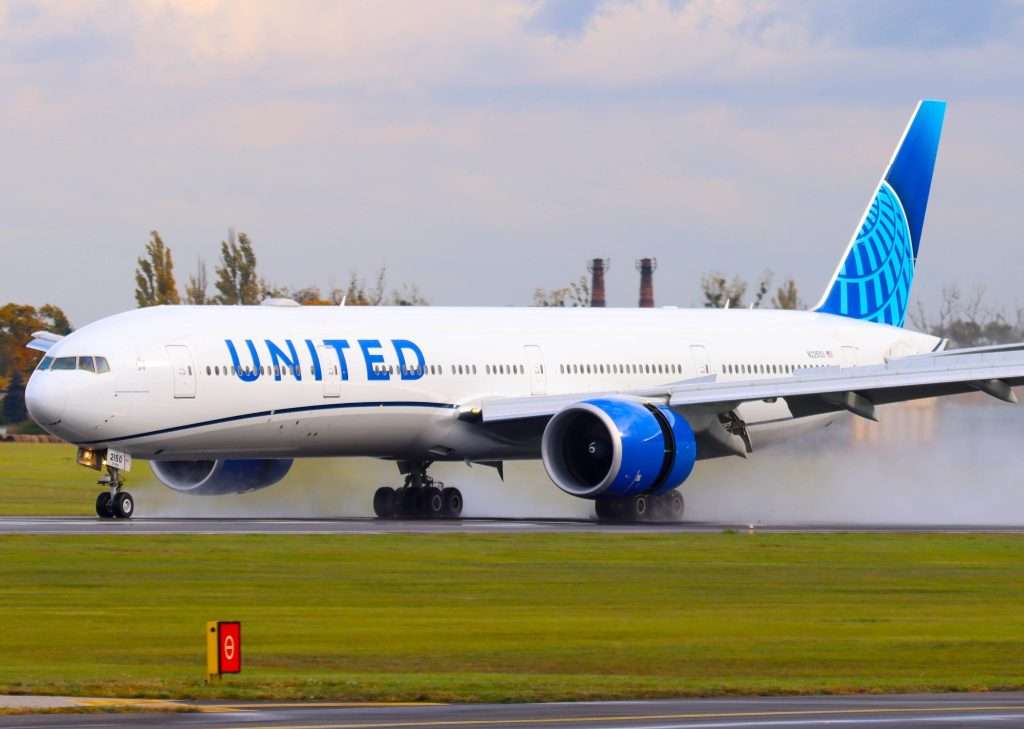
However, some legacy and certainly more hybrid airlines have in the 21st century turned more than ever to the 787 as an effective medium to long haul route platform on sectors that do not require the 400 seater capacity present with the Boeing 777-300ER but may still benefit from the capabilities of a widebody, whether from a comfort or now efficiency standpoint.
The 787’s ability to open up new point-to-point city pairings and, certainly, connectivity at secondary airports has made it stand out from the previous-generation 777-300ER, which may be deemed either too large or, in airlines’ studies, simply too expensive to operate on certain route segments without damaging profitability.
Boeing 777-300ER Specifications and Performance
The Boeing 777-300ER is a long-haul heavyweight for airlines and was built to move passengers over long distances; its capacity means airlines did not have to sacrifice range for capacity, all the while still having two engines rather than the more costly four.
The aircraft stretches over 73m with a wingspan of 64.8m, placing it between the 747-8 and 747 as an adequate middle ground; however, its performance leans much closer to the former, in an era when quad-engines were departing the industry. It was innovations like the 777-300ER that helped airlines take the next step.
With a maximum range quoted around the 7,390-7,930 mark, depending on the payload and configuration, it has been responsible for connecting many major city pairings in nonstop fashion, and its strong capacity, with a maximum certified capacity of 550 in a single class, means that it’s the go-to option in ultra-high-density locations.
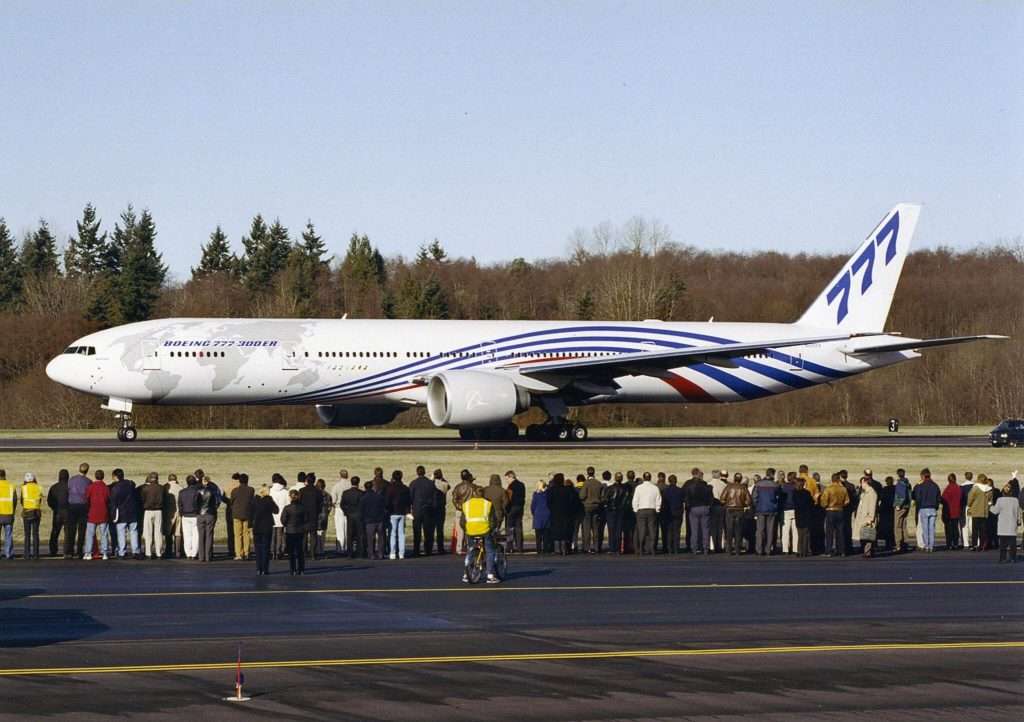
Performance-wise, the General Electric GE90-115B engines power the 777-300ER, this among the most powerful turbofans that have evern been produced globally, each engine has a rated thrust of around 115,000lb and supported by such strong muscle means the engine is able to climb in an effiiencet manner and cruise at speeds near Mach 0.84-0.86 or 575mph (920-930km/h).
Where The Boeing 777-300ER Thrives
The Boeing 777-300ER really thrives on dense, high-yield trunk international routes that feed through major hubs, whether in Oceania, the United States, the Middle East, Europe, or Asia. For those airlines that have ordered the jet, it offers a blend of range, capacity, and cargo capabilities.
Now, in the mid- to late 2020s, the 777-300ER remains an excellent solution for airlines’ lucrative, high-volume routes, as seen in the Middle East, where Emirates, Qatar Airways, and Etihad Airways all use the aircraft to support their next-generation widebody operations.
For the passengers of the aircraft, the size means there are more seats in every class. It gives airlines the chance to configure the aircraft to offer generous business-class cabins if they see fit, while also allowing them to use the scale to create a layout that complements the widebody’s size.
Boeing 787 Dreamliner Variants Explained
The Boeing 787 family is a three-variant widebody programme built entirely around its efficiency for customers and, once within networks, its flexibility for deployment. It focuses on passenger comfort instead of sheer scale.
The 787-8 is the baseline model, the smallest in the program, and can seat around 248 passengers in a typical two-class layout. This is further complemented by the 787-9, which seats around 296 passengers in the same layout. The last model, the further-stretched 787-10, can accommodate roughly 336 passengers; final numbers depend on the airlines’ decisions.

However, even with the capacity shifts enabled by fuselage extensions, all three Dreamliner variants share the same foundation that brought the series so much success: its fuel efficiency and the new standards for commonality for airlines choosing to adopt one, two, or all three models.
What makes each variant different is the role it plays in airlines’ global fleets. The 787-9 has become the runaway sales leader; it has absorbed the bulk of the orders and deliveries, seen as the more mid-ground option, capable of anything and everything.
However, the 787-8, with its smaller capacity, in an era when airlines have at times prioritised capacity over range, has filled a more niche role, looking towards thinner routes.
The 787-10, the largest member of the series, serves as a fantastic base for airlines looking to deploy a widebody aircraft in the short- to medium-haul market previously dominated by the 767 and A330, both of which are retiring.
Why Airlines Choose The 787-9 Dreamliner
The 787-9, especially in the Boeing Dreamliner lineup, is often perceived as the sweet spot for airlines; it has been widely adopted and offers a roughly 20ft stretch over the smallest variant, the 787-8.
That stretch allows Boeing to push the typical two-class seating capacity from the mid-200s closer to 300 passengers, all the while retaining the long-range capability of 7,530 nautical miles, enabling airlines to either service thinner long-haul routes or open new long-range destinations, such as Qantas’ Perth-to-Rome flight.

For airlines, this means there’s a platform that offers range and capacity, while efficiency exceeds that of the 777-300ER, on routes that, for some companies, would not support an aircraft of this scale.
What makes the 787-9, therefore, so attractive is that it is able to give customers the best of both worlds, not just able to carry a meaningful premium cabin to drive up revenue across key markets, but it is also not large enough in scale that it takes up larger gates at airports or restricts its deployment across locations globally.
Airlines such as United have built their strategy around the Boeing 787 Dreamliner, operating all variants and expecting greater reliance on the 787-10 in the coming years due to a recent shift in orders. The jet is crucial not just to coast-to-coast connectivity but also to international flights to Asia, Europe and Oceania.
For customers, the 787-9 provides a full Dreamliner experience, with larger windows, lower cabin altitude, quieter cabins, modern lighting, and several other features that make the jet more comfortable for long-haul travel than previous-generation jets.
Passenger Experience: 777 vs 787
The passenger experience aboard the Boeing 777 and 787 ultimately reflects two generations of widebody design, not just in overall efficiency but also in comfort levels. Where the 777 is a high-capacity, high-performance workhorse, the 787, while just as effective in its role from a passenger standpoint, has a cabin more tailored to physical comfort.
Both are comfortable; that judgment ultimately comes down to the seat installed in the aircraft by the operating airline; however, the 787 Dreamliner’s cabin environment reflects a new era of standards for passengers on long-haul services.
A Game-Changing Cabin Combats Fatigue
Boeing’s 787 was designed to reduce fatigue on long-haul flights, more than was present on the. This is attributed to its composite fuselage, which results in lower cabin altitude and higher humidity, leading to a reported less-dry, easier flight with less pressure on the throat and skin.
The 787 also uses hygienically graded filtration systems. This extends to the installed air quality systems, and when combined with quieter engines and other advancements, it means the cabin is not just less noisy than the 777 but also less jittery in the air.

Boeing has also gone one step further with the Dreamliner, revolutionising the lighting in the series with large windows featuring electronic dimming rather than traditional shades, complemented by mood-based LED lighting and larger overhead bins to create a less cramped feel within the cabin on 15-hour ultra-long-haul flights.
These calculated moves by Boeing were not just to impress airlines but also customers, who can notice the cumulative improvements that reflect a broader shift toward passenger well-being over simplicity and comfort, as seen in the products installed on the aircraft.
As a result, customers often perceive the 787 as inherently a more advanced aircraft from a wellness standpoint. Even though the 777 can feel more spacious, the Dreamliner wins customers over because of Boeing’s adoption of new technologies through its own studies and learning.
Fuel Efficiency and Operating Costs
Fuel efficiency and operating costs of the two Boeing widebodies are where the 787 Dreamliner shows the generational edge it has over the high-capacity 777-300ER counterpart. While the latter holds up well within its niche, the 787’s heavy composite structure yields a roughly 20-25% reduction in fuel burn per seat.
The fuel burn reductions mean improved margins on long-haul routes, especially on those with more moderate demand levels, reducing the overall risks of opening thinner city pairings in markets or even running more frequent flights without the same scale pressure that an aircraft like the 777-300ER has demanded since its conception.

Over time, the 787’s efficiency has also helped airlines meet stricter emissions targets across the industry. This contrasts with the 777-300ER, which burns more fuel per seat but can spread that cost over a larger cabin base, meaning that on high-density routes it can still prove a valuable and reliable asset.
The Economics Of Efficiency
Efficiency doesn’t just come from new technology; it’s about how airlines use every litre of fuel and how each booked seat affects operating costs. Here’s how the numbers break down between the Boeing 787-9 and 777-300ER:
- Fuel Burn: The 787-9 consumes roughly 5,400 liters per hour, whereas the 777-300ER burns closer to 7,000 liters. This translates to a 20-25% reduction in fuel costs for the Dreamliner.
- Operating Cost per Hour: In 2026, operating a mid-life 777-300ER costs approximately $18,000–$19,000 per hour.
- Cost per Seat: On high-density routes, the 777-300ER averages $26.03 per seat hour, while the 787-9 sits slightly lower at $25.86, despite carrying fewer passengers
Future of Boeing Widebody Aircraft
Boeing’s widebody future through the 2030s has been defined by a two-pillar strategy. The current 787 Dreamliner continues to provide itself as an efficient and mid-sized jet forming the backbone of many airliens long-haul strategies, but it’ll be complemented by a new model soon.
The 777X family, positioned to directly replace the aging 777-300ER on flagship, large-capacity routes, is expected to debut in 2027 upon certification. Together with the 787, it will cover density-led and hub-heavy routes, whether across hub-and-spoke journeys or point-to-point networks.

The 787, even with the emergence of the 777X, will remain a prime tool for Boeing, positioning the jet as an option for new nonstop routes where capacity and flexibility are important. With recent upgrades to the aircraft, including a higher MTOW and thus improved payload or range performance, the 787-9 and 787-10 can now handle more routes than ever before and still deliver roughly 20-25% better fuel efficiency per seat.
With continued investment in the 787 line visible in South Carolina, with a second final assembly building, Boeing intends to keep the Dreamliner at the core of its widebody output long into the 2030s, as the backlog does not weaken, and production increases are planned to reach record levels.
The 777X Steps In For The 777-300ER
Boeing’s upcoming 777X, meanwhile, with GE9X power and lower fuel burn than competing aircraft, is designed to feed off the 777-300ER on heavy trunk routes where the latter has thrived for some time.
Airlines like Etihad Airways, Emirates, and other Gulf carriers have already committed to the new Boeing widebody and intend to deploy the jet on large-capacity hub-and-spoke routes. This traditional model works well for their niche well into the 2030s, while still leveraging the 787 for thinner sectors.

This two-aircraft lineup means the best of both worlds, the efficiency and flexibility of the 787 Dreamliner remains, but to be complemented by the 777X, which is suited for high-density and high-revenue routes without having to compromise on marins thanks to the newest member of the commercial airpanes division taking inspiration from the Dreamliners’ technical leaps.
The Insider’s Verdict: Which Aircraft Do Airlines Prefer?
For airlines, the choice between the Boeing 777-300ER and the 787 Dreamliner isn’t about a clear winner, but rather about matching their requirements to the right tool for the task at hand.
The 777-300ER has long made sense because of its high seat count, and even now, complemented by strong cargo-carrying capacity, it thrives on busy hub-to-hub trunk routes and markets where airlines can maintain stable load factors. Its scale has proven reliable and, if executed correctly, can keep the jet competitive despite a higher fuel burn per seat.
However, the 787, and especially the 787-9, has remained the preferred option in the 21st century for an airline seeking efficiency, flexibility, and economics on a long-haul network that’s thinner but still capable of dominating.
The aircraft has proven successful for many airlines on city pairings where route demand is moderate rather than consistently strong, and the flexibility of its deployment means airlines are comfortable switching the jet out seasonally as well.
What this means is that airlines can end up operating both aircraft on different missions. However, the upcoming 777X amplifies the split that’s been observed, with this expected to be the direct, modern, and fuel-efficient answer to the 777-300ER and positioned to capitalise on markets held by this older aircraft.
The 777X and 787 will thus carry the torch and dominate the widebody segment for Boeing as it moves into the 2030s, with an ideal mix of flexibility and capacity that allows airlines to tailor their fleet mix to their needs.
Frequently Asked Questions
Is the Boeing 777-300ER being replaced by the 787?
Not directly, while yes, the Boeing 787 is the more efficient of the two models, it also comes from a different era. The 777-300ER can carry more passengers and cargo, and its true successors are the 777X and 777-9 variants, which combine the 777’s massive capacity with the 787’s efficiency standards.
Which is better for long-haul flights: The 777 or 787?
For passengers, the 787 Dreamliner generally offers a better experience, thanks to its higher cabin humidity and lower effective cabin altitude. Still, the 777-300ER, with its spacious cabin and roar of the GE90 engines, can be an enthusiast’s choice.
What does ETOPS mean for these aircraft?
ETOPS (Extended-range Twin-engine Operational Performance Standards) allows these twin-engine jets to fly long distances over oceans, with both the 777 and 787 having high ETOPS ratings of up to 330 minutes, meaning they can fly almost any route globally while remaining within 5.5 hours of an emergency airport.

ABOUT THE AUTHOR
Daniel Fowkes is a Melbourne-based aviation analyst and journalist with over a decade of industry experience. As founder of Dj’s Aviation, he delivers trusted analysis on aircraft, airline strategy and global aviation trends for djsaviation.net
Leave a Reply
Related Articles




Stay Informed
Get the latest aviation news, analysis and route updates delivered to your inbox.
We respect your privacy. Unsubscribe at any time.
Enjoyed this story?
Make us your go-to for aviation news
Add us as a preferred source on Google and see our latest stories first in Top Stories.
Add Us On Your News Feed
Attractive section of content. I just stumbled upon your web site and in accession capital to
assert that I acquire in fact enjoyed account
your blog posts. Any way I’ll be subscribing to your augment and even I achievement you
access consistently rapidly.
For the reason that the admin of this website is
working, no doubt very shortly it will be renowned, due to its feature contents.