
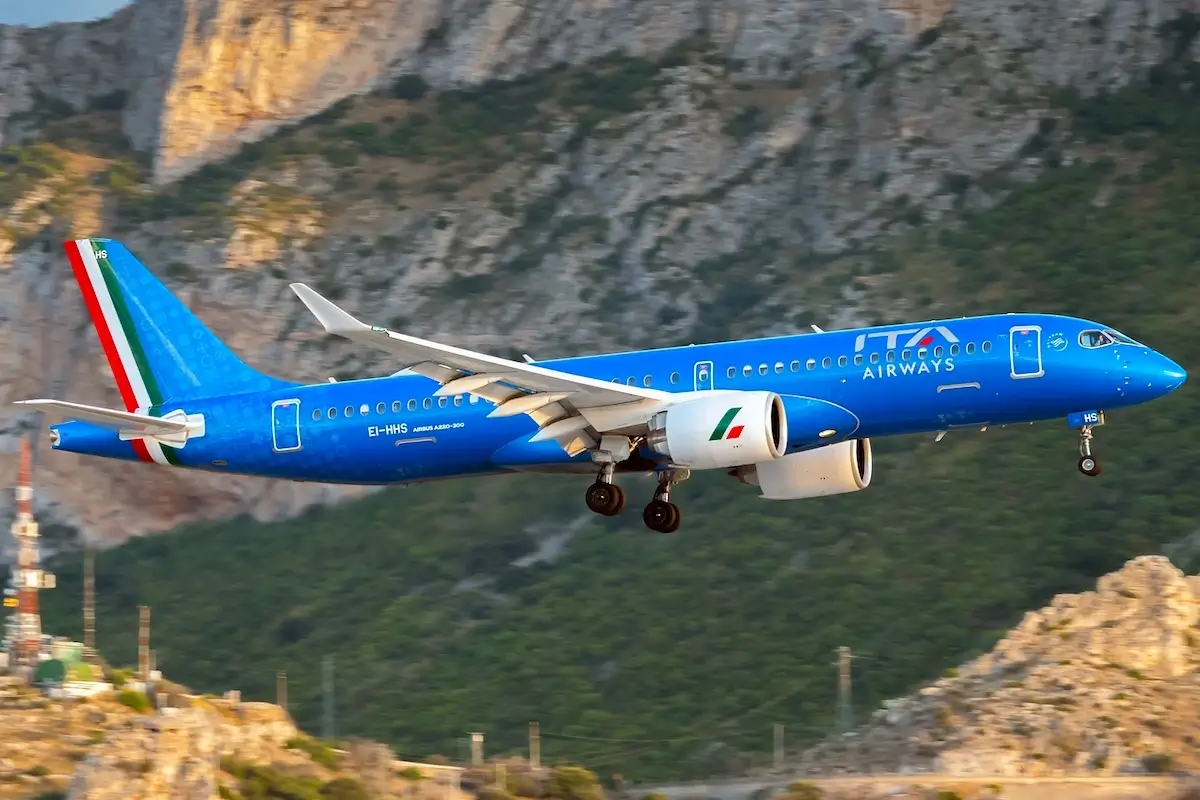
ITA Airways’ aircraft reliability woes are worsening, the airline confirming further bad news for the fleet.
Driven by reporting from Corriere.it, the Italian carrier’s Airbus aircraft are continuing to face problems, all stemming from reliability concerns with the Pratt & Whitney GTF engines.
Unfortunately, ITA Airways is in a position where nearly 30% of its active fleet, flying domestic and short-haul international services, is on the ground, which absolutely decimates the airline’s ability to serve key markets.
Unfortunately, this is not a problem expected to improve for ITA Airways either. Under current forecasting, the toll on the business will exceed €100 million across the next four to five years, with the problem not diminishing until the turn of the decade.
For ITA Airways, it’s not one area that’s impacting operations with Pratt & Whitney aircraft more than others; it must be said, it’s a host of issues ranging from spare part shortages to the availability of other key areas.
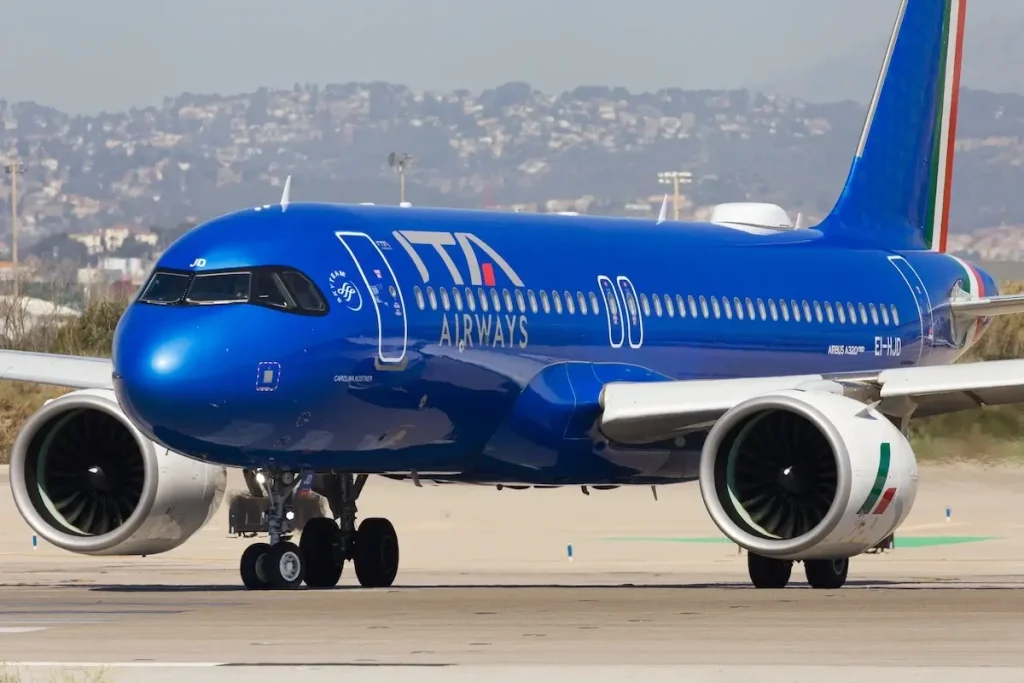
Take the highlighted EI-HJD, staggeringly, this aircraft has been parked since 20 January, 2025, after entering service only on 12 April, 2023. That’s some 307 days on the ground, and this period has become even less surprising given the state of the global industry.
For a company such as ITA Airways, the damage these groundings have caused is quite considerable, mainly because it recently emerged after the collapse of Alitalia and has been attempting to ensure the same problems do not arise as those evident in the former flag carrier.
Data across the airline’s fleet shows that 26 Airbus A220S are in operation; however, only 17 are active, with nine parked. The vast majority of these are for the A220-300 model.
Meanwhile, in the A320neo program, with 19 aircraft delivered, a similar theme is evident: eight aircraft on the ground and just 11 active.
ITA Airways also relies on the Airbus A321neo, with seven aircraft delivered and two parked, leaving five aircraft currently serving the network.
Unfortunately, the affected aircraft are all next-generation, state-of-the-art single-aisle jets designed to deliver efficiency and flexibility across the network. Yet they are parked and not being utilised, as their youthful nature would typically be leveraged to maximise use.
ITA Airways Not Alone
For ITA Airways to see such a significant portion of its aircraft on the ground is by no means a surprise, especially given the current global engine issues.

Each airline’s circumstances have been different, some feeling the heat more than others, which means their direct responses to the engine reliability challenges will vary case by case.
In some instances, airlines have looked to leasing markets to secure much-needed temporary capacity; however, the pressures this part of the industry has faced have posed challenges in their own right.
On the more extreme side, Air Austral has moved to axe the A220, an aircraft type powered by Pratt & Whitney GTF engines, a decision made after the business signed an LOI with Macquarie AirFinance to acquire the A320neo.
Under this agreement, deliveries for two aircraft would come in March and May of 2026. In essence, these A320neo would help replace the A220-300, which has been cut as the airline aims to cut its losses.

Frustrations have not just been about reliability but also about communication issues, which have left little to no improvement. For example, Air Austral held discussions with Pratt & Whitney over the engine woes, the provider saying improvement would arrive.
However, Air Austral found that no improvement occurred; instead, engine woes persisted. A decision was therefore made to axe the fleet type to improve long-term stability.
Some airlines have even been forced to slash capacity across their networks due to their inability to take on new aircraft through the leasing market, a lack of coverage that necessitates adjustments to preserve the most important markets.

ABOUT THE AUTHOR
Daniel Fowkes is a Melbourne-based aviation analyst and journalist with over a decade of industry experience. As founder of Dj’s Aviation, he delivers trusted analysis on aircraft, airline strategy and global aviation trends for djsaviation.net
Related Articles




Stay Informed
Get the latest aviation news, analysis and route updates delivered to your inbox.
We respect your privacy. Unsubscribe at any time.
Enjoyed this story?
Make us your go-to for aviation news
Add us as a preferred source on Google and see our latest stories first in Top Stories.
Add Us On Your News Feed