
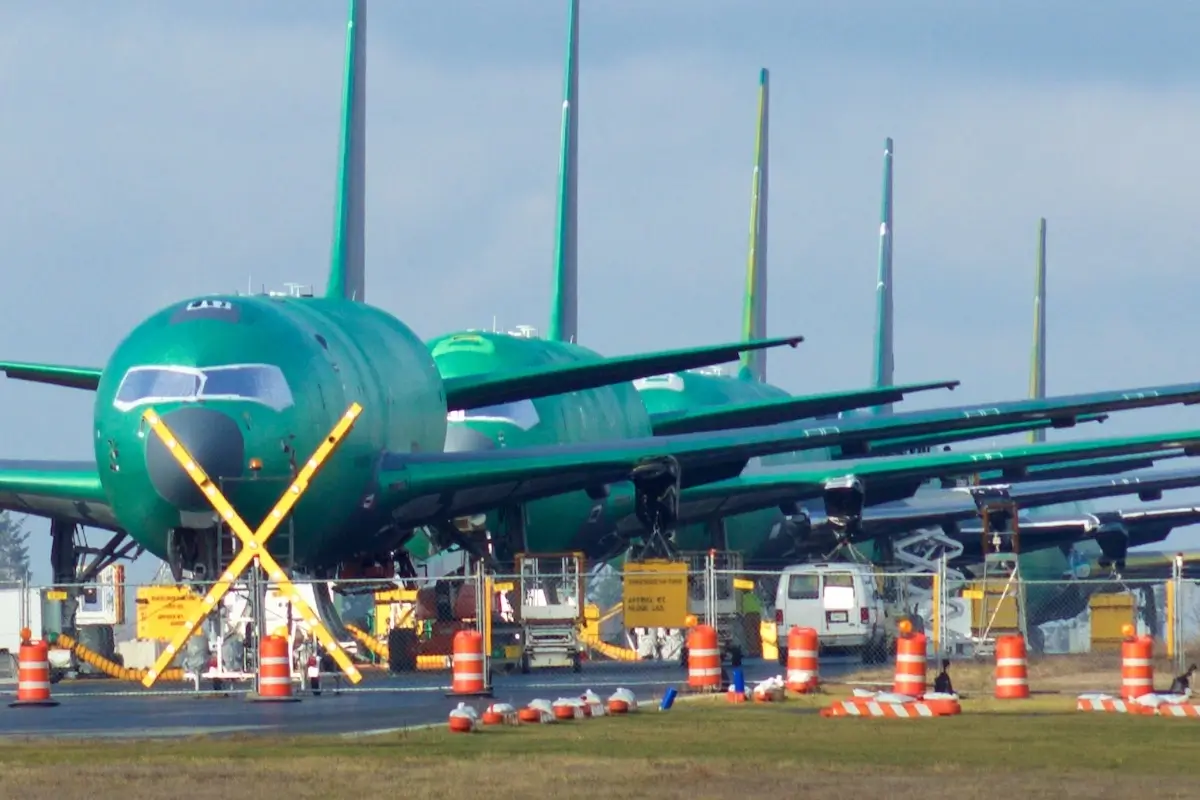
In some bad, but expected news for Boeing, the Federal Aviation Administration has issued proposed fines.
The fresh fines total some 3.139 million and are against the Boeing company following several safety violations that occurred between September 2023 and February 2024.
These safety violations are related to the door plug blowout incident, which occurred aboard an Alaska Airlines 737 MAX on January 5, 2024 and spiralled the planemaker into this situation.
The FAA, following its own investigation, has implemented the maximum statutory civil penalty authority consistent with law after it conducted reviews into the practices of the American planemaker following increased oversight across recent times.
To highlight the sheer scale of the fines, the governing regulator stated that, across its review, it had identified hundreds of quality system violations at the 737 factory in Renton, Washington, and at Boeing’s subcontractor, Spirit AeroSystems, and their 737 factory in Kansas.
All this was highlighted further by two unairworthy aircraft being presented by the planemaker for its airworthiness certificates, which naturally failed after the FAA was alerted to the state of the planes and the failure on Boeing’s part to adhere to quality control.

Additionally, the FAA said that it found a non-ODA Boeing employee pressured a Boeing ODA unit member to sign off on a 737 MAX so that Boeing would be able to move ahead and meet the delivery schedule laid out.
This pressuring tactic still occurred despite obvious signs that the aircraft in question was not fit for delivery, and the ODA member knew it did not comply with the required standards, but did not have a choice.
A Long-Standing Problem For Boeing
Pressures from within Boeing to sign off on aircraft have been a common occurrence, prompting the need to expedite shipments to meet delivery schedules, whether for the 737 MAX or other aircraft, such as the 787.
When Airbus moved ahead with its A320neo before Boeing could react, it set off a chain reaction that pushed the American planemaker into the position it is today, a rebuild following turmoil.

In a bid not to lose ground, the business pushed to release a re-engineered version of its 737 MAX, thereby stretching the capabilities of a dated fuselage to the absolute limit to get a plane to market sooner rather than later to avoid further market share loss to its competitor.
This race to get the plane to market engulfed the day-to-day operation at the planemaker, not just centred around the MAX, but also other programs as Boeing pushed in every sense to raise profits and meet deadlines imposed.
At times, this race for financial gain put the safety and quality control of the aircraft being shipped out into the rear-view mirror, an obvious concern, and these priorities began to show as new aircraft encountered issue after issue.

ABOUT THE AUTHOR
Daniel Fowkes is a Melbourne-based aviation analyst and journalist with over a decade of industry experience. As founder of Dj’s Aviation, he delivers trusted analysis on aircraft, airline strategy and global aviation trends for djsaviation.net
Related Articles




Stay Informed
Get the latest aviation news, analysis and route updates delivered to your inbox.
We respect your privacy. Unsubscribe at any time.
Enjoyed this story?
Make us your go-to for aviation news
Add us as a preferred source on Google and see our latest stories first in Top Stories.
Add Us On Your News Feed