

The Airbus A380, which operates with Emirates under lease, have now been sold to the Dubai-based carrier.
Amedeo has announced the successful closing of two A380-861 aircraft to Emirates.
The closing is the first two units of a broader four-aircraft agreement, Amedeo saying that the remaining A380’s are expected to be sold to Emirates by the end of the year.
The sale at year’s end will align with the conclusion of the respective lease terms agreed upon by Emirates, and therefore falls in Q4 of 2025.
Amedeo, the ones responsible for the transaction, say that this move further reinforces their position as a leading asset manager across the industry.
The business continues to drive the delivery of aircraft transactions, such as these, while also providing comprehensive financial solutions to clients worldwide.
Why Emirates Is Buying A380’s
Emirates’ decision to buy specific Airbus A380’s, which were initially acquired through a lease, is not an uncommon decision for the airline.
Additionally, this signing with Amedeo would not represent the first time a similar deal has taken place, as towards the end of 2024, the carrier also agreed to purchase five A380’s at the end of their lease agreement.
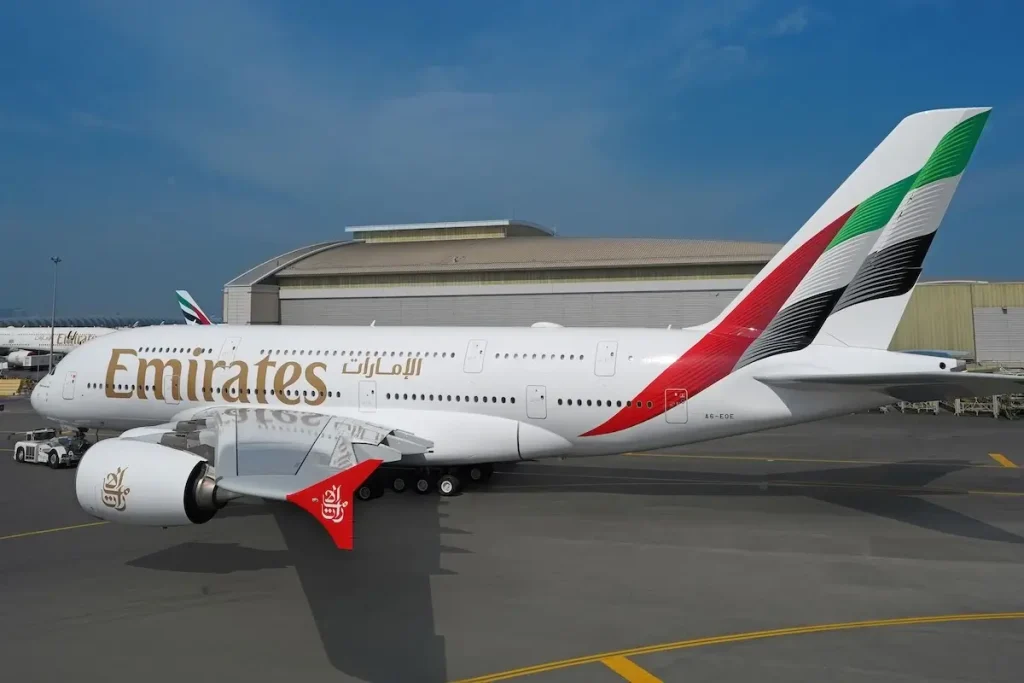
For Emirates, the benefit of owning aircraft outright is substantial. Once executed, it gives them the ability to move ahead without the neccesary approval from a lessor for a host of endeavours.
With the A380 being such a key asset, as best described by the airline’s President, Tim Clark, as the most profitable, it is essential to keep these jets in service for quite some time, while also maintaining complete ownership.
Ultimately, the decision can be viewed as a cost-effective solution for the carrier to incorporate these planes into its operation permanently, with full ownership, at a fraction of the cost of purchasing one from another company.
Emirates’ Airbus A380 Plan
While much of the airline’s decision to buy A380’s, which have been on leases, comes from the viewpoint of optimising available assets, it also ties in with future fleet planning.
Emirates intends to keep the A380 flying into the 2040s, and as a result, these planes will require careful maintenance to ensure they’re fit and able to fly daily across long-haul operations.

With this decision in mind to keep the jet around for so long, and knowing that production has been halted, the carrier expects it to become more challenging and more expensive as time moves forward to maintain the planes.
As a result, owning its entire A380 fleet is an appealing business decision for the long-term, with this airline likely to be the last operator of the world’s largest passenger plane in fitting fashion, given it’s also the one with the most units.
What is also worth considering for the fleet plan is the reality that there remains no dedicated replacement for the A380-800 offered by Airbus or Boeing.
While there may exist forms of a replacement, such as the Airbus A350-1000 or the Boeing 777-9, which are efficient high-capacity alternatives, they are not on the same sheer scale as the world’s largest passenger plane.

The Dubai-based carrier has committed to the 777-9, but knows adequately replacing the superjumbo will be one of its most demanding tasks yet, given that the series could very well be seen as irreplacable.

ABOUT THE AUTHOR
Daniel Fowkes is a Melbourne-based aviation analyst and journalist with over a decade of industry experience. As founder of Dj’s Aviation, he delivers trusted analysis on aircraft, airline strategy and global aviation trends for djsaviation.net
Related Articles




Stay Informed
Get the latest aviation news, analysis and route updates delivered to your inbox.
We respect your privacy. Unsubscribe at any time.
Enjoyed this story?
Make us your go-to for aviation news
Add us as a preferred source on Google and see our latest stories first in Top Stories.
Add Us On Your News FeedRelated articles
· Airlines
Allegiant Air Buys Six More 737-8s From Boeing
Daniel Fowkes
26/10/2026
· Airlines
Emirates vs Qatar Airways: The Gulf Superhub Rivalry Compared
Bryan Shelmon
26/10/2026
· Airlines
Riyadh Air Is Moving Away From Riyadh
Daniel Fowkes
26/10/2026
· Airlines
Emirates Isn’t Worried At All
Daniel Fowkes
25/10/2026