

The Airbus A380 is the world’s largest passenger plane, and across its history, it has had many operators.
However, not all airlines that purchased the Airbus A380 ended up flying the aircraft, instead choosing to cancel their contract for a host of reasons.
Virgin Atlantic, the major U.K. carrier, ordered the jet but never went on to fly it, but what’s the full story?
A Landmark Order For The Aircraft
In 2001, Virgin Atlantic announced its landmark purchase of the A380 to welcome the aircraft into its operations by 2006.
A decision at the time, led by the involvement of Sir Richard Branson, made perfect sense, as Virgin Atlantic eyed significant expansion around the world, some would argue it was fixated on this and starting new routes.
As a result, what better decision than opting for the upcoming world’s largest passenger plane to move forward and drive capacity into markets that required it, as global air travel was predicted to continue surging.
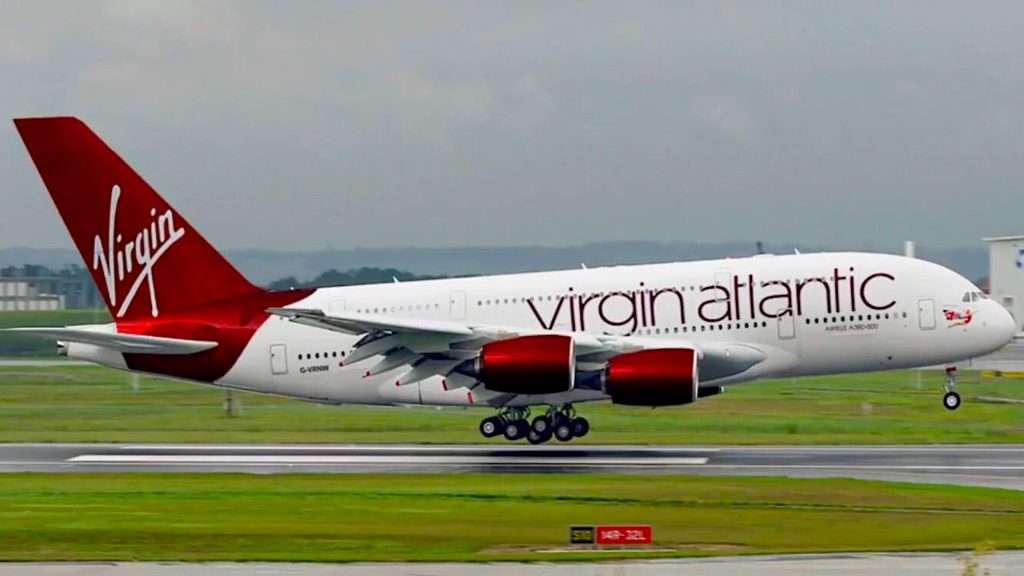
While Virgin Atlantic already flew the Boeing 747, it felt the A380 offered something different across longer-ranged routes, and its efficiency upgrades over the Boeing quad-engined plane would make it an optimal choice to complement what is renowned as the queen of the skies.
An Industry Changes… Forever
Unfortunately, following Virgin Atlantic’s purchase of the A380, much changed. Not only was the A380 delayed in its launch to customers, but the emergence of a major global economic downturn in the mid to late 2000s pushed airlines to rethink their strategies.
For the U.K.-based carrier specifically, there was much emphasis on the future fleet plan, which previously had a reliance on the world’s largest passenger plane but, in times of struggle, showed that maybe it was not the most suitable choice.
With the EIS pushback coming at a similar point with the GFC, there was considerable scepticism internally and externally over whether Virgin Atlantic would take on the superjumbo, with priorities felt to be elsewhere.
Everything Changes At Virgin Atlantic
A decade after Virgin Atlantic first purchased the Airbus A380, there were already many who had their doubts that the carrier would ever take delivery of the type.
However, in 2012, when Delta confirmed its 49% stake in the business, any remaining confidence of an A380 delivery had disappeared as the U.S. carrier would help shape the airline moving forward.
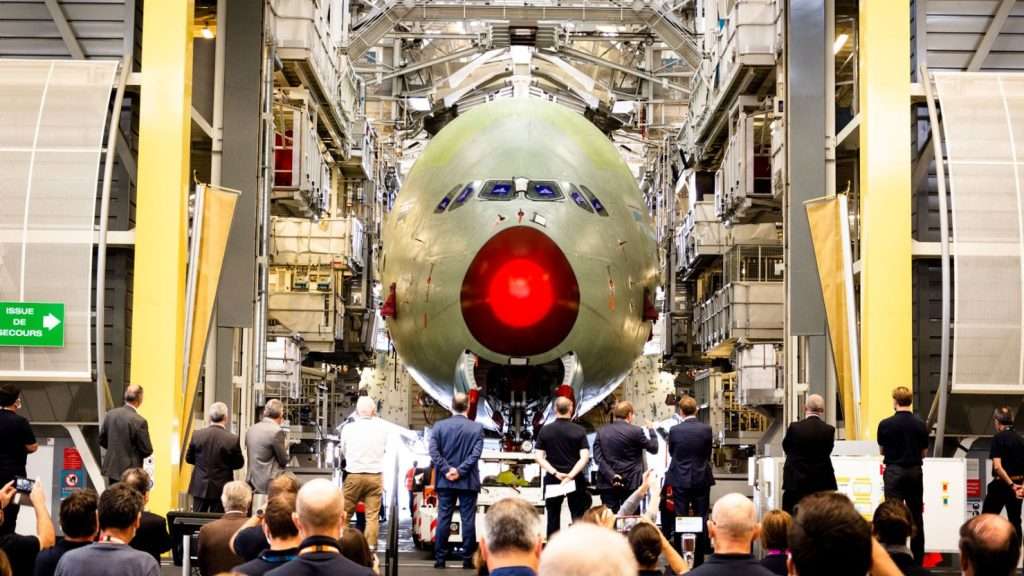
At the time of the purchase, an internal review also began to take shape with studies to determine the future of Virgin Atlantic better.
Much of the lack of optimism around the delivery of the superjumbo followed the stance of Delta, which did not order the aircraft and firmly believed the type was not of any use.
While each airline is different, and indeed their markets, the importance of Delta’s viewpoint on the jet cannot be overstated enough.
Additionally, for the A380 order, much of this was backed by Sir Richard Branson, who at the time had a hefty role in the day-to-day decision-making of the business, but with that diminishing, so did the confidence in the jet internally.
Delta believed at the time of its investment that the airline taking on the A380 would be a mistake, given the identified risks, and it would be a poor business decision moving forward.
Bye Bye To The A380
Even with the investment from Delta, there would be a hefty wait before a formal decision was to be made, reflected in a definitive cancellation of orders for the program.
In 2018, Virgin Atlantic would cancel its orders for the widebody, following yet another comprehensive review of the business and its long-term fleet composition.
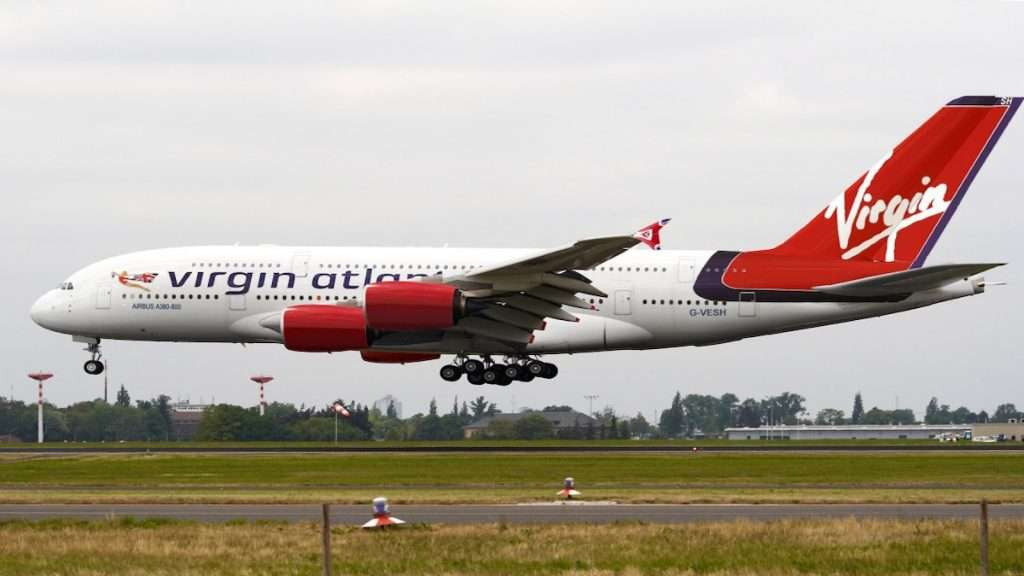
The cancellation coming 17 years after the first commitment for the program would be a formality, with the likelihood of the jet joining the network in the decade leading up to it becoming increasingly unlikely as the years passed.
When the confirmation arrived, a Virgin Atlantic executive discussed the decision, stating that identifying key markets internally where the A380 could be deployed was an impossible task.
This “impossible task” of finding suitable routes for the A380 alongside juggling the expensive operating costs was one of the many reasons why the widespread adoption of this superjumbo did not occur. Simply put, airlines were not willing to take on the risk associated with such a large aircraft.
Additionally, it was clear from years prior and the development of the fleet, thanks to new purchases, that adding the A380 would only add complexity to the operation, something that could be avoided.
At the time of the cancellation, Virgin Atlantic were firmly entrenched in the overhaul of their fleet with he removal of quad-engined aircraft and the transition towards newer and much more efficient twin-engine planes.

As a result of this overhaul, types such as the A340 and 747 were being axed; instead, the A350, 787, and even A330neo were all forming an integral part of the business, thus adding the A380 would’ve made no sense.
Ultimately, if Virgin Atlantic wanted to take delivery of the A380, it would’ve done so almost a decade before its confirmed cancellation; instead, it drew out the process that many already knew the outcome would be.

ABOUT THE AUTHOR
Daniel Fowkes is a Melbourne-based aviation analyst and journalist with over a decade of industry experience. As founder of Dj’s Aviation, he delivers trusted analysis on aircraft, airline strategy and global aviation trends for djsaviation.net
Leave a Reply
Related Articles




Stay Informed
Get the latest aviation news, analysis and route updates delivered to your inbox.
We respect your privacy. Unsubscribe at any time.
Enjoyed this story?
Make us your go-to for aviation news
Add us as a preferred source on Google and see our latest stories first in Top Stories.
Add Us On Your News Feed
With Trump tariffs why would a USA based airline pay for a European built aircraft as it would be prohibitive to their network profits
Because this was a long time before Trump decided his deluded tariffs were a good idea.
So is irrelevant.
As a 23 year service veteren with LUFTHANSA Reservations 1969-1992, I’ve never felt comfortable with 2 engined lon haul jets on long overwater flights. Such flights demand a four engined aircraft simply to make passengers feel safer, even if it bumps up the ticket price. How much is human life worth – go figure.
great news Sir Richard where possible have back up fleet of your meny still young hours suitably moth balled to star will untill the new air craft is accepted by it’s passengers.
We Do not want another Freddy
It is sogud but iwesh to or ihop to seveme my life becus iAm not sev her iwant saport to helpme or protectme iwary and iscet my life her plc human bing
The a380 while big the service cost are bigger than .most airlines can justify to keep operating them!
Hi,
Virgin Atlantic is nice Airline. It may use Airbus A380 from India to USA/Canada. There is good scope because there is regular customers on these route through out the year.
Regards
Such a pity to see it going out of service.
I was fortunate to see it in Toulouse.
Luckily still 2 Airlines using it to OR Tambo, South Africa