

Over five years ago, Air France grounded its Airbus A380 fleet, marking a major change to its international long-haul flying.
When the world’s largest passenger plane was grounded, questions arose about the future of the series in the French carrier’s operation.
With retirement on the cards, the life of the program was cut short, the jet never returned, but the story is more than just that, what truly happened across those years?
Airbus A380s Grounded
In response to the emergence of the COVID-19 pandemic, subsequent government restrictions and more, international travel demand dropped to levels not seen before.
As a result, Air France was forced to ground many of its aircraft, and a focus was indeed placed on the Airbus A380, with this high-capacity jet no longer being required.
By mid-March, Air France confirmed its remaining A380 fleet, following some jets returning to their lessors at the end of the prior decade, would be grounded.
At this point, given the unknowns surrounding what was unfolding, the grounding was not immediately one that led to the permanent retirement of the jet; instead, a watch this space decision.
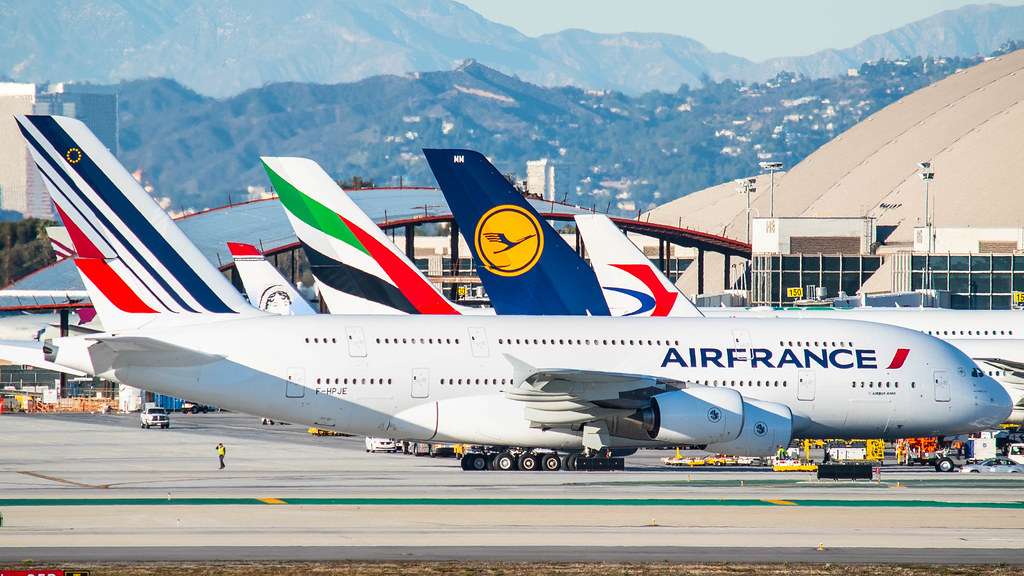
However, over the next month, with the aircraft remaining grounded and demand not returning, in fact, only worsening, airlines were beginning to feel financial pressures daily.
Due to these financial constraints, some decisions needed to be made, sometimes harsh ones, to ensure businesses would survive if the restrictions were to remain implemented for not just weeks but months into the future.
By April, Ben Smith, the CEO of the Air France-KLM Group, said that there were internal expectations that the A380 had operated its last scheduled passenger flight.
With little to no demand present, many analysts believed that the time for the A380 was up, and the papers had been stamped for the remaining grounded jets to head for scrapping with no second-hand market.
A Retirement Already Planned?
Even before the grounding of the Airbus A380 fleet, Air France had confirmed that it would remove the aircraft from service.
Benjamin Smith, the Air France-KLM CEO, confirmed his intent that the A380 would not have a long future within the business, which was confirmed in 2018 when Smith was just appointed.

The decision would see the axing of half the fleet, specifically five aircraft, which were on leases, would depart, two leases expiring at the end of 2019, and the others to follow soon after that.
Air France’s total A380 commitment only ever reached ten units, which followed an order for 12 jets, but the airline never flew this many of the type because of a conversion of two existing units to the smaller A350s.
But, only just over six months later in the middle of 2019, the French flag carrier would confirm that its entire A380 fleet would be retired by 2022, which was naturally before the emergence of the COVID-19 pandemic.
Decided at a board meeting, the airline said the retirement of the jets, which were to be in three years at this point, followed a necessary evaluation of the business and the competitive operating environment.
While the A380 brings significant capacity, it also comes with higher fuel and maintenance costs alongside CO2 emissions, all of which the business wanted to reduce at the time.
Air France Says Goodbye
In May, two months after deciding to ground its Airbus A380 fleet and with demand concerns worsening, Air France decided to retire the world’s largest passenger plane permanently.
Effective immediately, the airline confirmed it would no longer fly the aircraft, and thus not bring it back to service, axing the series two years earlier than what was previously planned.
As part of the phasing out, Air France said it would utilise products such as the Airbus A350 and Boeing 787 to help replace the series moving forward, while with less capacity, these programs are much more efficient.

Problems Inside The A380
While the COVID-19 pandemic ultimately contributed to the retirement of the jet, so did the poor operating efficiency and even prior plans; there was also a problem inside the aircraft.
For a considerable period, the viewpoint stood that the A380s offered by Air France were not up to standard, especially for the airline compared to its other long-haul aircraft and certainly against other operators of the superjumbo.
Many airlines leveraged the capacity seen on the A380 to their advantage by going above and beyond, creating an upmarket product that would bring people to fly the A380 over other aircraft and competitors, especially in the upper classes.
But, for Air France, they had a cabin that often copped significant criticism, seen as one of the lower quality business classes on the market that was not just dated and old but arguably generations behind what was present at the time.
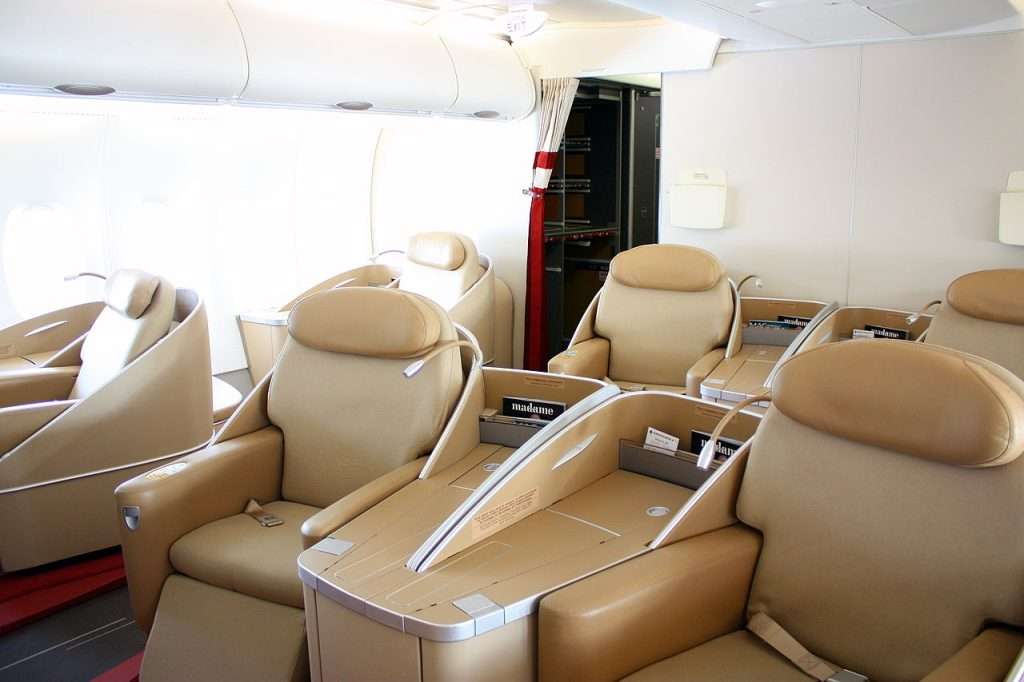
As a result, with a dated cabin, Air France was aware that a major investment would’ve been required to overhaul the product, and while initially, when half the fleet was planned to be axed, a retrofit looked to be in the pipeline, there were doubters.
Despite a retrofit being an investment, it could be considered an investment in the future that most airlines make at some point in the lifespan of owning an aircraft/fleet type.
However, Air France did not love the A380; additionally, the costs to maintain the aircraft were growing, and a future without the jet became increasingly more likely to be the best move.
As a result, yes, a retrofit could’ve occurred, but Air France didn’t see a future with the aircraft in the first place, so why would a decision be made to invest millions and pour resources into a product that was not deemed worthwhile?

In the end, the A380 was grounded, then retired, earlier than expected, and unlike some airlines, it was retired for good. The series has not returned to service since that decision was made, in any capacity.
Instead, Air France is now moving ahead with a more streamlined fleet makeup and, additionally, for the long term, relying on twin-engine and thus vastly more efficient products from Airbus and Boeing.

ABOUT THE AUTHOR
Daniel Fowkes is a Melbourne-based aviation analyst and journalist with over a decade of industry experience. As founder of Dj’s Aviation, he delivers trusted analysis on aircraft, airline strategy and global aviation trends for djsaviation.net
Leave a Reply
Related Articles




Stay Informed
Get the latest aviation news, analysis and route updates delivered to your inbox.
We respect your privacy. Unsubscribe at any time.
Enjoyed this story?
Make us your go-to for aviation news
Add us as a preferred source on Google and see our latest stories first in Top Stories.
Add Us On Your News Feed
The A.380, regretablly, was a aircraft that was ahead of its time. If introduced now with more economic engines airlines would be clammering for it. With air travel on the increase there will be a lack of capacity of ‘slots’ at airports. So to overcome this you need aircraft that can carry a higher capacity. When the crunch comes and no more slots are available the solution will be A. Additional airports. B. Aircraft with a higher carrying capacity. or C. Other forms of transit.
A. Building a new airport is a lengthy and cash intensive solution. So not a likely answer at least in the short term. You would also face major challenges from the NIMBYS (Not in my back yard) and the environmental groups that would delay, possibly halt an airport being built.
B. Aircraft with higher capacity Airbus is looking at increasing the capacity of its A.350 to a A.350 1000. An increase of 7 metres in length with only an additional 40 seats. This is also achieved by modifying emergency exits [not for me then !!]. Boeing are in all Sorts over problems after the 737 bebarcle. As a result are now rather cash strapped.
C. Other forms of transport. High speed rail can be used instead of short haul, but new rail lines and links would also be needed to make this a useful contribution.
So, to me a A.380 aircraft that has been refurbished would help this situation. emirates the largest user of the A.380 have even asked Airbus for a stretched A.380 to help overcome this critical problem. It seems that Airbus are playing it cool at the moment, but must surely be looking at the possibility. With more economic engines available it would seem to be the solution to this future problem.
There was two bad decision in aviation abolishing or scraping 747 a very successful aircraft, next welcoming A380 with it’s many inherited problems suchas maintenance, to fulfill passenger capacity n many more with it’s lengthy list.
Still a 4 engine aircraft is required for long haul.
This is almost a repeat of the Concorde situation, if Air France cannot make money,British airways can!
Its a shame she is a beautiful bird,but its unlikely airtravel will reach the heights it did before covid 19,so i agree with air france sad as it is