

Canadian flag-carrier Air Canada is expecting to take delivery of many new aircraft in the coming years.
The delivery of these new planes, albeit delayed, is part of efforts to restructure the Group, transition towards next-generation aircraft and retire some older planes still in service.
In the airline’s quarterly earnings call, Mark Galaro, the airline’s Executive Vice President and CCO, discussed the future of the airline’s fleet, which included exciting new additions.
Firstly, Air Canada is hoping to take delivery of its first A321XLR sometime in 2026, with the expectation that, should Airbus not encounter further delays, 11 deliveries of this single-aisle jet will occur by the end of 2026.
Ultimately, the delivery of the A321XLR in 2026 represents a further delay, with guidance in February 2025 suggesting that the first aircraft would be delivered this year, rather than next year.
The flag-carrier stated at the top of the year its expectation that two XLR jets would be delivered this year, but now deliveries are not possible.
While the A321XLR is still some time away from being delivered, the airline is accelerating with plans to reveal the first routes the A321XLR will fly across the business in the coming weeks, these flights commencing in the Summer 2026 season.

Away from the Airbus A321XLR, Boeing will play an essential role in the airline’s future fleet with the first two 787-10s also expected to arrive in 2026, if all goes according to plan. This is the largest variant in the series.
Air Canada also expects to take delivery of another four Boeing 737 MAXs in 2026 to enhance its single-aisle fleet, with no fundamental changes expected to capital expenditures.
Across 2025, and the second quarter, there were three more A220s delivered and two 737 MAX jets, with the hope that there’ll be a further five A220s and one 737 MAX across the remainder of the year too.
John Di Bert, the airline’s CFO, said that the fleet strategy is closely tied to the overall growth strategy and is being conducted to ensure financial stability alongside great benefits to customers with superior aircraft economics, which can be visible on a larger scale.

The new aircraft are going to be huge for the airlines’ day-to-day operations, with the possibility to launch new services while also enhancing the onboard product where required with the latest technologies.
Air Canada’s 737 MAX Change
With such a heightened focus on the renewal of the fleet at Air Canada, this follows one of the Group’s most significant announcements concerning the single-aisle fleet only recently.
At the end of 2024, and during its Investor Day presentation, the Group revealed a landmark change that would redefine how the business operated single-aisle flying and involve the Boeing 737 MAX.
Instead of progressing with the usage of the Boeing single aisle family across the mainline Air Canada division, the Group confirmed that by 2028, the aircraft would be transitioned to the Rouge brand to meet demand and renewal efforts.
At the time, the carrier said the decision was in response to the growing need to increase capacity towards leisure destinations, and with Rouge only launching in 2012, there was room to offer more flights.
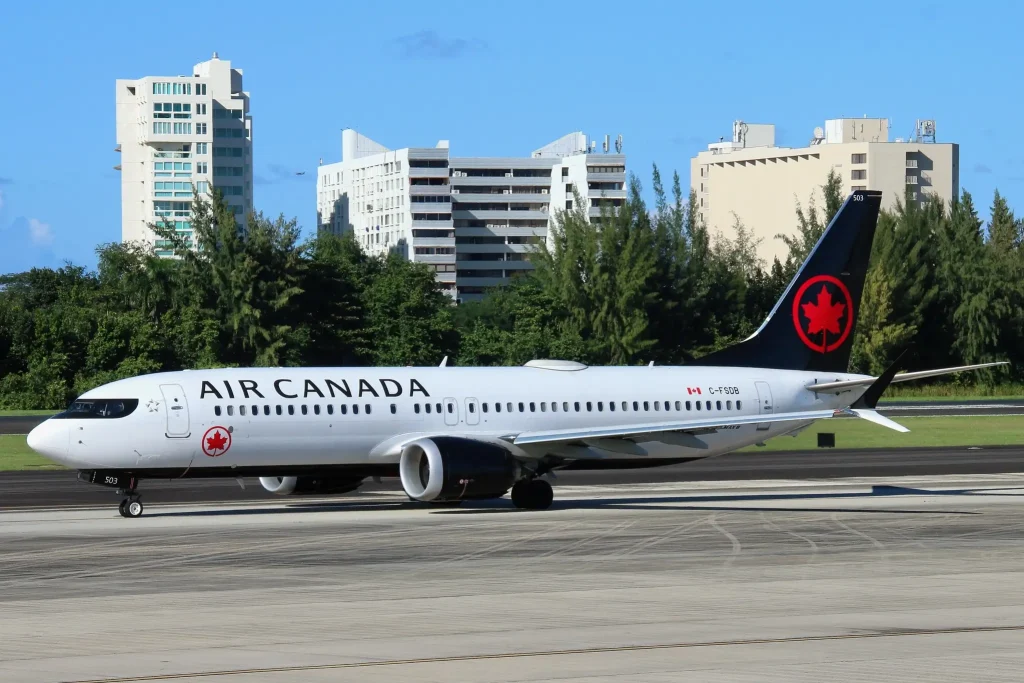
Additionally, the Rouge branding has seen its fleet age quite considerably across recent times, jets now nearing the end of their commercial life need a replacement, being all Airbus, the airline will send its MAX jets here.
As a result, Air Canada will move ahead with its mainline division with a reliance on the Airbus A220 and A321XLR jets, saying farewell, at least for the primary brand, to the MAX program, with the swap over to occur.
New bases are also expected, with the business confirming the MAX transfer would open a new West Coast base in Vancouver, meaning coast-to-coast connectivity would be possible and longer-range flying.

ABOUT THE AUTHOR
Daniel Fowkes is a Melbourne-based aviation analyst and journalist with over a decade of industry experience. As founder of Dj’s Aviation, he delivers trusted analysis on aircraft, airline strategy and global aviation trends for djsaviation.net
Leave a Reply
Related Articles




Stay Informed
Get the latest aviation news, analysis and route updates delivered to your inbox.
We respect your privacy. Unsubscribe at any time.
Enjoyed this story?
Make us your go-to for aviation news
Add us as a preferred source on Google and see our latest stories first in Top Stories.
Add Us On Your News Feed
Congrats Air Canada