

Qantas played a significant role in the development of the Boeing 777, but never placed an order for the aircraft.
Why did an airline so invested in a program never go on to order the aircraft? Was it the right decision, and what about the 777X?
Qantas Helps Release The 777
One of the reasons some remain confused about Qantas’ decision not to order the Boeing 777 is its involvement in this project.
During the 1990s, the American planemaker relied on several international airlines to help develop the 777; it was a core design group tasked with helping create a next-generation, twin-engine, efficient plane.
All Nippon Airways, American Airlines, British Airways, Cathay Pacific, Delta, Japan Airlines, Qantas, and United were the carriers that played a crucial role in shaping the “Working Together Group,” a wide-body initiative.
By being part of this group, Qantas was allowed to put forward its preferred design elements, including cabin configurations and overall capacity requirements.
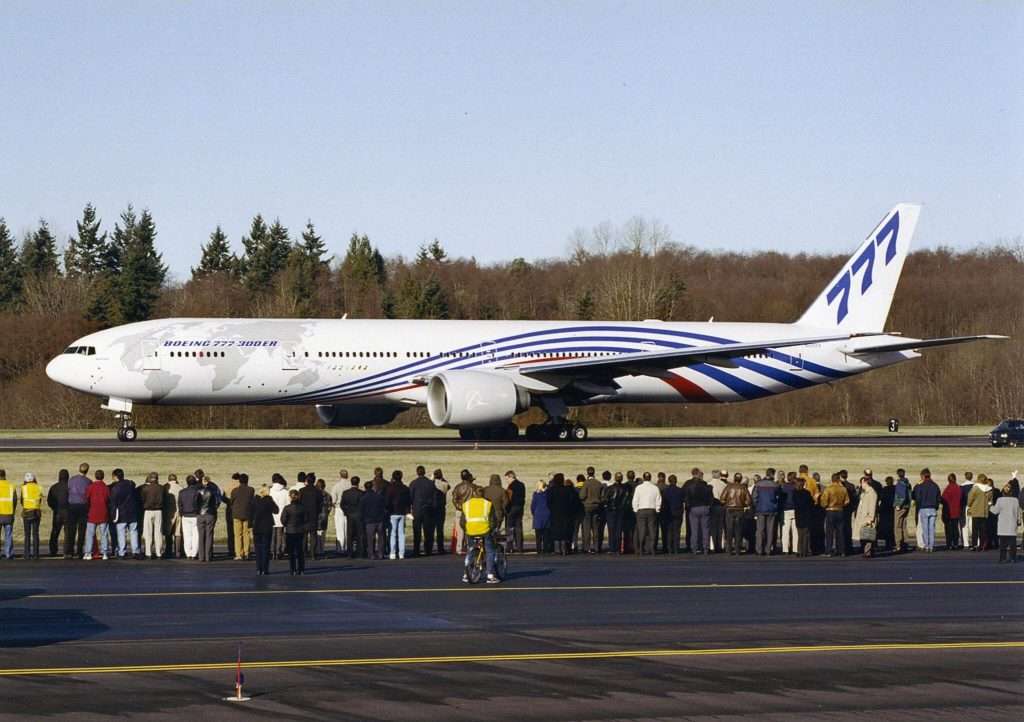
Every airline that was part of this group, excluding Qantas, would go on to commit to the 777 in some capacity and operate their aircraft across their respective networks.
Therefore, for Qantas to play a role in shaping the 777 but not order the aircraft was seen as peculiar; however, there were reasons for the Australian flag-carrier behind their decision.
But Why No Order?
Qantas never went on to order the 777; instead, it prioritised other commercial aircraft throughout the 1990s and into the 2000s.
The airline’s most notable decision is its commitment to the world’s largest passenger plane, the Airbus A380, a high-capacity jet that is deemed groundbreaking for international routes with strong demand.
For an airline based in Australia, aware of the geographical positioning-related restrictions it faces, former executives of the airline argued that the 777 ultimately proved not to be optimal for their long-haul operations.
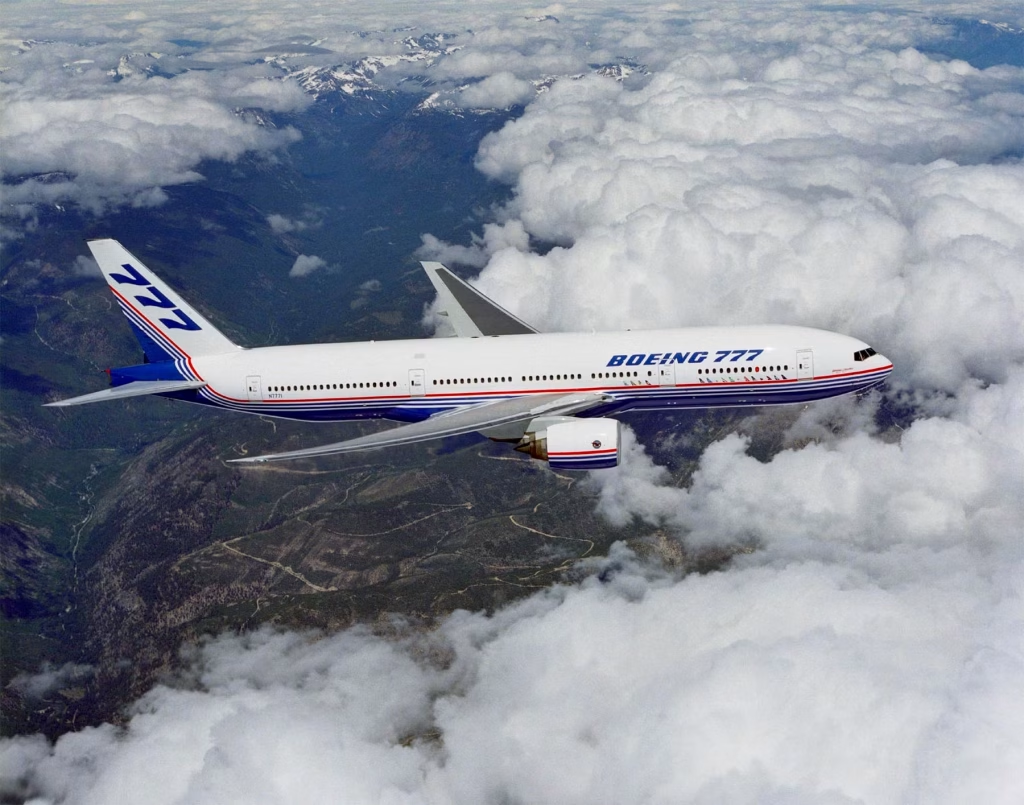
Instead of selecting what most would have still considered a perfect option, Qantas opted for a combination of the 747 and A380, with the 747 being a more critical pillar throughout the latter stages of the 1990s and the early 2000s.
It was also important to the airline at the time to limit the overall number of aircraft types within its operation, ensuring that complexity didn’t become a problem as the years progressed.
What About The 777X?
Qantas would not have ordered the 777, an aircraft that was essential in helping it come to life. Still, when the planemaker began moving ahead with the new-generation 777X, a fresh opportunity presented itself.
As Qantas began the early stages of planning for its Project Sunrise, an ambitious project aimed at launching 20-hour nonstop flights, Boeing put forward its 777X to rival Airbus’ A350 series.
Qantas considered the 777X, and some argued that, given the airline’s understanding of the program, it may be the optimal choice for the future.

However, after internal analysis of specifications, it became apparent that the A350 was the favourite in the selection process. Moreover, when Airbus announced that they’d even modify the high-capacity A350-1000 to increase its range, it became a no-brainer.
Unfortunately for Boeing, while the product may have met Qantas’ requirements, what they were after was not what the 777X had.
Additionally, when considering the challenges on the manufacturer’s end, getting the plane to launch became such a struggle that for Qantas, it was deemed unfavourable.
How could Qantas commit to the 777X with little to no understanding when the aircraft was going to be in its hands, analysts argue?
Was This The Right Decision?
Ultimately, was not selecting the Boeing 777 the right decision? Well, hindsight is a wonderful thing, and ultimately, aircraft types such as the 747 and 767 have since been axed from the fleet.
On several occasions, while awaiting the delivery of next-generation planes such as the 787, Qantas has faced a capacity shortage; in some cases, the 777 could have stepped in to fill the gap.
However, suppose Qantas had followed through with the initial order for the 777. In that case, there remains a high chance that those planes would have been nearing the end of their operational life, considering the program was being studied more than three decades ago.
The A380 remains a workhorse, and although it was parked during the COVID-19 pandemic, it has been reactivated and continues to hold a place in the airline’s fleet.

Meanwhile, a commitment to the 787 has only been extended recently, and this new-generation aircraft is expected to continue operating for decades to come.
As the Airbus A350 arrives, Qantas will not only launch its ultra-long-haul flights but will also have a replacement lined up for the A380, thereby moving ahead with the 787 and A350 for future flying efforts.
So, while on paper the 777 has been a success for many airlines and Qantas played a role in its development for several reasons, it was deemed not to be the most optimal solution when it mattered most for a new aircraft order.

ABOUT THE AUTHOR
Daniel Fowkes is a Melbourne-based aviation analyst and journalist with over a decade of industry experience. As founder of Dj’s Aviation, he delivers trusted analysis on aircraft, airline strategy and global aviation trends for djsaviation.net
Related Articles




Stay Informed
Get the latest aviation news, analysis and route updates delivered to your inbox.
We respect your privacy. Unsubscribe at any time.
Enjoyed this story?
Make us your go-to for aviation news
Add us as a preferred source on Google and see our latest stories first in Top Stories.
Add Us On Your News Feed