

The A350 is Airbus’ flagship widebody offering and a perfect aircraft type for airlines seeking to develop their fleet.
However, Airbus is not alone in battling for widebody market share with an efficient alternative; Boeing is countering with its 777X series.
For decades, these two aircraft types will be viewed as the ideal high-capacity option for airlines seeking to serve busy cities without quad-engined planes, which are currently being retired.
However, with the retirement of quad-engined widebodies taking shape, can these aircraft series replace the industry’s superjumbos?
In steps the proposed A350-2000 and 777-10, two equally ambitious endeavours that have not formally released but both been studied by their respective planemakers to achieve the same thing, dominance in the high-capacity widebody space.
How do these two variants ultimately compare, and do they have any chance of releasing?
Introducing The A350-2000
The A350-2000 was envisioned as a longer, higher-capacity variant of the A350-1000. The -1000 model remains the largest member of the passenger series, and with an extension, it would target retiring airline types such as the 747, 777, and even A380.
By stretching the fuselage of the A350-1000, Airbus could theoretically accommodate up to an additional 50 passengers, with the capacity reaching almost 440 depending on the configuration selected by the chosen customer.
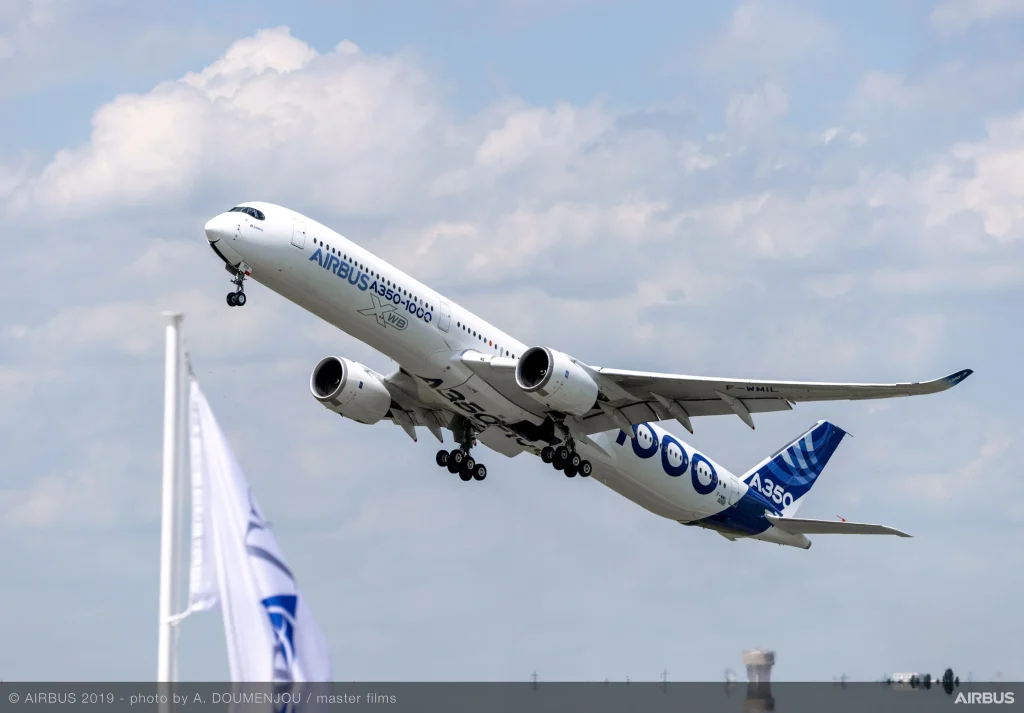
This increase in size and seating would’ve positioned the prospective A350-2000 with the likes of the 777-9 and, if anything, exceeded that, putting it closer to the prospective 777-10.
While today it’s being labelled as “the A350-2000,” this proposed model existed through many other names, such as the A350 Stretch and A350-1100.
Despite the changes at its core, the name represented an increase over the -1000s numerical value to highlight its purpose in the commercial portfolio of planes produced by the planemaker.
Introducing The Boeing 777-10
Meanwhile, at Boeing, the 777-10 remains an unrealised aircraft that may have already been produced at the American planemaker in another timeline.
Acting as a stretched version of the 777-9, a prospective increase would place this variant as likely the largest twin-engine built with the extended fuselage at the heart of the design and appeal to customers.
Potential seating for this variant would have exceeded well over 400. Depending on the configuration, customers still would’ve had significant space to make decisions they felt were best and to their liking.

The levels of space that would’ve been available to airlines wouldn’t have been seen on any other efficient commercial airplane and would only be visible with the outgoing and less efficient A380.
Boeing’s motivation for developing the 777-10 was to cater to the industry’s evolving dynamics. That industry saw customers shift from larger, less efficient widebodies to more efficient ones.
These airlines firmly believe that twin-engine jets offer them lower operational costs and enhanced fuel efficiency over larger counterparts. As a result, the next generation of widebody flying will better align with sustainability targets.
Boeing felt it would have appealed to airlines still requiring large aircraft for high-density routes. Moreover, if launched, the prospects of a 777-10 negating the inefficiencies of the A380 model were a key talking point.
How Do The Aircraft Compare?
Based on prospective specifications, the two planes likely look quite similar. Essentially, both aim to further evolve the existing model with additional capacity.
Therefore, as widebody quad-engined planes begin exiting the industry, if airlines believe they need more capacity than what is already offered, these ultra-high capacity yet still efficient jets could be the answer they require.
Despite this, with specifications largely not finalised, telling the exact ins and outs remains challenging. However, based purely on the metrics featured with the 777-9 and A350-1000s, the likelihood is the 777-10 would be equipped with a higher capacity.
Why Haven’t They Released?
The A350-2000 and 777-10 share their similarities from a specification standpoint and their ultimate purpose to serve the industry; however, both have yet to be formally released. Why?
In the case of Boeing, the planemaker confirmed the technical feasibility of the 777-10 in the mid-2010s; however, no action was taken to pursue release.
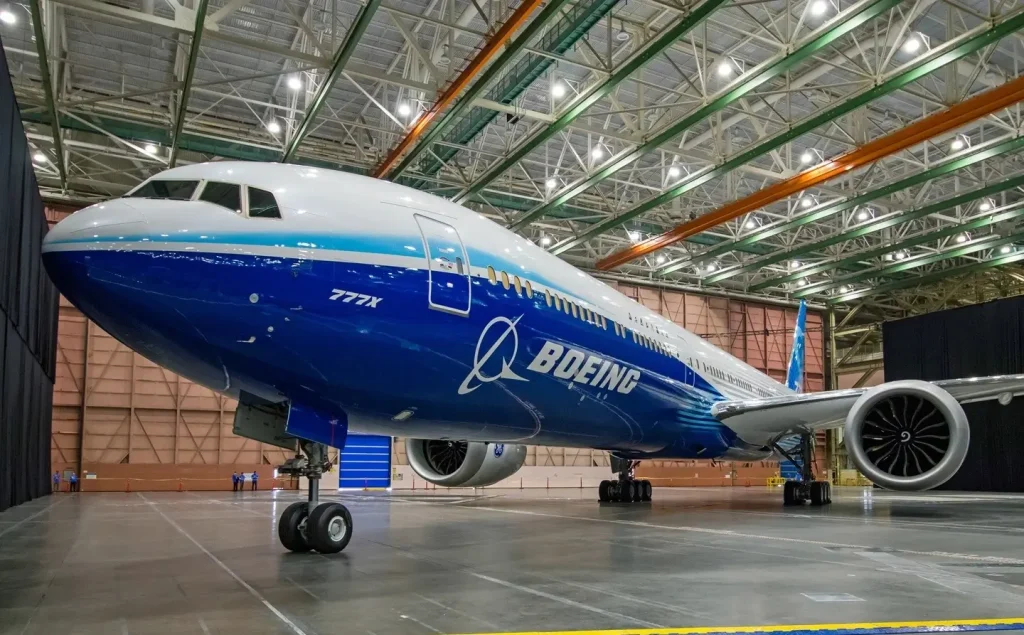
Since that technical feasibility, the American planemaker has encountered problem after problem, which has forever changed the business’s direction.
From persistent issues surrounding aircraft production to quality issues being uncovered on existing planes, which led to groudings, financial turmoil, and frustrated airline customers.
The trust with the planemaker was broken, and in steps the 777X. Without the 777-10 attached, the 777X series has had enough problems, with fresh delays repeatedly impacting the planemaker’s release timeframe.
For a series that was meant to enter the industry in 2020 and is still uncertified by 2025, future operators and the manufacturer have visible concerns.
As a result, while there are factors such as costs, the availability of resources, and market appeal for Boeing progressing with the 777-10, when it is incapable of certifying the existing variants announced 12 years ago, it is a problem that must be sorted first.
This was studied for the Airbus A350-2000, and interest was expressed. Still, the European planemaker chose not to pursue the jet purely because of struggles involving the broader program but for direction reasons.
Executives at the planemaker throughout the latter stages of the 2010s expressed their opinion that the A350 program had enough variants and a -2000 or Stretch would cause too much overlap and not be worth the investment.
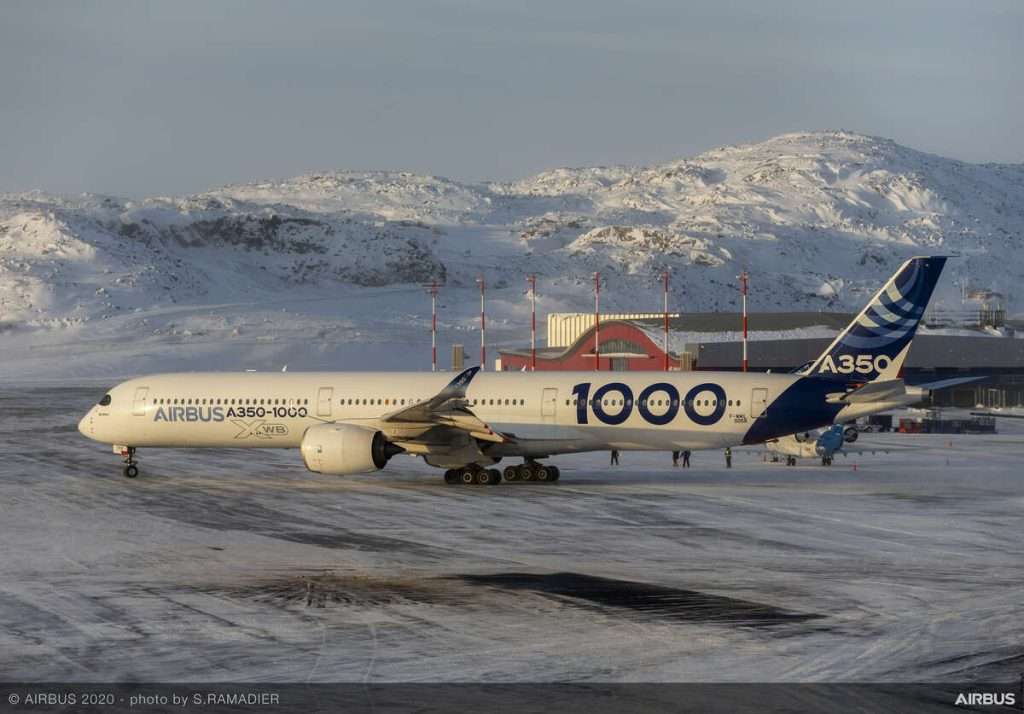
Instead, Airbus has been able to exercise more innovation out of the program through the highly anticipated launch of the A350-1000ULR with project sunrise or the game-changing A350F, which is expected to launch closer to the end of the decade.
In theory, both the variants examined today serve a purpose and are ultimately very similar. However, their release seems unlikely in the mid-2020s as the industry has shifted, and the focus rests on how the next commercial airliner of the 2030s will be powered.

ABOUT THE AUTHOR
Daniel Fowkes is a Melbourne-based aviation analyst and journalist with over a decade of industry experience. As founder of Dj’s Aviation, he delivers trusted analysis on aircraft, airline strategy and global aviation trends for djsaviation.net
Leave a Reply
Related Articles




Stay Informed
Get the latest aviation news, analysis and route updates delivered to your inbox.
We respect your privacy. Unsubscribe at any time.
Enjoyed this story?
Make us your go-to for aviation news
Add us as a preferred source on Google and see our latest stories first in Top Stories.
Add Us On Your News Feed
Boeing have sufficient issues on their plate with getting the 777-8 and 9 certified, but they would wise in keeping the -10 design going. Airbus, basically the same thing, although their 350 variants are certified(the think that the -1000 is certified?), so they could probably put more engineering to the -2000.
How can Boeing even think about a B777-10 if they can’t get their act together with the -8 and -9?
A rambling monologue devoid of facts or new information. AI?