
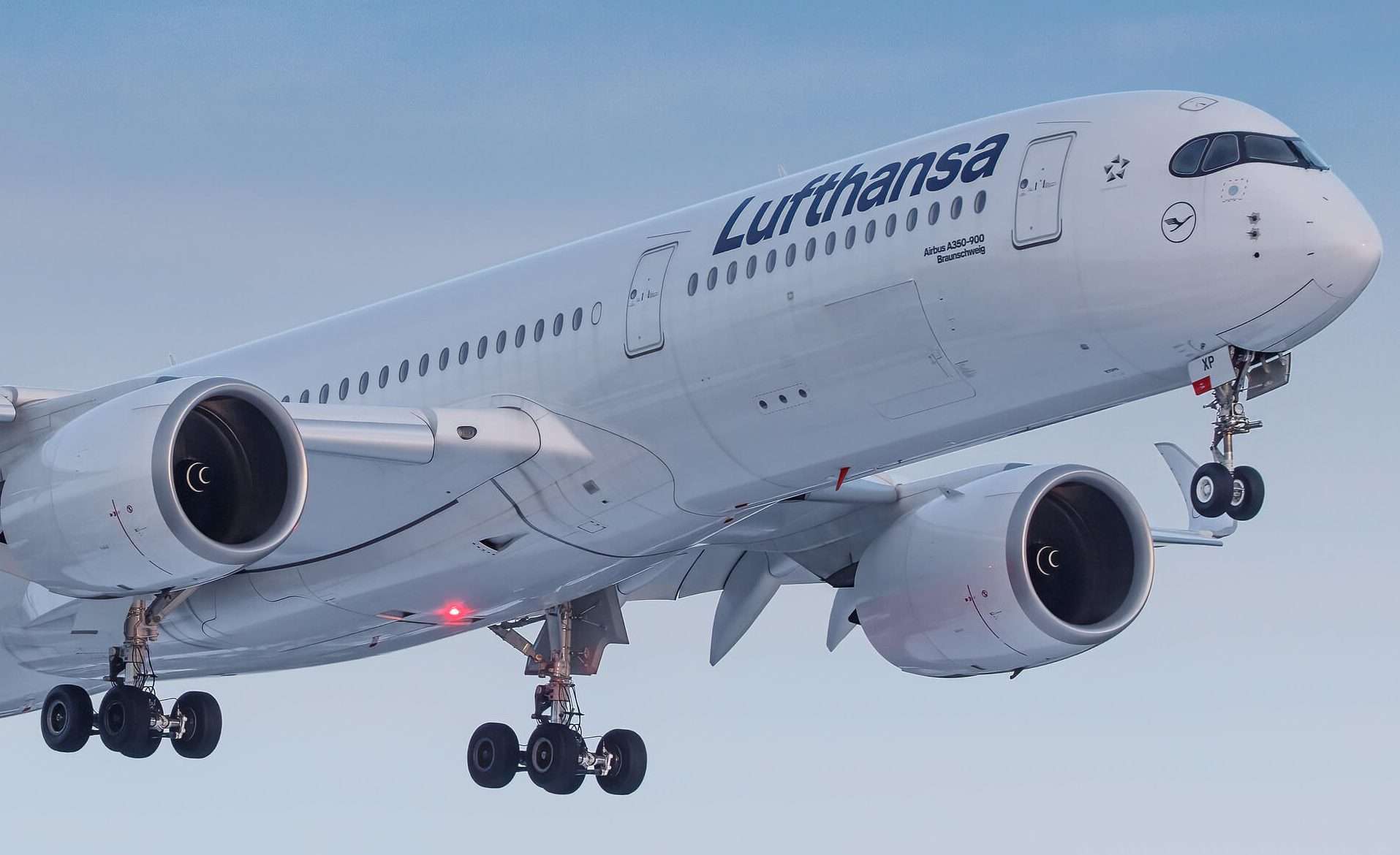
Lufthansa Group is approaching 2025 differently from what it may have initially expected, as challenges exist within the various airlines that call the Group home.
One of the most significant changes will be how the Group handles its flagship and mainline brand, Lufthansa, which has experienced turbulent recent years.
While the Group emphasises hiring new employees, notably 10,000 people, this figure will be dramatically lower with the mainline Lufthansa branding.
Ultimately, Lufthansa’s lower hiring rate is part of refocusing its efforts to stabilise itself and navigate the many challenges impacting the business.
Turnaround efforts for Lufthansa were announced in 2024 and will continue into 2025 as the airline attempts to reposition itself more stably.
While the number of people hired across the Lufthansa operation will decrease, just over 1,000 people are still expected to be employed to fill new roles.
The Group says the people hired will be strictly related to operations. The company believes that if it can hire people to work within its operations, elements of the business can improve.

Lufthansa Struggles With Aircraft Delays
One of Lufthansa’s significant challenges has been Airbus and Boeing’s ongoing supply chain issues.
These issues have delayed the delivery of new aircraft, disrupted Lufthansa’s fleet renewal and expansion plans, and negatively impacted the company’s financial state.
Particularly concerning for Lufthansa is Boeing’s inability to get the 777X certified. The airline’s CEO has commented on the delayed certification across recent years, stating that his forecast is for a 2026 entry into service, but this could shift once more.
While this is frustrating, based on the initial 2021/22 delivery estimate, broader impacts, such as financial results, must be considered. Moreover, the 777X is not the only plane experiencing delays.

Lufthansa bet on the 777X, among other widebodies, to replace older aircraft and has ultimately been able to do this on time. However, the company is not left with enough aircraft to cover the capacity due to persistent delays, rising demand, and uncertainty.
Nowadays, the airline relies on older jets that, while reliable and widely loved, would otherwise have been retired for more efficient aircraft to align with the transition plan. While these plans are only short-term, they do have their effects.
Thanks to these decisions, the carrier has retained aircraft such as the Airbus A380, Airbus A340, and Boeing 747 to meet the high demand following the global pandemic. While this capacity is beneficial, it isn’t the most optimal solution to the problem.
Other Challenges At Lufthansa
Over several years, one of the most significant struggles was ongoing unrest among its workforce, which resulted in strike action by many different groups of employees.
Ultimately, this strike action was driven purely by the demand for better wages, working conditions, and associated living benefits. These demands were in response to the pressures faced by rising inflation.
Strike action occurred in 2023 and 2024, with walkouts staged and led by the unions representing the employees. On each occasion, strike action unfolded, and disruption was felt immensely across the Lufthansa network, affecting finances.
The walkouts forced Lufthansa to reconsider its contractual obligations to staff and adjust them to reflect a liveable wage. As a result, expenses were raised to mitigate the walkouts.
Moreover, the German carrier has faced persistent challenges regarding the consistency of its onboard product and service levels, a central topic among active travellers.
A significant majority perceive the airline to have spiralled downhill as it struggles considerably with increased competition and a lack of focus on its product for a price point that sees its position as a full-service flag-ship.

ABOUT THE AUTHOR
Daniel Fowkes is a Melbourne-based aviation analyst and journalist with over a decade of industry experience. As founder of Dj’s Aviation, he delivers trusted analysis on aircraft, airline strategy and global aviation trends for djsaviation.net
Leave a Reply
Related Articles




Stay Informed
Get the latest aviation news, analysis and route updates delivered to your inbox.
We respect your privacy. Unsubscribe at any time.
Enjoyed this story?
Make us your go-to for aviation news
Add us as a preferred source on Google and see our latest stories first in Top Stories.
Add Us On Your News FeedRelated articles
· Airlines
Allegiant Air Buys Six More 737-8s From Boeing
Daniel Fowkes
26/10/2026
· Airlines
Emirates vs Qatar Airways: The Gulf Superhub Rivalry Compared
Bryan Shelmon
26/10/2026
· Airlines
Riyadh Air Is Moving Away From Riyadh
Daniel Fowkes
26/10/2026
· Airlines
Emirates Isn’t Worried At All
Daniel Fowkes
25/10/2026
interchangeability of equipment between parent co (LH) and other sister companies should be experimented so also the manpower of all the group s should be utilized to the maximum optimum level
in one co there may be less utilization of the aircraft whereas other company
may need an aircraft to fill up the gap. so also the man power this will bring
down the wage bill and increase the utilization of equipment